Food, Culture and Heritage Tourism Through Travel Media
Food, Culture and Heritage Tourism Through Travel Media
How the stories we tell about what we eat and where we come from shape the way we travel—and how cultural storytelling can protect identity while supporting local economies.
I remember standing in the narrow lanes of Old Delhi’s Chandni Chowk one sweltering afternoon, the air thick with the aroma of spices that seemed to have seeped into the very bricks of the centuries-old buildings.
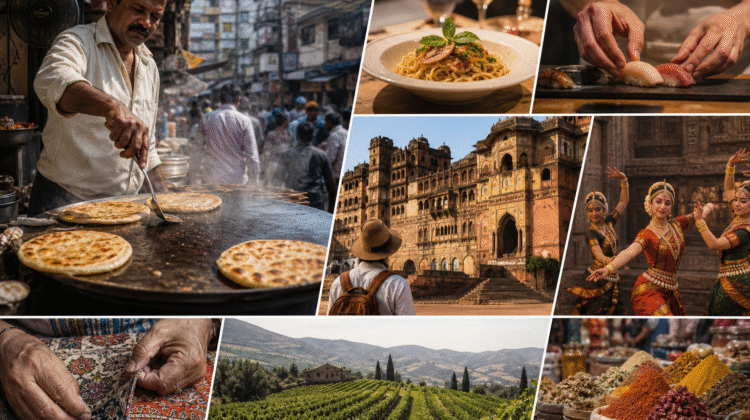
A third-generation paratha vendor, his hands moving with the practiced grace of someone who had been doing this since childhood, handed me a flaky bread stuffed with spiced potatoes, cooked on a griddle that had probably witnessed the comings and goings of emperors and commoners alike.
As I bit into it, the explosion of flavours was not merely culinary—it was historical, cultural, deeply personal. That single paratha told me more about Delhi than any guidebook ever could.
This, in essence, is what food tourism represents at its most profound. Food is often the first sensory introduction to a destination’s identity—the handshake before the conversation, the embrace before the introduction.
Whether savouring the fiery streetside noodles of Bangkok’s Yaowarat Road, twirling handcrafted pasta in a family-run trattoria tucked away in Rome’s Trastevere neighbourhood, experiencing the meditative precision of a Tokyo sushi master’s omakase, or sampling the dizzying diversity of regional cuisines that crisscross the Indian subcontinent, culinary experiences create memories that linger long after the journey ends.
Travel media turns meals into narratives
Through professional storytelling, ordinary meals become extraordinary narratives, and destinations become not merely places to visit but experiences to savour.
The Rise of the Culinary Traveller
The growth of food tourism has been nothing short of remarkable. Travellers today increasingly seek authentic cultural encounters rather than the conventional checklist of sightseeing.
The modern tourist wants to understand not just what people eat, but why they eat it—the stories behind the ingredients, the traditions that have shaped cooking techniques over generations, and the social rituals that accompany meals.
How Travellers Discover Food Culture Today
Context and History
Connect dishes with communities, traditions and the people who preserve them.Visual Immersion
Bring markets, kitchens, farms and culinary rituals to life.Personal Discovery
Introduce audiences to local voices and hidden culinary experiences.Professional travel writers, celebrated television programmes, glossy culinary magazines, intimate podcasts, compelling documentaries, and a vast army of digital creators now serve as the primary conduits through which audiences discover local recipes, meet farmers tending ancient crops, hear from chefs preserving grandmother’s techniques, explore vibrant food festivals, wander through sprawling vineyards, haggle in spice markets that have operated for centuries, and dine in family-owned restaurants where the same recipes have been perfected over generations.
These stories do more than tantalise tastebuds. They encourage visitors to appreciate local traditions with genuine respect, understand the labour and love that goes into each dish, and support small businesses and regional economies in a meaningful way.
Support Small Businesses
Choosing local establishments helps distribute tourism spending more widely.Community Knowledge
Cooking classes and community-led experiences sustain traditions.Artisans and Producers
Direct purchases strengthen local livelihoods and regional identity.Heritage Beyond the Plate
Culture Is a Destination’s Living Memory
Heritage tourism extends far beyond the culinary realm. Historic monuments that have witnessed centuries of human drama, UNESCO World Heritage Sites that represent the collective genius of our species, museums preserving humanity’s creative output, architectural marvels that demonstrate engineering brilliance across civilisations, musical traditions, dance forms, handicrafts and indigenous traditions all contribute to a destination’s unique identity.
Travel media serves as the documentarian of these cultural treasures, preserving stories for future generations while encouraging responsible visitation.
Through compelling narratives, travellers gain a deeper appreciation of the history, values and customs that define each destination. The stories we tell about heritage sites influence not only whether people visit, but how they behave when they arrive.
“Without the stories, these walls are just bricks and lime. The stories breathe life into the art. When travellers understand what they are seeing, they become custodians, not just visitors.”
I recall interviewing the curator of a modest museum in Rajasthan’s Shekhawati region, a man who had dedicated his life to preserving the fading frescoes that adorn the region’s havelis. His words have stayed with me throughout my career.
Destination Marketing Through Cultural Storytelling
Beyond the Predictable Postcard
Destination Marketing Organizations have increasingly recognised the power of cultural storytelling to differentiate themselves in an increasingly competitive tourism marketplace.
Instead of promoting only famous landmarks—the predictable postcard shots reproduced a million times—they highlight local artisans working in time-honoured traditions, traditional festivals celebrated for centuries, community-based tourism initiatives, heritage walks and culinary trails.
This approach represents a fundamental reimagining of how destinations position themselves. It distributes tourism benefits more widely across communities, ensuring that the economic advantages of travel are not concentrated in a few pockets.
It encourages visitors to spend more time exploring local communities, venture beyond well-trodden tourist paths and develop a deeper connection with the places they visit.
“The most successful destinations we cover are those that understand the power of authentic narrative. They’re not selling attractions; they’re inviting travellers into a story.”
The Digital Revolution in Cultural Tourism
Cultural Stories Now Travel Before the Traveller Does
Digital media has revolutionised cultural tourism in ways that were unimaginable just a generation ago. High-quality photography captures the precise moment when light falls upon ancient stone, immersive videos transport viewers into the heart of festivals, virtual museum tours enable exploration of priceless collections from any corner of the globe, food blogs document culinary adventures with obsessive detail, and social media campaigns allow destinations to tell their stories directly to the world.
Interactive storytelling inspires curiosity while encouraging respectful cultural engagement. A potential traveller can now experience a destination virtually before ever booking a ticket, exploring it intimately, understanding its nuances and developing a connection that makes the eventual physical journey more meaningful.
TheTravigator has been at the forefront of this digital evolution, leveraging its platform to deliver analytical, well-researched and authentic content across digital magazine, newsletters, social channels and its innovative Weekly News Podcast.
The Responsibility of Ethical Journalism
Authenticity Must Be Protected, Not Packaged Away
Responsible travel journalism plays an increasingly important role in safeguarding cultural authenticity. Ethical reporting discourages cultural appropriation, promotes respect for local customs and encourages visitors to contribute positively to heritage conservation efforts.
Journalists increasingly highlight community-led tourism initiatives that empower local residents while preserving traditional knowledge and craftsmanship.
This is not merely a philosophical position but a practical necessity. When cultures are commodified without understanding, when traditions are performed without context, and when communities are exploited rather than empowered, tourism becomes a destructive rather than a generative force.
The ethical travel journalist recognises this responsibility and approaches cultural storytelling with the seriousness it deserves.
“Our unwavering commitment to sustainability and authentic storytelling has made us the trusted partner for tourism boards, hotels, and airlines.”
Conclusion: The Power of Storytelling
Ultimately, travel media transforms food, culture and heritage into powerful tourism assets. By sharing authentic stories and celebrating diversity, it strengthens cultural appreciation, supports local economies and inspires travellers to explore destinations with curiosity, respect and understanding.
The stories we tell about places matter enormously. They shape perceptions, influence behaviour and determine whether visitors approach new cultures with openness or judgment.
When we tell stories that honour the complexity and richness of cultural traditions, we contribute to a form of tourism that enriches both traveller and destination.
Every dish has a history. Every monument has witnessed human drama. Every tradition embodies the accumulated wisdom of generations. Travel media, when practised with skill and integrity, brings these stories to light, creating connections that transcend borders and building understanding that bridges differences.
Every dish has a history. Every monument has a story. Every tradition carries the wisdom of generations.
This report is part of TheTravigator’s continuing news coverage of the travel, tourism, aviation, and hospitality sectors. Our editorial team publishes industry news, market insights, partnerships, policy developments, and business updates relevant to the travel trade community. For press releases, partnership opportunities, advertising enquiries, or editorial collaborations, please contact our editorial desk at:
INFO@THETRAVIGATOR.COM