
Borneo: The Last Frontier of Asian Travel
Borneo: The Last Frontier of Asian Travel The Island That Has Everything—Except a Single Name
Three countries, three regulatory frameworks and three marketing strategies—but one extraordinary ecosystem and one increasingly compelling B2B travel proposition.
Let’s begin with a paradox. Ask a traveller about “Borneo,” and they conjure images of orangutans swinging through emerald canopies. Ask an Indonesian about “Kalimantan,” and they speak of rugged frontiers and a new capital rising from the jungle. Both are right.
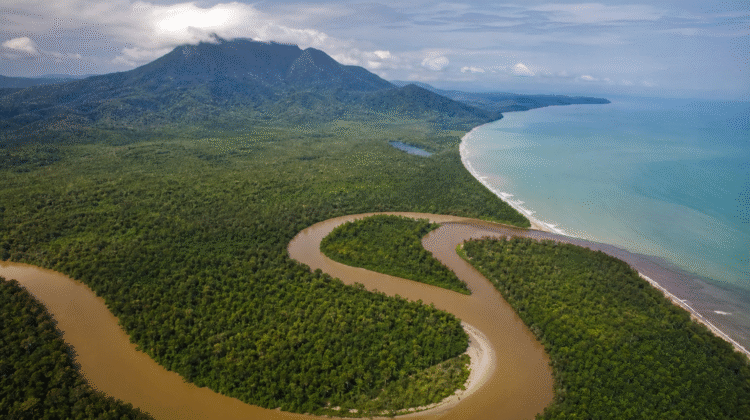
Both are describing the same 748,168-square-kilometre landmass—Asia’s largest island, politically divided among three nations, yet united by an ecosystem that predates human civilisation by 140 million years.
For the uninitiated, Borneo is a geography lesson waiting to happen. Seventy-three per cent belongs to Indonesia—five provinces collectively called Kalimantan, now home to Nusantara, the nation’s ambitious new capital. Twenty-six per cent is Malaysian territory—the states of Sabah and Sarawak, with their distinct flavours of adventure. The remaining one per cent is Brunei, a sovereign sultanate that punches well above its weight in oil wealth and cultural preservation.
Indonesia — Kalimantan
Five provinces and Nusantara, the nation’s ambitious new capital.Malaysia — Sabah & Sarawak
Distinct adventure propositions within Malaysian territory.Brunei
A sovereign sultanate combining oil wealth with cultural preservation.Here’s what that means for B2B travel professionals: three countries, three regulatory frameworks, three marketing strategies—but one extraordinary product to sell.
Why Borneo Matters Right Now
Let’s cut to the chase. Borneo isn’t just another destination. It’s a microcosm of everything today’s discerning traveller craves—and everything the industry struggles to deliver consistently.
Three Assets That Make the Destination Different
Conservation as Product
The Heart of Borneo initiative protects 220,000 square kilometres of rainforest across the three nations.Natural Encounters
The Bornean orangutan, proboscis monkey and pygmy elephant exist in natural habitats, with Sabah’s Kinabatangan River and Danum Valley offering high-value wildlife experiences.Living Heritage
Dayak communities continue to live in longhouses, practise traditional crafts and welcome visitors who approach with respect.Sustainability with substance. The Heart of Borneo initiative, a conservation agreement between the three nations, protects 220,000 square kilometres of rainforest. Travel brands that can authentically connect clients to this conservation story—through community-led homestays, wildlife monitoring programmes, or carbon-offset itineraries—will win the loyalty of the conscious traveller.
Wildlife that delivers. The Bornean orangutan, the proboscis monkey, the pygmy elephant—these aren’t marketing buzzwords. They’re creatures that exist in their natural habitats, visible to those who know where to look. The Kinabatangan River in Sabah offers some of the most reliable wildlife viewing in Southeast Asia. The Danum Valley Conservation Area is a 438-square-kilometre primary rainforest that researchers describe as “the closest thing to untouched Borneo.”
Cultural authenticity. The Dayak people—hundreds of ethnic groups under one collective umbrella—continue to live in longhouses, practise traditional crafts, and welcome visitors who approach with respect. This isn’t manufactured cultural performance; it’s living heritage. And luxury travellers, increasingly fatigued by curated experiences, are willing to pay premium prices for genuine cultural connection.
The Numbers That Demand Attention
For those who speak the language of spreadsheets and ROI, consider this: the global ecotourism market is projected to grow at a compound annual rate of 15.2 per cent through 2030. Asia-Pacific, with destinations like Borneo at its core, will lead this expansion. The island’s biodiversity—15,000 flowering plant species, 221 terrestrial mammals, 420 resident birds—isn’t just a natural wonder; it’s a commercial asset that competitors simply cannot replicate.
MICE Potential
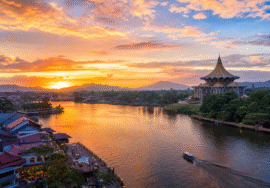
Borneo Convention Centre Kuching
Positioned as a premier event venue for the region.Eco-Lodges
Unique retreat settings for corporate off-sites.Future Business Travel
When fully operational, the new capital is expected to inject business travel into the region.Consider the MICE potential. Sarawak’s Borneo Convention Centre Kuching has positioned itself as a premier event venue, while Sabah’s eco-lodges offer unique retreats for corporate off-sites. The new Nusantara capital in Indonesian Kalimantan, when fully operational, will inject unprecedented business travel into the region. Early movers in this space will reap disproportionate rewards.
The Challenges—and Why They’re Opportunities
The Friction Is Part of the Product
Let’s be frank: Borneo isn’t easy. Infrastructure outside major cities remains basic. Connectivity between the three nations is improving but still requires careful itinerary planning. The region’s push for sustainability means that not every development project proceeds smoothly.
But here’s the insider’s perspective: the very factors that make Borneo challenging are what make it valuable. In an age of overtourism and cookie-cutter experiences, difficulty creates exclusivity. The travel brands that invest now in local partnerships, deep destination knowledge, and authentic product development will own this market for a generation.
The Bottom Line
Borneo is not for the casual traveller, and it is not for the casual tour operator. It demands commitment, expertise, and a genuine passion for what makes travel meaningful. But for those willing to invest, the returns—both commercial and creative—are extraordinary.
The third-largest island in the world is finally having its moment.
The B2B opportunityThe question for the B2B travel community is simple: will you be part of the story, or will you watch from the sidelines?
Borneo at a Glance
| Metric | Figure |
|---|---|
| Total area | 748,168 sq km |
| Population (2023) | 21.26 million |
| Political division | Indonesia (73%), Malaysia (26%), Brunei (1%) |
| Highest peak | Mount Kinabalu (4,095m) |
| Rainforest age | ~140 million years |
| Endemic species | Orangutan, proboscis monkey, pygmy elephant |
| UNESCO sites | Kinabalu Park, Gunung Mulu, Niah Caves |
One Ecosystem. Three Countries. A Destination Still Being Defined.
Borneo’s complexity is not a weakness to be hidden from the market. It is part of the product. The opportunity is to package that complexity intelligently—connecting conservation, wildlife, culture, MICE and premium travel into experiences that are difficult to reproduce elsewhere.
This report is part of TheTravigator’s continuing news coverage of the travel, tourism, aviation, and hospitality sectors. Our editorial team publishes industry news, market insights, partnerships, policy developments, and business updates relevant to the travel trade community. For press releases, partnership opportunities, advertising enquiries, or editorial collaborations, please contact our editorial desk at:
INFO@THETRAVIGATOR.COM