
Peanut Sauce by Day, Wok Smoke by Night
Building a Vegetarian Southeast Asian Food Trail Around Gado-Gado and Char Kway Teow
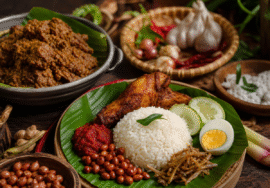
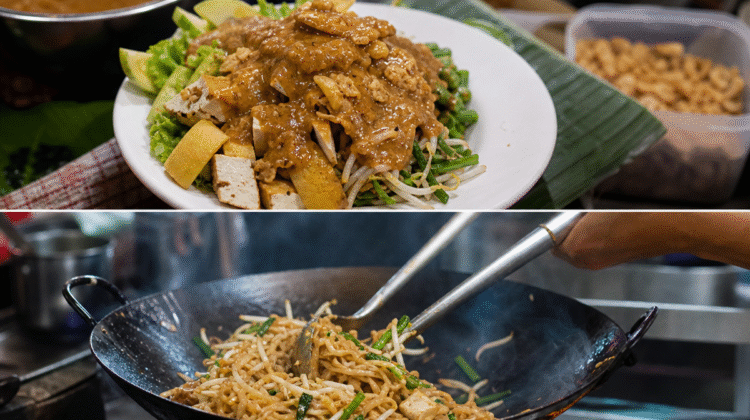
At a daytime food stall in Indonesia, the meal begins with colour. Blanched vegetables, cucumber, tofu and tempeh are arranged on a plate before a thick peanut sauce is spooned across the top. The vendor adds the final elements almost by instinct, adjusting texture and seasoning with each movement.
The finished dish is gado-gado, a meal that refuses the idea that vegetarian food must be a side order. Vegetables provide freshness, tofu and tempeh bring substance, and the peanut dressing unites everything with sweetness, salt, spice and richness. Boiled egg is common, but it can be omitted for vegan travellers when the sauce and other components are prepared accordingly.
Gado-gado offers the travel trade something increasingly valuable: a local dish that can satisfy vegetarian guests without separating them from the destination’s culinary story. It is recognisably Indonesian, visually engaging and adaptable enough for mixed-diet groups. A tasting can sit naturally within a market walk, a neighbourhood tour or a visit focused on tempeh production.
The experience becomes stronger when travellers see the sauce being made. Grinding peanuts and aromatics, explaining the role of tempeh and allowing guests to choose their preferred heat level turns lunch into a conversation about everyday Indonesian food. For small incentive groups or culinary departures, a short preparation session can be more meaningful than another formal restaurant booking.
By evening, the food story moves from the measured assembly of a plate to the speed of a smoking wok.
Across Malaysia and Singapore, char kway teow is known for flat rice noodles cooked over fierce heat. Bean sprouts, chives and dark soy move rapidly through the wok, taking on the lightly charred aroma known as wok hei. The cooking lasts only minutes, but the result depends on timing, temperature and the skill of the person holding the pan.
Traditional char kway teow commonly includes seafood, egg and animal-based seasonings, which means a vegetarian version must be designed rather than casually improvised. Removing the prawns is not enough if the same oil, sauces or wok continue to carry non-vegetarian ingredients. For strict vegetarian and vegan travellers, especially groups from India, this distinction can determine whether the experience succeeds or damages trust.
That operational challenge is also a commercial opportunity. DMCs can identify vendors or restaurants capable of producing a credible vegetarian char kway teow with vegetable-based sauces and appropriate preparation practices. Hotels serving the outbound Indian market can pre-arrange the dish during group meals, while guides can explain that it is a thoughtful adaptation of a local classic rather than presenting it as the traditional recipe.
Gado-gado and vegetarian char kway teow create two contrasting halves of a Southeast Asian culinary day. One is built at a stall through vegetables, tofu, tempeh and peanut sauce. The other comes together in seconds through heat, movement and smoke. Both can work within mainstream itineraries, but neither should be treated as a generic “veg option.”
For travel businesses, the larger lesson is clear. Vegetarian product development is most successful when it remains connected to local technique. Guests do not want to travel across Southeast Asia only to receive familiar substitute meals. They want access to the destination’s food culture, accompanied by honest information about ingredients and preparation.
A well-designed itinerary can deliver exactly that: gado-gado in the daylight of an Indonesian market, followed by the hiss of a dedicated wok after dark. The food remains simple; the story, setting and operational care turn it into a memorable travel product.
This report is part of TheTravigator’s continuing news coverage of the travel, tourism, aviation, and hospitality sectors. Our editorial team publishes industry news, market insights, partnerships, policy developments, and business updates relevant to the travel trade community. For press releases, partnership opportunities, advertising enquiries, or editorial collaborations, please contact our editorial desk at:
INFO@THETRAVIGATOR.COM