
From Maharashtra’s Fiery Mornings to Kathmandu’s Steaming Evenings
How Misal Pav and Vegetable Momos Can Turn Street Food into a Bookable South Asian Experience
The first spoonful rarely goes as expected. Beneath the crunchy farsan, chopped onion and coriander sits a gravy with enough heat to wake up an entire morning. A piece of pav is torn, dipped and quickly followed by another. Around the table, conversations pause for a moment as everyone adjusts to the spice.
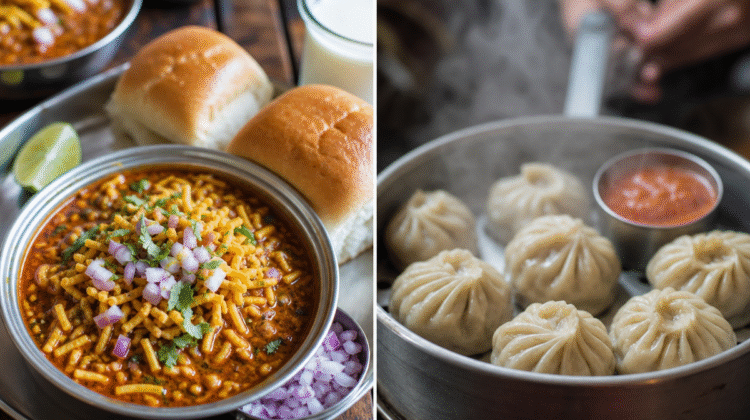
This is misal pav, a Maharashtrian dish that feels less like a formal breakfast and more like an introduction to the personality of the region. It is energetic, layered and deliberately untidy. Sprouted beans provide the base, the spiced gravy brings intensity, farsan adds texture and the soft bread holds everything together. No single component explains the dish; the experience comes from assembling all of them in one bite.
For travellers, that participation matters. Misal pav is not most memorable when it appears anonymously on a hotel buffet. Its real value emerges in a busy local restaurant, where guests can watch plates being built, compare milder and hotter versions and learn why recipes change from one Maharashtrian city—or even one family—to another.
For a tour operator or DMC, this creates a useful alternative to the generic city breakfast. A small-group morning experience can combine a market visit, a specialist misal outlet and a short conversation with the owner or cook. The format is compact, affordable and easy to place before a day of sightseeing. It also gives the guide a natural way to explain local ingredients without turning breakfast into a lecture.
Several hours and a border away, another dish tells a very different street-food story.
As evening settles over Kathmandu, steam rises from metal baskets and glass-fronted counters begin filling with rows of vegetable momos. The dumplings arrive soft and hot, carrying a filling of cabbage, carrot and spices. Beside them sits the essential companion: a tomato-and-chilli achar that can move from tangy to fiercely hot in a single spoonful.
Momos invite a slower kind of participation. Travellers can watch the dough being rolled, see each wrapper folded by hand and understand how a simple dumpling became woven into the everyday food culture of the Himalayan region. Steamed momos offer softness and warmth; fried versions bring crunch and a more indulgent character. The chutney provides the final regional signature.
This makes momos particularly suitable for an interactive culinary product. Instead of limiting the experience to a tasting stop, operators can work with a local kitchen to create a short folding workshop followed by a shared meal. The activity requires little technical knowledge from guests, works well for families and incentive groups, and produces the kind of personal moment travellers are likely to remember and share.
There are operational details to manage. Spice levels should be explained rather than assumed. Kitchens must confirm that stocks, sauces and frying oils meet vegetarian requirements, especially for strict Indian vegetarian groups. Vendors should be selected for hygiene, consistency and their ability to handle a group without losing the atmosphere that made the stop attractive in the first place.
Misal pav and vegetable momos succeed as travel experiences because neither needs to be made luxurious. Their value lies in setting, interaction and local rhythm. One begins with a fiery Maharashtrian morning; the other ends in the steam of a Kathmandu evening. Together, they show the travel trade how two modest dishes can become a genuine South Asian story—provided the itinerary allows guests to do more than simply eat them.
This report is part of TheTravigator’s continuing news coverage of the travel, tourism, aviation, and hospitality sectors. Our editorial team publishes industry news, market insights, partnerships, policy developments, and business updates relevant to the travel trade community. For press releases, partnership opportunities, advertising enquiries, or editorial collaborations, please contact our editorial desk at:
INFO@THETRAVIGATOR.COM