The Uttar Pradesh Opportunity: Why the Travel Trade Should Pay Attention Now
Uttar Pradesh is staking a quiet but serious claim on India’s tourism map — not through another temple circuit, but through ecotourism, heritage hotels, village stays and business events. For operators willing to look past the obvious, the commercial upside is real. So are the risks.
Start with a number that ought to make every tour operator in India sit up. In 2024, Uttar Pradesh recorded 646.8 million domestic tourist visits — the highest of any Indian state, accounting for nearly 22 per cent of India’s entire domestic tourism volume, according to the Ministry of Tourism. By 2025, propelled by the Prayagraj Mahakumbh alone attracting over 660 million visits, that figure had crossed 1.37 billion. And yet, if you asked most DMCs or inbound operators to name five bookable nature experiences in UP, you would likely get a long silence and then, eventually, “the Taj Mahal.”
That gap between visitor volume and product depth is exactly what the state government is now trying to close. Through its Tourism Policy 2022, a range of transport and connectivity initiatives, and the creation of the Uttar Pradesh Eco-Tourism Development Board, the state is attempting something genuinely ambitious: to move beyond pilgrimage and monument tourism, and turn its forests, wetlands, forts, villages and trade show infrastructure into products the travel industry can actually sell.
Whether it succeeds matters — not just for UP, but for the B2B travel economy in India. The WTTC’s 2024 Economic Impact Research pegged travel and tourism’s contribution to India’s GDP at INR 21.15 trillion(projected) — roughly 7 to 7.5 per cent of the national total — supporting over 43 million direct jobs. Nature-based tourism, by the WTTC’s own projections, is growing at 7 to 9 per cent annually, outpacing conventional leisure travel. India’s ecotourism market alone is valued at somewhere between USD 14 billion and USD 20 billion, depending on which research house you ask, with compound annual growth rates in the double digits. If UP can capture even a fraction of that growth, the commercial implications for operators, hoteliers, transport providers and ground-handling companies are considerable.
But here is the thing an economist would tell you before a marketer does: policy announcements are not the same as delivered infrastructure. Incentive frameworks are not the same as disbursed subsidies. And identified destinations are not the same as bookable products. This distinction runs through every part of the UP tourism story, and the trade would do well to keep it in mind.
Consider the ecotourism proposition first, because it is where UP’s natural advantages are most obvious and most underexploited.
The state’s Terai belt — that strip of sub-Himalayan lowland running along the Nepal border — contains three serious wildlife destinations: Dudhwa National Park, established as a tiger reserve in 1987 and home to over 450 recorded bird species and a reintroduced population of Indian rhinos (in March 2026, the UP Forest Department and WWF-India moved Greater One-horned Rhinos from fenced enclosures into unfenced natural core grasslands for the first time, a genuine conservation milestone); Pilibhit Tiger Reserve, whose tiger population has climbed to around 80 individuals according to recent camera-trap surveys, up from 25 a decade ago — a recovery that earned it the global TX2 Award in 2020; and Katarniaghat Wildlife Sanctuary, a corridor habitat that remains largely unknown outside specialist circles.
The numbers tell a story of their own. Dudhwa recorded 64,401 visitors in the 2023-24 season, a 54 per cent jump over the previous year. In 2024-25, foreign tourist arrivals at the park surged to 644 — still modest in absolute terms, but nearly triple the prior year’s figure. Combined footfall across Dudhwa and Pilibhit crossed 133,000 visitors in 2025-26, generating over INR 4.58 crore in revenue. These are not the numbers of a mature destination. They are the numbers of a destination beginning to find its market.
The state is trying to change that. The UPETDB has launched a mobile application for eco-tourism discovery — available on both Android and iOS, with GPS navigation, offline map support for low-connectivity forest areas, and permit booking integrations. The Lucknow-Dudhwa AC bus service, operated by UPSRTC from Kaisarbagh Bus Terminal, runs with morning departures around 8 AM, covering the route in roughly five and a half hours and bookable through redBus and MakeMyTrip. And Indian Railways operates Vistadome coach excursions on the 107-kilometre Bichia–Mailani metre-gauge line every Saturday and Sunday, the journey taking about four and a half hours each way through forested stretches of Dudhwa and Katarniaghat — a rail experience that can be sold as a product in its own right.
These are real, functioning services. But — and this matters for anyone building itineraries — the Vistadome schedule is subject to monsoon and fog-season suspensions, and coordination with park safari timings and accommodation check-in arrangements still requires ground-level verification before packages go on sale.
For the economist, the opportunity cost is worth noting. Tiger tourism across India already generates an estimated six to eight thousand crore rupees annually for local economies, according to figures associated with the National Tiger Conservation Authority. That revenue is heavily concentrated in a small number of states. If UP’s Terai destinations can establish even modest commercial traction, the redistribution effects — on local employment, accommodation investment, guiding services and supply chains — could be significant in a region where per capita income sits well below the national average.
Then there is Haiderpur. Designated as India’s 47th Ramsar site in December 2021, this wetland in Bijnor district covers nearly 7,000 hectares along the Upper Ganga river system. It supports over 300 bird species, including globally threatened ones — the Egyptian Vulture, the Sarus Crane, the Black-bellied Tern, the Indian Skimmer. The UPETDB has reported visits by international birdwatchers, which suggests an existing, if small, point of demand.
Birdwatching tourism is a peculiar segment. It attracts travellers who plan months ahead, travel in small groups, stay longer and spend more per day than the average leisure tourist. They also tend to visit during specific windows — migratory seasons, breeding periods — which means the product requires precise seasonal knowledge and credible local guiding. It is not the kind of tourism you can improvise. But for operators who specialise in it, or who want to diversify their India portfolio beyond the golden triangle and Rajasthan, a Ramsar-designated wetland within a few hours of Delhi is a genuinely interesting proposition.
The economics of birdwatching tourism are instructive. Because the groups are small and specialist-led, revenue per visitor tends to be high, but total volume stays modest. The commercial model works best when combined with other experiences — a wildlife stay at Dudhwa, a heritage property visit, a cultural stop in Lucknow. This is where itinerary design becomes the real product, not any single destination.
Speaking of heritage properties, UP’s play here is both promising and still largely unproven.
The state’s Tourism Policy 2022 includes incentives for heritage hotel projects — capital support for qualifying restoration, interest assistance, and specified benefits on stamp duty and property conversion. The intent is clear enough: encourage private investors to restore historic buildings and run them as hotels, creating distinctive accommodation that gives travellers a reason to stay longer and spend more.
The model is not new. Rajasthan has run with this idea for decades and now operates more than a hundred classified heritage hotels. The ADR premium for heritage properties in India runs between 20 and 40 per cent above comparable contemporary hotels, according to HVS India data. But the picture is not uniformly rosy. Heritage hotels outside the established circuits — particularly outside Rajasthan and Kerala — often struggle with occupancy rates of 35 to 50 per cent, well below the national hotel average of 65 to 70 per cent. And restoration costs are significant: one to five crore rupees for a smaller haveli, ten to fifty crore for a larger fort or palace. Breakeven, by industry estimates, takes seven to twelve years — nearly double the timeline for a new-build property.
In Agra, The Grand Imperial offers a working example of what heritage hospitality can look like. The building dates to the 1890s, and the hotel combines period character with modern accommodation and event facilities. It predates the 2022 policy and was not developed under it, but it illustrates the type of product the state is hoping to encourage.
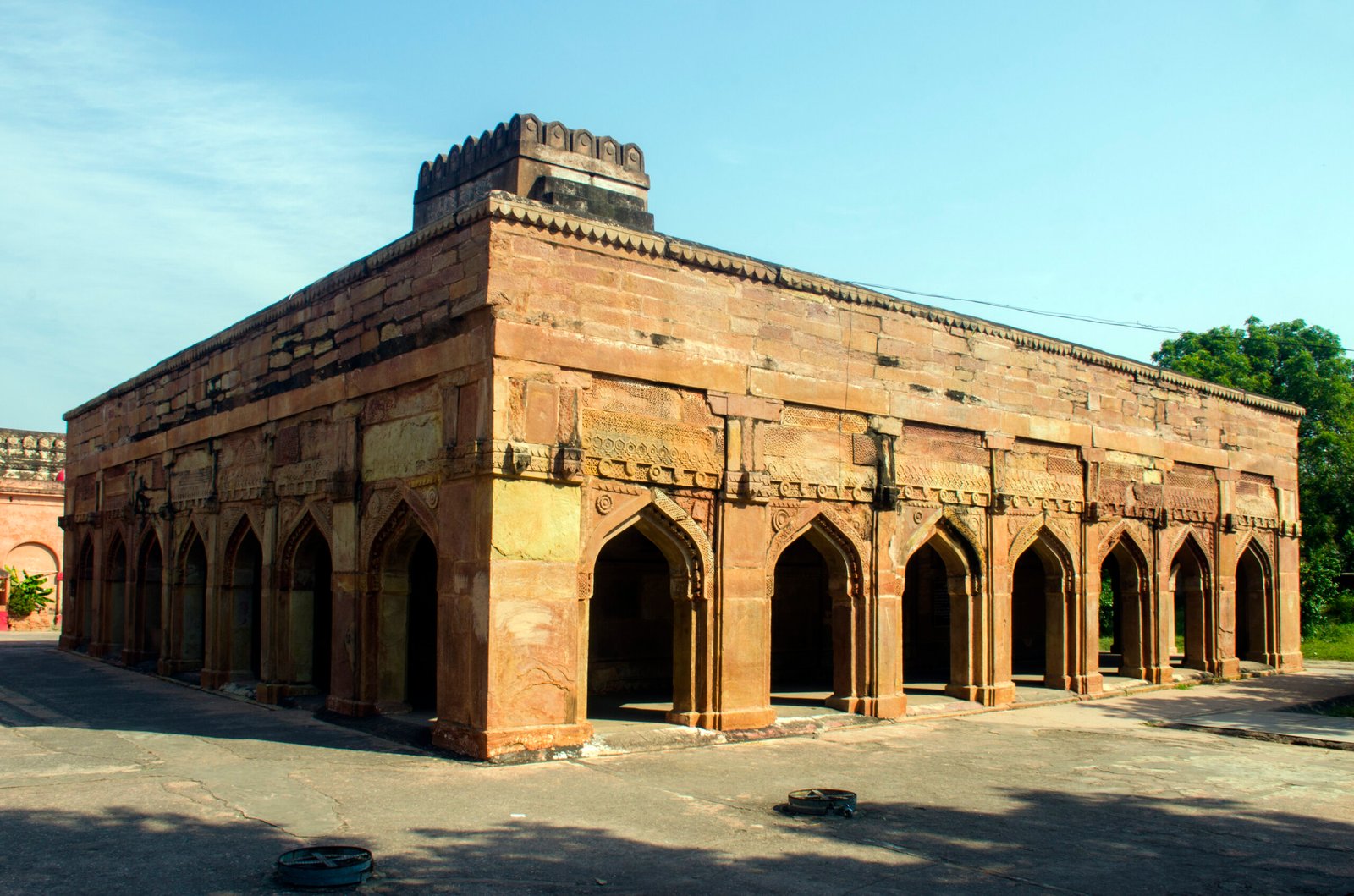
The more interesting case to watch is Chunar Fort. Located in Mirzapur district, about 40 kilometres from Varanasi, the fort is being developed into a 100-room heritage hotel under a public-private partnership, with an estimated capital outlay of INR 150 crore. The MoU was signed with Golden Triangle Fort and Palace Private Limited — promoted by the Suryagarh Collection, whose Suryagarh Jaisalmer property has established serious credentials in the fort-hotel space. The master plan reportedly incorporates wellness and spa facilities, royal banquet suites, and destination wedding venues, with integration into the Ganges River Tourism Circuit through luxury electric catamarans connecting Varanasi, Chunar and Mirzapur. If it comes off, it could anchor a genuinely new stretch of itinerary in eastern UP — linking the spiritual draw of Varanasi with a heritage stay and a river journey that no operator currently offers. Architectural conservation clearances have reportedly been approved. But the property is not yet operational, and the trade should watch with interest rather than start selling.
Now, the rural and craft tourism story. This is where the policy ambition is broadest and the evidence base thinnest.
UP’s tourism framework originally envisioned 75 model themed tourism villages or clusters built around local identities and community businesses. A parliamentary answer from the Union Ministry of Tourism, dated March 2023, identified 18 villages across the state for rural tourism development — places like Tarapur in Varanasi, Kathvaara in Lucknow, Chandan Chowki in Lakhimpur Kheri, Barua Sagar in Jhansi. The geographical spread was promising. What has happened since is more interesting than the original target: the programme has actually expanded. An initial rollout of 93 villages across five divisions was fast-tracked with the State Rural Livelihood Mission and NABARD for rural homestays and agri-tourism. The target has since grown to 234 villages, with a separate tranche of 35 border tourism villages sanctioned across seven frontier districts. Several pilot villages — Shringverpur in Prayagraj, Jait in Mathura, Kachha in Agra — are active and hosting guests.
One documented example gives a glimpse of what this could look like in practice. The Madhumakkhi Wala beekeeping centre in Rajauli, Barabanki, founded by Nimitt Singh — an engineer turned agri-entrepreneur — specialises in raw, mono-floral and multi-floral honey sourced from managed ethical apiaries. It is not a tourism gimmick: the enterprise was praised by Prime Minister Modi on Mann Ki Baat, has trained thousands of rural women in beekeeping as a livelihood, and has hosted international agricultural delegations including from New Zealand’s Ministry for Primary Industries. The UPETDB has recorded educational visits there. Another example: pottery workshops in Chunar where visitors can observe artisans at work. These are small-scale, real and grounded in actual livelihoods. They also illustrate the gap between a genuine cultural encounter and a reliably bookable tourism product.
For the rural model to work commercially, the economics need to be right — not just for the operator, but for the community. UNWTO research suggests that in well-designed community-based tourism, 60 to 95 per cent of revenue stays local, compared to 20 to 40 per cent in conventional mass tourism. India-specific studies put the figure closer to 50 to 70 per cent when local accommodation, food and guiding are used. But without organised supply chains and proper visitor management, leakage rates can reach 50 to 60 per cent, with most spending flowing to external transport companies and chain hotels rather than to the village itself.
This is the central tension in rural tourism everywhere, not just in UP. The authenticity that makes the experience compelling is also what makes it fragile. A pottery workshop visited by three families a week is a cultural encounter. The same workshop funnelling through a hundred tour groups a month risks becoming a performance. Getting the balance right requires restraint from operators, meaningful revenue-sharing with communities, and infrastructure — sanitation, safety, access, local guiding — that does not arrive overnight.
How many of the 75 target villages are actually ready? The honest answer is that no consolidated, independently verified count exists in the public domain. The policy target should be treated as a commitment, not a progress report.
Finally, the business events angle — and here, UP has something more concrete to point to.
The Uttar Pradesh International Trade Show opened its first edition in Greater Noida on 21 September 2023, bringing together around 1,914 exhibitors and over 70,000 B2B buyers, with visitors from more than 60 countries, according to the President’s Secretariat. By the third edition, inaugurated on 25 September 2025 by the Prime Minister, those numbers had grown: over 2,400 exhibitors across 110,000 square metres of exhibition space, more than 500 international buyers from 85 countries, and total footfall exceeding 450,000. Greater Noida’s India Expo Centre and Mart — one of the largest exhibition venues in the country — provides the physical infrastructure for events at this scale.
For the travel trade, the MICE segment matters disproportionately. A business event delegate in India typically spends two to three times more per day than a leisure tourist, according to the India Convention Promotion Bureau. The economic multiplier for MICE spending runs to about 2.5 to 3 times, according to FICCI — meaning that every rupee spent at a conference generates two and a half to three rupees in the wider economy through hotel stays, transport, dining, retail and services.
India’s MICE market is estimated at USD 5.5 to 6.8 billion and growing at 12 to 14 per cent annually, propelled by new mega-venues like Bharat Mandapam and Yashobhoomi in Delhi NCR, along with regional convention hubs under development. UP’s Tourism Policy 2022 recognises this, with provisions for conference infrastructure, financial support for qualifying events and coordination among hospitality providers. The policy has since been updated, too — a 2025 strategic pivot added incentives specifically tailored for MICE centres, luxury wellness resorts and high-value tourism. The question is whether these provisions translate into delegate room nights and extended stays — whether a buyer who comes for an exhibition in Greater Noida also visits Agra, takes a weekend in Lucknow, or returns for a family holiday because the destination made an impression.
That conversion — from attendance to tourism impact — is where most destinations struggle and where the real commercial upside lies.
Stand back from the individual pieces and look at the whole picture, and UP’s tourism strategy starts to look like something worth tracking seriously. Ecotourism destinations with genuine wildlife credentials. A transport and digital access programme that addresses real barriers. Heritage incentives modelled on a proven concept from Rajasthan. Rural and craft products grounded in actual livelihoods. A recurring trade show with international participation and a growing MICE infrastructure.
But the distance between ambition and delivery is considerable, and the trade needs to be clear-eyed about where things actually stand. The operational details — accommodation standards, permit systems, transport schedules, guiding capacity, booking mechanisms — are what will determine whether these destinations become products or remain proposals. Heritage hotels need to open and run profitably, not just get announced. Village tourism needs visitor infrastructure and genuine community benefit, not just identification on a government list. Digital platforms need current information and booking functionality, not just a download page.
MOST IMPORTANTLY: UP’s GSDP has reached roughly INR 30 lakh crore — about 9 per cent of India’s total GDP, making it the country’s second-largest state economy. But its per capita income remains well below the national average. Tourism offers a redistribution mechanism. The NCAER’s Tourism Satellite Account puts the sector’s employment multiplier at 2.29 — for every direct job created in hospitality or guiding, another 1.29 emerge in farming, transport, crafts and construction. The World Bank’s research on nature-based tourism in developing countries puts the return at USD 4 to 6 for every dollar invested in park management and tourism infrastructure. UP’s tourism assets represent a stock of natural, cultural and infrastructural capital that is currently undermonetised. The policy framework attempts to address market failures — information asymmetry, coordination problems, investment risk — through subsidies, digital platforms and public transport links. Whether the net result is an efficient allocation of resources or a set of well-intentioned interventions that fail to reach commercial viability depends on execution, not announcement.
For tour operators, DMCs, hotel investors and ground-handling companies, the practical advice is this: watch the Terai wildlife destinations and Haiderpur for seasonal product opportunities. Track the Chunar Fort and any other heritage projects for timelines and operational readiness. Explore rural and craft partnerships carefully, with community benefit and commercial sustainability in mind. And treat the MICE infrastructure around Greater Noida as a potential gateway to wider UP tourism — but only if the post-event destination offer develops alongside the exhibition calendar.
Uttar Pradesh will not become India’s next Rajasthan or Kerala overnight. It doesn’t need to. What it needs is a handful of well-executed products that prove the concept, generate positive word-of-mouth in the trade and give operators enough confidence to invest in itinerary development. The raw material is there. The policy intent is there. What comes next is the hard part — and also, for those paying attention, the opportunity.
#UttarPradeshTourism #IndiaTourism #TravelTrade #Ecotourism #HeritageTourism #RuralTourism #CraftTourism #WildlifeTourism #MICEIndia #HospitalityInvestment #CommunityTourism #SustainableTourism #Dudhwa #ChunarFort #GreaterNoida
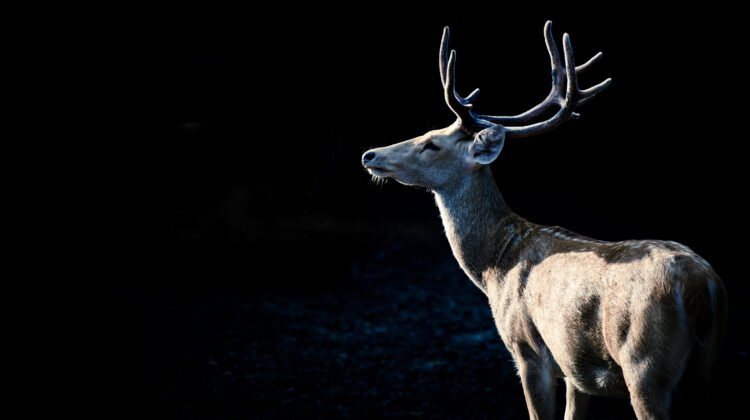
Featured photograph: Swamp deer in Dudhwa National Park. Photo: Abhishek Shastri / Wikimedia Commons, CC BY-SA 2.0.