Kwetsani Camp Reimagined: A New Chapter for Luxury Safari in Botswana’s Okavango Delta
Luxury safari is changing.
Today’s traveller is increasingly looking beyond a beautifully designed room or a spectacular wildlife sighting. The modern safari experience is about the relationship between architecture, wilderness, privacy, service and the destination itself.
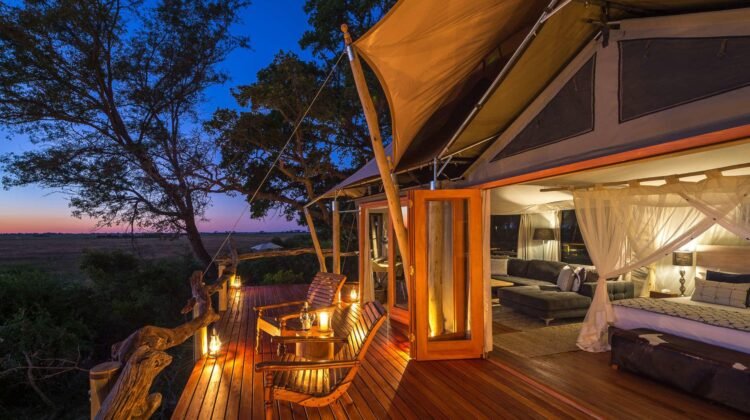
That evolution is visible in the renewed Kwetsani Camp, located in Botswana’s extraordinary Okavango Delta.
The camp’s transformation represents more than a property refresh.
It reflects a broader movement within African luxury tourism: established safari camps are being reimagined to deliver more contemporary, immersive and environmentally conscious experiences without losing their connection to the wilderness.
A New Chapter in the Okavango Delta
The Okavango Delta is one of Africa’s most distinctive safari environments.
Unlike traditional safari landscapes dominated by dry plains, the Delta is shaped by water.
Channels, lagoons, islands and floodplains create a constantly changing ecosystem that supports an extraordinary variety of wildlife.
Kwetsani Camp sits within this environment, making the surrounding wilderness an essential part of the guest experience.
The camp’s renewed identity therefore needs to work with the landscape rather than compete with it.
That philosophy is increasingly becoming central to luxury safari design.
Reimagining an Established Safari Camp
The challenge when renovating an established safari property is simple but significant:
How do you introduce contemporary luxury without removing the character that made the destination special in the first place?
Kwetsani’s transformation approaches this challenge by placing the wilderness experience at the centre.
Rather than treating the accommodation as an isolated luxury product, the camp becomes a base from which guests can experience the Delta.
The surrounding water, vegetation, wildlife and changing light become part of the property itself.
This is an increasingly important distinction in luxury hospitality.
When Architecture Becomes Part of the Safari
The best safari camps rarely feel disconnected from their surroundings.
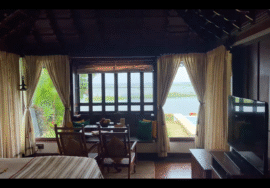
Their architecture frames the landscape.
Open spaces allow guests to watch wildlife and changing weather patterns.
Elevated structures provide different perspectives across the wilderness.
Outdoor areas create opportunities for guests to experience the sounds and atmosphere of the Delta without leaving the camp.
In this model, design is not simply decorative.
It becomes part of the safari.
Kwetsani’s renewed approach reflects this broader philosophy of integrating accommodation with its natural setting.
The Okavango Delta as the Main Attraction
No matter how sophisticated a safari camp becomes, the destination remains the primary attraction.
The Okavango Delta is one of Botswana’s defining tourism assets.
Its seasonal flood cycle transforms the landscape and supports a complex network of habitats.
This creates opportunities to experience wildlife in environments that can include waterways, islands, floodplains and woodland.
For travellers, the result is a safari that can feel dramatically different from a traditional game-drive experience.
The water is not simply scenery.
It influences how people move through the wilderness, how wildlife behaves and how the safari itself is experienced.
Wildlife Beyond the Game Drive
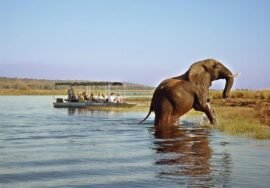
The Delta allows safari experiences to extend beyond the conventional vehicle-based game drive.
Depending on local conditions and camp operations, water-based experiences and other forms of exploration can provide different perspectives on the ecosystem.
This variety is increasingly valuable to luxury travellers.
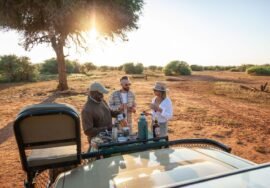
A guest may begin the day observing wildlife from a safari vehicle, experience the waterways later, and return to camp to watch the changing colours of the Delta at sunset.
The objective is not simply to accumulate activities.
It is to create a deeper relationship with the environment.
The New Definition of Safari Luxury
Luxury safari has traditionally been associated with exclusivity, high levels of service and premium accommodation.
Those elements remain important.
But expectations are evolving.
Today’s luxury traveller increasingly values:
- Privacy
- Personalised service
- Authenticity
- Sustainability
- Exceptional guiding
- Immersive experiences
- Architecture connected to nature
- Low-density tourism
A remote camp can therefore compete with a five-star urban hotel on very different terms.
The luxury is not only in what the guest receives.
It is in where the guest is able to experience it.
Sustainability and the Future of Safari Hospitality
The Okavango Delta is an ecosystem that requires careful stewardship.
That makes sustainability particularly important for hospitality operators working in the region.
Luxury tourism and conservation do not necessarily have to operate as competing priorities.
In fact, well-managed high-value, low-volume tourism can help make remote wilderness destinations economically valuable while limiting the pressure associated with mass tourism.
For properties such as Kwetsani, the challenge is to ensure that renewed infrastructure continues to support the destination’s ecological priorities.
The future of safari hospitality will increasingly depend on that balance.
Why Renovation Matters to the Safari Industry
The renewal of an established camp also highlights an important trend within African hospitality.
Many iconic safari properties were designed for an earlier generation of travellers.
Today’s guests often expect contemporary design, better connectivity between indoor and outdoor spaces, stronger sustainability credentials and more personalised experiences.
Renovation allows established properties to respond to those expectations without abandoning their location or identity.
That makes projects like Kwetsani relevant beyond one individual camp.
They demonstrate how Africa’s established safari infrastructure can evolve for a new generation.
Botswana’s Position in the Luxury Safari Market
Botswana has built a particularly strong reputation in the premium safari sector.
The country’s wilderness areas, conservation approach and emphasis on lower-density tourism have helped establish it as a preferred destination for high-value travellers.
The Okavango Delta is central to that proposition.
For luxury travel designers, Botswana provides the opportunity to create highly personalised itineraries around remote camps, exceptional wildlife and distinctive ecosystems.
Kwetsani’s renewal adds another dimension to that market.
It shows that luxury safari is not static.
Even established properties must continue to evolve.
What the Future Luxury Traveller Wants
The luxury traveller of the next decade may care less about conventional signs of opulence and more about access.
Access to wilderness.
Access to expert guides.
Access to remote landscapes.
Access to experiences that cannot easily be replicated elsewhere.
That changes the role of a safari camp.
The property is no longer simply accommodation.
It is the gateway through which the traveller experiences the destination.
Kwetsani’s reimagined identity fits naturally into this evolution.
The Bigger Picture
The significance of Kwetsani Camp goes beyond its individual refurbishment.
It represents a broader question facing the African luxury hospitality industry:
How can iconic safari properties evolve while protecting the wilderness that makes them valuable in the first place?
The answer will require more than attractive interiors.
It will require thoughtful architecture, responsible operations, conservation partnerships, strong guiding and a clear understanding of what today’s luxury traveller actually values.
The Okavango Delta remains the star.
The camp’s role is to help travellers experience it more meaningfully.
The Verdict
Kwetsani Camp’s new chapter reflects the direction in which luxury safari is moving.
Contemporary design is being combined with wilderness immersion.
Privacy is becoming as important as conventional luxury.
Sustainability is becoming central to the guest proposition.
And the safari camp itself is increasingly being designed as part of the landscape rather than simply placed within it.
For Botswana, this evolution strengthens an already powerful luxury tourism proposition.
For travellers, it creates another reason to experience the Okavango Delta.
And for the wider African hospitality industry, Kwetsani offers a useful example of how an established safari property can be renewed for a new generation without losing sight of the wilderness that made it special.