Tarangire National Park: Tanzania’s Elephant Country Beneath the Baobabs
Tanzania is famous for its great wildlife landscapes, but not every safari experience has to begin with the country’s most celebrated parks.
In northern Tanzania, Tarangire National Park offers a different interpretation of the classic safari.
Here, elephants move through open grasslands and woodland beneath enormous baobab trees, seasonal water sources shape wildlife movements and the landscape feels distinctly different from the vast plains associated with the Serengeti.
For travellers looking for wildlife, photography and a quieter safari atmosphere, Tarangire can be an important part of a northern Tanzania itinerary.
Its appeal lies not only in what travellers can see, but in the character of the landscape in which those encounters take place.
The Landscape That Defines Tarangire
The first thing many visitors notice about Tarangire is its scenery.
The park is characterised by open grasslands, woodland, seasonal wetlands and towering baobab trees.
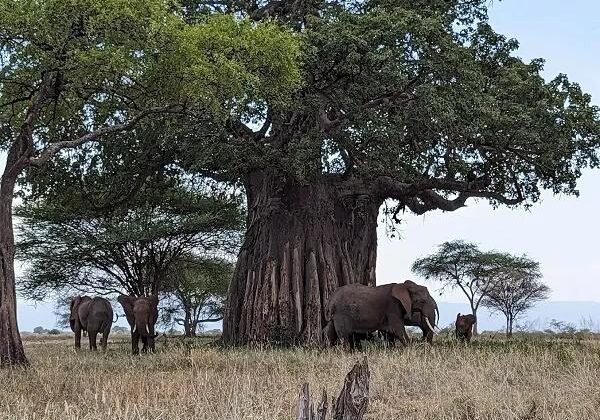
These trees have become one of Tarangire’s visual signatures, creating a dramatic backdrop for wildlife photography.
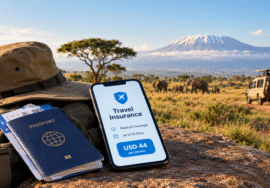
During a game drive, it is possible to see elephants moving through the landscape with massive baobabs rising behind them.
The combination is immediately recognisable as northern Tanzania, but the atmosphere is different from the open plains that dominate perceptions of an African safari.
Elephants at the Centre of the Experience
Tarangire is particularly associated with elephants.
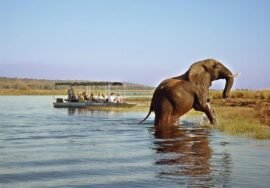
The park supports important elephant populations, and during periods when water becomes less widely available, wildlife can become concentrated around the Tarangire River and other remaining water sources.
For visitors, this creates opportunities for close observation of elephant behaviour.
Groups may be seen moving between feeding areas and water, while younger animals remain close to adults.
For photographers, the combination of elephants and baobab-dotted landscapes creates some of the park’s most compelling visual moments.
The Tarangire River
Water is central to understanding Tarangire.
The Tarangire River provides an important source of water for wildlife, particularly during the dry season when other sources may become less reliable.
As conditions change across the wider ecosystem, animals can move towards areas where water remains available.
This seasonal movement is one reason Tarangire can feel particularly wildlife-rich at certain times of year.
It also demonstrates an important principle of safari tourism: wildlife experiences are shaped by ecology rather than by fixed schedules.
The landscape determines where animals gather.
Beyond Elephants
Although elephants may be Tarangire’s most recognisable residents, they are far from the only attraction.
The park supports a diverse range of wildlife, including lions, leopards, buffalo, giraffes, zebras, wildebeest, antelope and numerous smaller species.
Birdlife adds another dimension.
For travellers interested in birdwatching, the variety of habitats creates opportunities to observe a wide range of species throughout the park.
This diversity means that Tarangire can appeal to more than the first-time safari traveller searching for the Big Five.
It can also reward repeat visitors who are interested in ecology, photography and less predictable wildlife encounters.
A Different Kind of Northern Tanzania Safari
Tarangire is often included in itineraries alongside other northern Tanzania destinations.
That positioning makes sense.
The park provides a different landscape and wildlife experience from the Serengeti, allowing travellers to experience greater variety within the same journey.
A carefully designed itinerary can combine Tarangire with other destinations across the northern circuit, creating a progression from woodland and baobab landscapes to open plains and other ecosystems.
For travel advisors, this diversity is valuable.
Rather than selling a safari as a collection of famous names, the itinerary becomes a journey through contrasting environments.
Why Tarangire Can Feel More Intimate
One of Tarangire’s attractions is its ability to offer a safari experience that can feel more relaxed than some of Tanzania’s busiest wildlife destinations.
The experience varies by season and location, but travellers may find opportunities to spend time observing wildlife without the same sense of concentration associated with the most heavily visited safari areas.
That can be especially appealing to couples, photographers and luxury travellers who value space and unhurried wildlife viewing.
The objective is not to avoid other visitors completely.
It is to create a safari where the landscape and wildlife remain the focus.
Tarangire for Photographers
Tarangire is particularly photogenic.
The combination of large mammals, dramatic trees, warm light and changing seasonal landscapes provides a wide range of photographic subjects.
Elephants beneath baobabs are an obvious highlight.
But the smaller details can be equally rewarding — birds, silhouettes, tracks, changing vegetation and the relationship between wildlife and water.
For photography-focused itineraries, the park can therefore provide a strong visual counterpoint to Tanzania’s other safari destinations.
Luxury in the Wilderness
Tarangire also fits naturally into the luxury safari market.
The surrounding area offers safari camps and lodges designed around low-density accommodation, personalised guiding and immersion in the landscape.
For luxury travellers, the attraction is increasingly less about conventional five-star features and more about privacy, access and the quality of the safari itself.
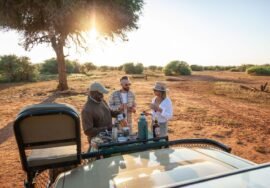
A private vehicle, experienced guide and flexible itinerary can allow travellers to spend more time following their interests rather than following a fixed group schedule.
The Importance of Responsible Safari Tourism
Tarangire’s appeal depends on the health of its wildlife and ecosystems.
That makes responsible tourism particularly important.
Wildlife areas need careful management of visitor numbers, vehicle behaviour, habitat and water resources.
Travellers can contribute by choosing responsible operators, following park regulations and respecting wildlife distances.
The goal should be simple:
To experience the landscape without compromising it.
For a destination whose identity is so closely tied to wildlife and ecological cycles, conservation is not separate from tourism.
It is the foundation of tourism.
When Should You Visit Tarangire?
Tarangire’s wildlife experience changes with the seasons.
The dry season is often particularly attractive for wildlife viewing because animals can become more concentrated around dependable water sources.
The wetter months bring changes of their own, with greener landscapes, seasonal movement and strong birding opportunities.
There is therefore no single answer for every traveller.
A photographer may want a different season from a birdwatcher.
A first-time safari visitor may prioritise concentrated wildlife.
A repeat visitor may prefer the greener landscape and quieter atmosphere.
For travel advisors, matching the season to the traveller’s priorities is more useful than simply promoting one universal “best time.”
Tarangire and the Future of Tanzania’s Safari Economy
As Tanzania’s safari industry evolves, destinations such as Tarangire have an important role to play.
Spreading visitor interest across different parks and experiences can help create more balanced tourism flows while giving travellers a broader understanding of Tanzania’s natural heritage.
The future of safari tourism is unlikely to be defined only by how many famous animals a traveller can see.
It will increasingly be about how responsibly those encounters happen, how local communities benefit and how landscapes are protected for future generations.
Tarangire’s model — wildlife, landscape, guiding and relatively intimate experiences — fits naturally into that conversation.
The Verdict
Tarangire may not carry the same global recognition as the Serengeti.
But that is part of its appeal.
Its elephants, baobabs, seasonal river and diverse wildlife create a safari experience with a distinctive visual and ecological identity.
For first-time visitors, it can add depth to a northern Tanzania itinerary.
For repeat safari travellers, it offers a different landscape to explore.
For photographers, it delivers extraordinary combinations of wildlife and scenery.
And for the luxury market, it provides the space and intimacy that increasingly define experiential safari travel.
In Tarangire, the safari is not simply about finding wildlife. It is about understanding the landscape that makes the wildlife possible.