

Jakarta Airport Reopens as Volcanic Ash Disrupts Thousands of Flights
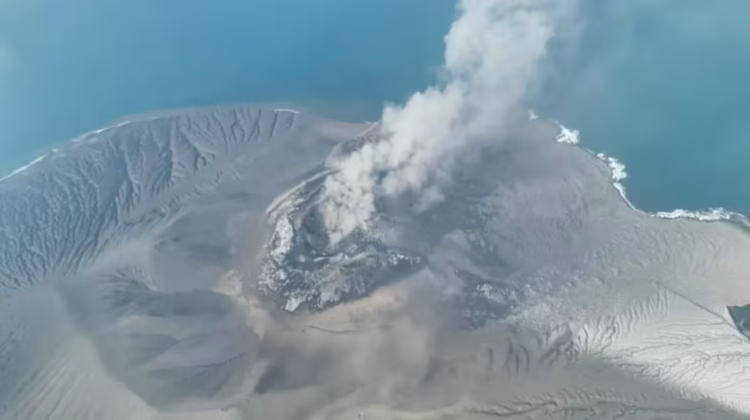
JAKARTA — Indonesia has reopened its main Jakarta airport and four other airports after volcanic ash from a series of eruptions at Mount Anak Krakatau forced their closure and disrupted air travel across the region.
Ash from the volcano, located between the islands of Java and Sumatra, spread across Jakarta and surrounding areas following an eruption late last week. The ash prompted authorities to temporarily shut down eight airports as a safety precaution, affecting hundreds of thousands of travelers.
Soekarno-Hatta International Airport, Jakarta’s main aviation hub, resumed operations on Tuesday after shifting winds moved volcanic ash away from the airport and nearby areas. Four other airports, including a smaller airport serving Jakarta and an airport in the neighboring city of Bandung, also reopened.
The reopening comes as Jakarta continues to strengthen its position as a major Asia-Pacific travel and business hub, making operational disruptions at the city’s airports particularly significant for airlines, travel companies and the wider regional tourism economy.
Another airport resumed operations on Monday, while two airports remain closed as authorities continue to monitor conditions.
Officials said additional inspections are required for aircraft that remained at Soekarno-Hatta during the shutdown. A total of 178 aircraft were at the airport and may require further checks before returning to normal operations.
The volcanic ash disruption affected approximately 341,000 passengers, with thousands of flights delayed, diverted or canceled across the affected airports.
The disruption highlights the vulnerability of Asia-Pacific aviation networks to sudden operational and environmental shocks. For airlines and travel businesses, such incidents reinforce the importance of contingency planning, alternative routing and real-time passenger communication.
Mount Anak Krakatau erupted three times on Tuesday, with the latest eruption recorded at 7:49 a.m. The intensity and impact of the eruptions were still being assessed.
Indonesia is home to around 130 active volcanoes and lies along the Pacific Ring of Fire, one of the world’s most seismically active regions. The area is characterized by frequent earthquakes and volcanic activity caused by the movement of tectonic plates.
Anak Krakatau, meaning “Child of Krakatau,” emerged from the sea roughly a century ago in the area once occupied by the legendary Krakatau volcano.
Krakatau’s massive eruption in 1883 destroyed much of the volcano and triggered devastating tsunamis. The disaster killed more than 36,000 people and remains one of the most significant volcanic catastrophes in recorded history.
The incident also follows other recent disruptions to Indonesia’s tourism infrastructure, underlining the importance of accurate destination-status information when natural events affect individual airports, attractions or regions.
Authorities continue to monitor Mount Anak Krakatau and surrounding airspace as aviation operations gradually return to normal. The situation is another reminder that regional connectivity and airport capacity remain critical to the resilience of Southeast Asia’s travel ecosystem.
This report is part of TheTravigator’s continuing news coverage of the travel, tourism, aviation, and hospitality sectors. Our editorial team publishes industry news, market insights, partnerships, policy developments, and business updates relevant to the travel trade community. For press releases, partnership opportunities, advertising enquiries, or editorial collaborations, please contact our editorial desk at:
INFO@THETRAVIGATOR.COM