
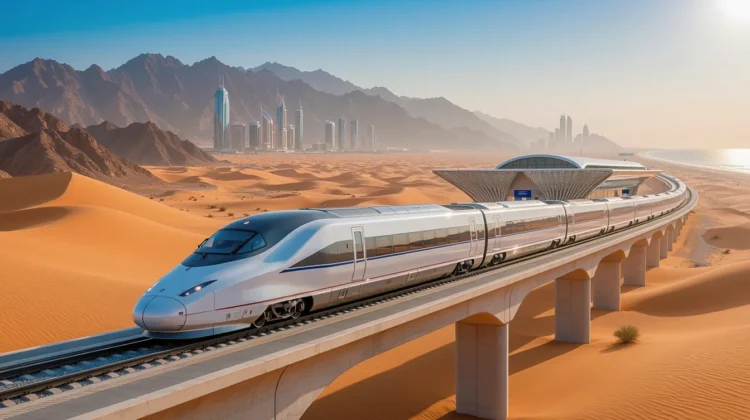
Etihad Rail: The 50-Minute Revolution Reshaping UAE Travel and Tourism
Etihad Rail: The 50-Minute Revolution Reshaping UAE Travel and Tourism
Not just a train. A mobility reset for 36 million annual passengers by 2030.
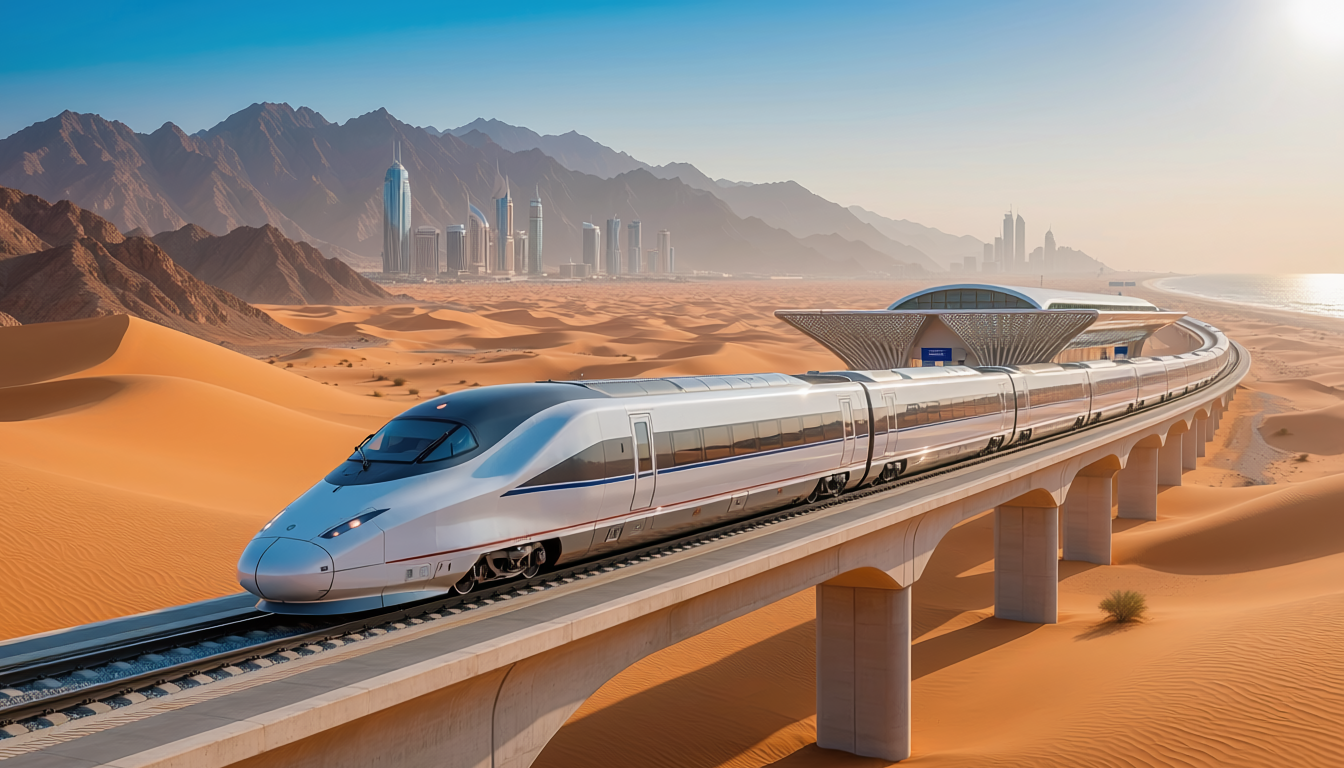
For the B2B travel trade, the UAE has just transformed from a collection of emirates into a unified destination.
Etihad Rail’s passenger network, launched in phases from June 2026, is compressing travel times, unlocking new tourism corridors, and fundamentally altering how residents and visitors move across the country.
The numbers demand attention. The network will eventually span 11 stations across all seven emirates, with each train carrying up to 400 passengers across economy, family, and first-class cabins. By 2030, annual ridership is projected to hit 36 million.
For Residents: A 40% Commute Cut
The Abu Dhabi–Dubai corridor will be covered in just 57 minutes on standard services—cutting commute times by up to 40%. Dubai to Fujairah drops from a two-hour highway crawl to roughly 50 minutes. This isn’t incremental improvement; it’s a spatial reconfiguration of the UAE.
For Tourists: A Seamless Multi-City Itinerary
Tour operators can now package Abu Dhabi’s culture, Dubai’s commerce, and Fujairah’s coastline into a single-day experience.
Business travellers gain productive work time with onboard Wi-Fi and power outlets. Families gain weekend beach access to Fujairah that feels practical, not punishing. For remote professionals, Al Ain becomes a realistic base when the capital is under an hour away.
The Gold Line metro integration at Jumeirah Golf Estates—Dubai’s first fully underground metro—will connect Etihad Rail directly to Dubai’s Red Line and eventually to the 42km Gold Line, creating a true multi-modal hub.
Nol card integration means passengers can use existing transit cards across rail, metro, buses, and taxis—reducing friction for inbound tourists. For DMCs and tour operators, this unlocks seamless group movement without the logistical headaches of coordinating road transport.
| Milestone | Date |
|---|---|
| Introductory phase: Abu Dhabi ↔ Fujairah | June 30, 2026 — 105 minutes |
| Dubai Station & Al Dhaid Station | September 30, 2026 |
| Al Dhafra Station | December 30, 2026 |
| Sharjah Station — University City | March 2027 |
The network will eventually connect 11 cities across all seven emirates through its full 900km route. For travel trade professionals, this means a staggered rollout with clear opportunities to build itineraries around each new station opening.
The UAE Railway Programme involves Dh50 billion (US$13.6 billion) in investments, with 70% targeting the local market.
The project is expected to contribute US$39.5 billion to the UAE economy over 50 years, driven by increased tourism, workforce mobility, and job creation.
Dh21 billion
from reduced carbon emissions
Dh8 billion
from road maintenance savings
Dh23 billion
from tourism benefits
9,000+ jobs
in railway and supporting sectors by 2030
Solo Travellers and Backpackers
Yes. The network’s affordability and safety make it ideal for independent travellers. With 400-passenger capacity across multiple classes, including family cabins, solo travellers can choose budget-friendly options while enjoying reliable, punctual service. The absence of road congestion anxiety and the ability to work or rest en route makes Japan’s shinkansen-style efficiency applicable here.
Business Travellers
The primary beneficiaries. The 57-minute Abu Dhabi–Dubai link and 50-minute Dubai–Fujairah route are designed for productivity. Meetings across emirates become day-trippable. A salesperson based in Sharjah can now close deals in Abu Dhabi and Dubai without losing six hours to traffic.
Families and Groups
Family cabins, pram storage folded before boarding, and the ability to travel with pets in approved carriers make rail a viable alternative to rental fleets. The introduction of child and infant ticketing policies—infants travel free on laps—aligns with family travel economics.
MICE and Incentive Groups
For corporate event planners, rail offers a premium group movement solution with predictable timing, first-class options, and the ability to book in advance. The network directly supports the UAE’s ambition to become a global business tourism hub.
Etihad Rail has introduced a clear passenger charter with fines ranging from Dh100 to Dh10,000. Key violations include:
| Fine | Offence |
|---|---|
| Dh200 | Feet on seats, travelling without ticket, fare evasion |
| Dh500 | Smoking, disruptive behaviour, boarding while moving |
| Dh5,000 | Tampering with safety equipment, throwing objects, trespassing |
| Dh100–Dh10,000 | Miscellaneous offences at operator’s discretion |
For tour operators, this means advising clients on acceptable conduct. For DMCs, it’s a compliance checklist to include in pre-trip briefings.
Etihad Rail is not merely a transport project. It is a tourism distribution channel—one that will reshape where travellers stay, how long they visit, and which destinations they can reasonably access.
For the Indian outbound market, Japan’s shinkansen lessons apply here: when travel time compresses, the destination map expands.
The trade that adapts early—building itineraries around rail connectivity, packaging multi-emirate experiences, and leveraging the Nol card ecosystem—will capture the first-mover advantage.
The 50-minute journey between Dubai and Fujairah isn’t just a commute. It’s a commercial opportunity.