
The Global Minefield: Cultural Taboos That Could Ruin Your Trip—and Your Reputation
From innocent gestures to international incidents, what travellers do not know can quickly cause offence
In 2018, a young American diplomat in Bangkok affectionately patted a Thai colleague’s son on the head. The room immediately fell silent. While harmless in his own culture, the gesture carried a very different meaning in Thailand, where the head is regarded as the most sacred part of the body. The diplomat reportedly spent months repairing relationships damaged in seconds.
International travel is filled with such invisible boundaries. A gesture, gift or dining habit that feels natural at home may be interpreted as disrespectful elsewhere. Understanding these cultural taboos is therefore not simply about displaying good manners; it can protect relationships, business opportunities and personal reputations.
Asia’s Etiquette Labyrinth
Across Thailand, Cambodia, Laos and Myanmar, the body is often understood through a symbolic hierarchy. The head represents spirit and intellect, while the feet are considered the lowest and least clean part of the body.
Travellers should never touch another person’s head, including that of a child. Pointing the feet towards a person or a Buddha image, sitting with the soles exposed or stepping over someone seated on the floor can also cause serious offence. Similar sensitivities are found in Indonesia, Malaysia, India and Nepal.
The use of the left hand is another important consideration. In India, Pakistan, Bangladesh, Nepal, Sri Lanka and much of the Middle East, it is traditionally associated with personal hygiene. Eating, shaking hands, exchanging money or accepting a gift with the left hand may therefore be seen as disrespectful. Using the right hand for greeting, giving and receiving is the safer approach.
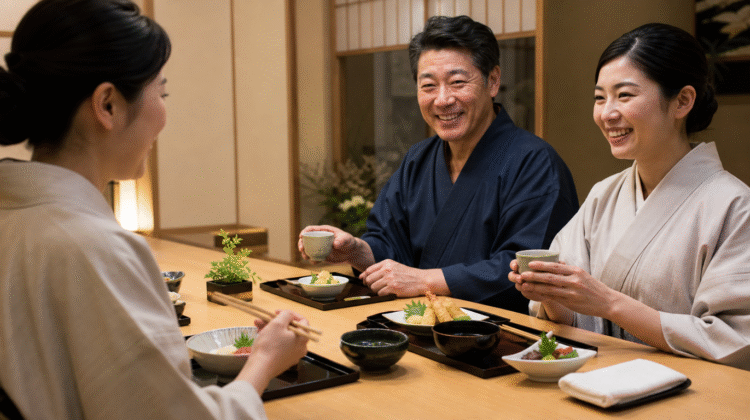
Chopsticks come with their own cultural rules across China, Japan, Korea and Vietnam. They should never be left standing upright in a bowl of rice because the arrangement resembles funeral incense. Passing food directly from one pair of chopsticks to another recalls Japanese funeral rituals involving cremated bones. Pointing with chopsticks or using them to spear food is also considered impolite.
In China and Korea, writing a living person’s name in red ink should be avoided. Red was traditionally used for the names of the deceased on tombstones and funeral banners, giving the act a deeply uncomfortable meaning.
When a Well-Intended Gift Goes Wrong
Gift-giving customs can be particularly complex in China because certain words carry symbolic associations.
Clocks are avoided because the Mandarin expression for giving a clock resembles the phrase for attending a funeral. Umbrellas can suggest separation, pears may represent parting, and shoes can symbolise someone walking out of a relationship. A green hat carries an especially insulting suggestion of marital infidelity.
Tea, fine wine, red envelopes containing money for celebrations and fruit baskets without pears are considered safer alternatives.
Flowers also require careful attention in Russia and parts of Eastern Europe. Even-numbered bouquets are associated with funerals, while odd numbers are reserved for celebrations. Yellow flowers may symbolise betrayal, while chrysanthemums and lilies are closely connected with mourning.
Similar sensitivities exist across Europe. Red roses usually suggest romantic intentions, chrysanthemums are widely associated with funerals, and white lilies carry mourning symbolism in several Catholic countries.
Knives, scissors and other sharp objects can be problematic gifts in Korea, Japan and parts of China because they represent cutting ties. When such an item must be given, the recipient may offer a symbolic coin so that the object is technically “purchased” rather than received as a gift.
Europe’s Unwritten Social Rules
Time carries different meanings across Europe. In Germany, Switzerland and Austria, punctuality is closely connected with respect. Arriving even a few minutes late can leave a poor impression.
Dinner invitations in Spain, Italy and Greece may work differently. Arriving exactly on time can sometimes mean reaching the venue before the host is ready, while arriving around 15 minutes later is generally considered acceptable.
Public conduct also matters in Germany, the Netherlands and Scandinavia. Spitting in public, chewing gum while speaking and openly boasting about salaries or personal wealth may be considered vulgar, unprofessional or embarrassing.
Where Etiquette Can Become a Legal Matter
In Saudi Arabia, the UAE, Qatar and Oman, travellers should be especially careful about local rules surrounding alcohol, public behaviour and the use of the left hand.
Alcohol is illegal or heavily restricted in several Gulf states, while public intoxication can result in imprisonment or deportation. Public displays of affection may also attract official attention, particularly in Saudi Arabia.
Photography requires similar caution. Women should never be photographed without explicit permission. Government buildings, airports and military installations must also be avoided, as taking pictures may lead to detention or confiscation of equipment. People wearing traditional clothing should always be asked before being photographed.
Thailand’s monarchy must be treated with complete respect. Insulting members of the royal family is illegal under the country’s lèse-majesté laws, with sentences of up to 15 years in prison. Stepping on currency carrying the king’s image or making jokes about the monarchy can carry severe consequences.
The Dining Table Minefield
Food customs reveal some of the strongest cultural differences.
In India and Nepal, beef can cause offence because cows are sacred to Hindus, while pork is forbidden in Muslim households. In some Indian dining situations, leaving a small amount of food may indicate satisfaction, while an empty plate can encourage the host to serve another helping.
In Japan, slurping noodles is considered a sign of enjoyment, but blowing one’s nose at the table is unacceptable. Diners should excuse themselves instead. Pouring one’s own drink may also be considered rude; guests traditionally pour drinks for one another.
During Ramadan in Muslim countries, eating, drinking or smoking publicly during daylight hours can be deeply offensive and may also be illegal. Pork is forbidden, while alcohol is prohibited in many destinations.
Tipping customs also vary considerably. In the United States, a tip of 15–20% is standard, and failing to leave one can be insulting. In Japan, tipping may cause offence because it can imply that the employee is not properly paid. Tipping is optional in Australia and New Zealand, while in Europe it is generally appreciated, although travellers should first check whether a service charge has already been included.
When Familiar Gestures Become Insults
A thumbs-up may signal approval in the United States, the United Kingdom and parts of Europe, but it carries an offensive meaning in Iran, Israel, Afghanistan and parts of the Middle East.
The familiar “OK” gesture also changes meaning across borders. In France, it may mean “zero” or “worthless.” In Brazil, Turkey and some Mediterranean countries, it becomes a serious insult. In Japan, the same gesture can refer to money rather than approval.
Beckoning someone with an index finger should be avoided across Asia and the Middle East, where it may be associated with summoning animals or carry other degrading meanings. In the Philippines, the gesture is particularly inappropriate. The respectful alternative is to use the whole hand with the palm facing down.
Strict Rules and Quiet Superstitions
Singapore is known for strict controls on public behaviour. The import and sale of chewing gum are heavily restricted, while improperly discarded gum can result in fines of up to S$1,000. Littering and spitting are also punishable offences, with repeat littering offenders potentially facing caning.
Australia and New Zealand may appear socially relaxed, but sensitivities remain. Suggesting that New Zealanders are simply Australians can cause offence. Shoes should be removed before entering Māori homes, and loudly blowing one’s nose in public may be viewed as crude.
Some customs are rooted in superstition rather than formal etiquette. Whistling indoors in Russia, Turkey and parts of Eastern Europe is believed to drive away money and good fortune. In Japan, China and Korea, opening a gift immediately in front of the giver can make the recipient appear impatient or greedy. Gifts are often opened privately later.
The Traveller’s Code
The safest approach is to observe local behaviour before acting. Travellers should learn how people greet one another, use the right hand when giving or receiving items, avoid touching anyone’s head, remove shoes where required and check local rules before presenting gifts.
Hand gestures should never be assumed to have universal meanings. Alcohol restrictions, religious practices, royal institutions and photography rules must also be treated seriously.
Most importantly, when a mistake occurs, a sincere apology can prevent an awkward moment from becoming a lasting conflict.
Every cultural taboo reflects something a society values, whether it is spirituality, cleanliness, hierarchy, loyalty or symbolic intention. Respecting these customs is not about memorising arbitrary rules. It is about recognising that travel takes place within living cultures whose traditions deserve the same consideration travellers expect for their own.
This report is part of TheTravigator’s continuing news coverage of the travel, tourism, aviation, and hospitality sectors. Our editorial team publishes industry news, market insights, partnerships, policy developments, and business updates relevant to the travel trade community. For press releases, partnership opportunities, advertising enquiries, or editorial collaborations, please contact our editorial desk at:
INFO@THETRAVIGATOR.COM