

Medical Tourism: Connecting Patients with Global Healthcare
When Healing Meets Hospitality, and Storytelling Becomes a Lifeline
I met Adebayo in a hospital corridor in Chennai, a city that has become synonymous with world-class healthcare at a fraction of Western costs. He was a businessman from Nigeria, his wife beside him, his young daughter recovering from a complex cardiac procedure that would have cost five times as much in London or New York. His face bore the unmistakable expression of someone who had moved from fear to relief—the quiet joy of a parent who had found hope in an unfamiliar land.
“Three months ago, I didn’t know India existed on a map,” he told me, his accent softening the bluntness of his words. “Now, I feel like I’ve discovered a second home. The doctors, the nurses, the people—they treated my daughter like their own. The hospital arranged everything. Hotel, transport, even a translator. I couldn’t have done this alone. I found the hospital through an article I read online, a travel piece about healthcare in India. That story changed my daughter’s life.”
His words stayed with me long after our conversation ended. They were a testament to the profound power of travel media—not merely to inspire wanderlust but to transform lives. Medical tourism, at its core, is not about tourism at all. It is about hope, about the desperate search for healing, about the courage to venture into the unknown for the sake of those we love. And at the intersection of healthcare and hospitality, travel media serves as both guide and guardian, connecting patients with the care they need and the dignity they deserve.
The Emergence of a Global Industry
Medical tourism has evolved into one of the fastest-growing segments of international travel, transforming the landscape of global healthcare. Every year, millions of patients cross borders seeking affordable, high-quality medical treatment, specialised procedures, and shorter waiting times than their home countries can provide. It is a phenomenon born of necessity and nurtured by opportunity—the recognition that healthcare, like so many other aspects of modern life, is increasingly a global marketplace.
The numbers are staggering. What was once a niche pursuit for the wealthy seeking elective procedures has become a mainstream option for patients across the socioeconomic spectrum. Dental work in Mexico, knee replacements in Thailand, cardiac surgery in India, fertility treatment in Spain, cosmetic procedures in Turkey—the range of treatments and destinations has expanded dramatically.
Yet medical travel is fundamentally different from leisure travel. It carries emotional weight, financial risk, and life-changing consequences. Patients are not simply seeking a pleasant experience; they are seeking solutions to urgent problems. The information they require is not merely interesting but essential. They need to understand the qualifications of healthcare providers, accreditation standards, treatment costs, visa requirements, accommodation options, recovery facilities, and post-operative care—a complex web of considerations that can feel overwhelming to navigate alone.
The Role of Travel Media in Medical Tourism
This is where travel media, at its most purposeful, steps in. Professional travel journalists help simplify this complex information while presenting balanced perspectives on healthcare destinations. They translate medical jargon into accessible language. They explain the accreditation systems that distinguish reputable facilities from questionable ones. They outline the realistic costs and outcomes that patients can expect. They address the practical considerations—visas, travel arrangements, accommodation, aftercare—that determine whether a medical journey is feasible.
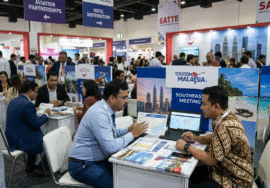
Countries such as India, Thailand, Singapore, Turkey, Malaysia, and South Korea have emerged as leading medical tourism hubs, and travel media has been instrumental in this ascent. Through documentaries, travel features, hospital partnerships, and destination campaigns, the media has highlighted their advanced medical technologies, internationally trained specialists, and comprehensive patient services. These stories help reduce uncertainty and encourage informed decision-making among prospective patients.
Mr. Sumit Tuli, Editor of TheTravigator, has seen this evolution unfold from within the industry. “Medical tourism represents a convergence of two sectors that were traditionally separate—healthcare and hospitality,” he observes. “The patient is no longer just a patient; they are a traveller, a guest, a consumer of services that extend far beyond the operating theatre. Travel media has had to adapt its storytelling to address this new reality, providing the detailed, verified information that medical travellers need while maintaining the engagement and accessibility that characterises good journalism.”
This report is part of TheTravigator’s continuing news coverage of the travel, tourism, aviation, and hospitality sectors. Our editorial team publishes industry news, market insights, partnerships, policy developments, and business updates relevant to the travel trade community. For press releases, partnership opportunities, advertising enquiries, or editorial collaborations, please contact our editorial desk at:
INFO@THETRAVIGATOR.COM