Tunisia: Where Ancient Empires Meet Mediterranean Charm
Tunisia: Where Ancient Empires Meet Mediterranean Charm
An Authentic North African Escape
There are countries that overwhelm you with grand monuments, and then there are countries that quietly win your heart. Tunisia belongs to the latter. I arrived expecting Roman ruins and Mediterranean beaches, but I left with memories of jasmine-scented evenings, conversations in centuries-old cafés, turquoise waters, bustling medinas and a culture that beautifully blends Arab, Berber, Mediterranean and European influences.
Often overshadowed by its larger North African neighbours, Tunisia offers something increasingly rare in modern travel—an authentic experience that is rich in history yet refreshingly uncrowded. For Indian travellers seeking a destination beyond the usual tourist trail, Tunisia is an elegant introduction to North Africa, where every town tells a different story and distances between attractions are surprisingly short.
Tunis, Carthage and Sidi Bou Said
My journey began in Tunis, the country’s lively capital where old and new exist side by side. The UNESCO-listed Medina of Tunis is a maze of narrow lanes lined with whitewashed buildings, colourful wooden doors and hidden courtyards. Every turn revealed artisan workshops where craftsmen hammered copper trays, painted hand-crafted ceramics or carefully wove traditional carpets using techniques passed down through generations.
One elderly shopkeeper invited me inside his tiny perfume store, explaining how jasmine has become one of Tunisia’s most cherished symbols. The delicate fragrance floated through the air as he described how locals wear fresh jasmine flowers behind their ears during the summer months—a simple tradition that reflects Tunisia’s relaxed Mediterranean lifestyle.
Just outside the capital lies one of the Mediterranean’s greatest archaeological treasures—Carthage. Once the powerful rival of ancient Rome, its ruins overlook the sparkling Gulf of Tunis. Walking among the remnants of Roman baths, villas and amphitheatres, it is easy to imagine the grandeur of one of history’s greatest civilizations. The site’s unique USP lies in its extraordinary blend of Punic, Roman and Byzantine heritage, making Carthage one of North Africa’s most fascinating historical destinations.
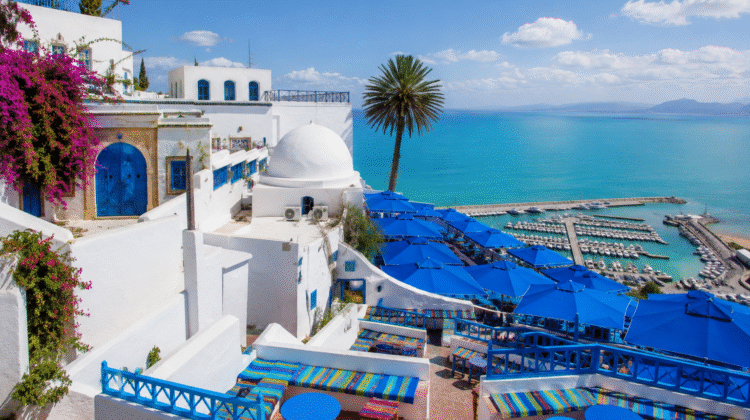
Nearby, the picturesque village of Sidi Bou Said feels almost dreamlike. Perched on a hill above the Mediterranean, its whitewashed houses with brilliant blue doors and flowering bougainvillea resemble a living postcard. Artists paint in quiet courtyards while cafés overlook the sea, serving strong Arabic coffee and traditional mint tea. Watching the sunset from one of its cliffside terraces remains one of the most memorable moments of my journey.
Heritage and beaches.
Wellness and seaside resorts.
Islamic heritage and architecture.
Beyond the Capital
Further south, the coastal city of Sousse showcases Tunisia’s perfect balance between heritage and leisure. Its UNESCO-listed medina preserves centuries of history, while nearby beaches attract visitors looking for relaxation and water sports. Along the marina at Port El Kantaoui, fishing boats share the harbour with luxury yachts, reflecting Tunisia’s growing appeal as a Mediterranean holiday destination.
Equally inviting is Hammamet, often called Tunisia’s premier beach resort. Golden beaches, boutique hotels, elegant seaside promenades and excellent wellness resorts make it particularly popular among honeymooners and families. Yet beyond the beaches, the old medina reveals traditional markets where artisans sell embroidered textiles, olive wood crafts and colourful ceramics unique to the region.
One of Tunisia’s most spiritually significant destinations is Kairouan, regarded as one of Islam’s holiest cities. The magnificent Great Mosque, with its impressive stone courtyard and centuries-old architecture, stands as one of the finest examples of early Islamic design in North Africa. Walking through its peaceful streets offered a deeper understanding of Tunisia’s religious and cultural heritage while local bakeries tempted visitors with freshly made Makroud—date-filled semolina pastries that have become one of the city’s culinary signatures.
Djerba, Tozeur and the Sahara
For travellers seeking something beyond the classics, Tunisia’s emerging destinations reveal another side of the country. The island of Djerba has become increasingly popular for its laid-back beaches, traditional villages and multicultural heritage. Whitewashed homes, lively markets and some of North Africa’s oldest Jewish heritage sites make the island remarkably diverse. Camel rides along quiet beaches and seafood lunches overlooking the Mediterranean create an atmosphere far removed from crowded resort towns.
Adventure enthusiasts are beginning to discover the dramatic landscapes of Tozeur and the vast Sahara Desert. Surrounded by thousands of date palms, Tozeur serves as the gateway to spectacular desert adventures. Four-wheel-drive excursions across rolling sand dunes lead to hidden oases such as Chebika and Tamerza, where waterfalls unexpectedly emerge amid rocky desert landscapes. The region’s dramatic scenery has even appeared in several international films, adding to its growing appeal.
One unforgettable evening was spent beneath a canopy of stars in the Sahara. Around a campfire, local Berber musicians played rhythmic drums while sharing stories of desert caravans that once connected North Africa with sub-Saharan trade routes. It was a reminder that Tunisia’s heritage is not confined to museums—it continues to live through music, storytelling and hospitality.
Food, Culture and Planning
Food quickly became one of the highlights of the journey. Tunisia’s cuisine combines Mediterranean freshness with North African spice. Fragrant couscous, grilled seafood, slow-cooked lamb and the fiery chilli paste known as harissa appear on nearly every table. Fresh olive oil, locally grown dates and handmade pastries reflect the country’s agricultural richness. Meals are rarely rushed; they are opportunities for families and friends to gather, converse and celebrate everyday life.
Markets remain at the heart of Tunisian society. Whether bargaining for handwoven rugs, tasting locally produced olive oil or watching potters shape clay into colourful ceramics, every encounter offered a glimpse into traditions that have endured for centuries. The warmth of local people transformed simple shopping trips into memorable cultural exchanges.
For Indian travellers, Tunisia offers several practical advantages. The country’s relatively compact geography allows visitors to experience beaches, ancient ruins, desert landscapes and vibrant cities within a single itinerary. Comfortable hotels, reliable road connections and experienced local guides make travel convenient, particularly for first-time visitors to North Africa. Tunisia also pairs exceptionally well with Egypt or Morocco for travellers looking to explore multiple destinations in one long-haul holiday.
The ideal time to visit is during spring (March to May) and autumn (September to November), when temperatures are pleasant for sightseeing. Lightweight clothing, comfortable footwear and modest attire for religious sites are recommended. Travellers should also carry comprehensive travel insurance, use licensed guides and registered transport providers, and review the latest official travel advisories before departure. Staying informed about local conditions and respecting local customs contribute to a safe and rewarding journey.
Tunisia’s greatest USP lies in its remarkable diversity packed into a relatively small country. Within a few hours, travellers can explore Roman cities, Islamic monuments, Mediterranean beaches, charming villages and the vast Sahara Desert. It is a destination that rewards curiosity rather than hurried sightseeing—a place where every ancient stone carries a story, every coastal breeze brings a sense of calm and every shared meal creates a lasting connection. Tunisia may not be North Africa’s loudest destination, but it is undoubtedly one of its most captivating.
B2B Industry Take
Tunisia can be positioned as a value-driven North Africa product for culture-focused Indian travellers. Its advantage lies in compact routing, beach-and-heritage diversity and easy itinerary planning. Tour operators should market Tunisia as a sophisticated short-stay destination that combines Roman archaeology, Mediterranean leisure, desert adventures and cultural experiences, especially for repeat international travellers.