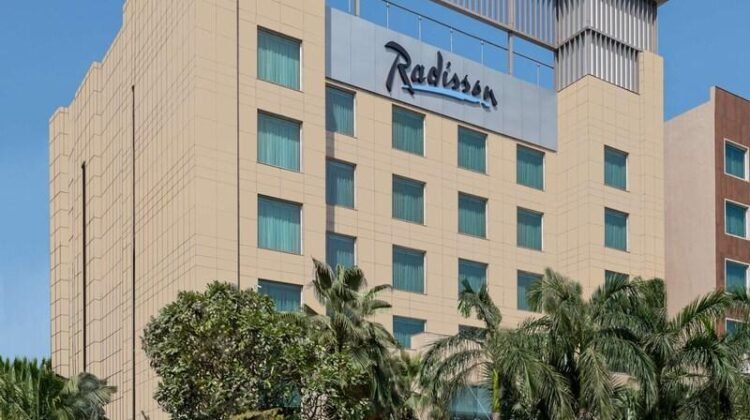
Radisson Unveils ‘India Booster’ as Hotel Group Targets 500 Properties by 2030
Radisson Hotel Group is putting India at the centre of its global growth strategy, with the international hospitality company preparing an “India Booster” plan aimed at accelerating expansion to 500 hotels in the country by 2030.
The strategy was outlined by Chema Basterrechea, Global President and COO of Radisson Hotel Group, in an interview with The Economic Times. Radisson currently operates 146 hotels with nearly 15,946 rooms in India and expects to cross the 150-operating-hotel mark by December 2026.
The target would take the group’s operating footprint to more than three times its current level within four years, making India one of the most important development markets in Radisson’s global portfolio.
India moves to the centre of Radisson’s growth strategy
Basterrechea said India is being treated as a central component of the group’s expansion strategy after nearly three decades of operations in the country.
Radisson already has close to 250 hotels in India when operating and pipeline properties are combined, according to Basterrechea. The company’s “India Booster” framework is intended to concentrate financial and human resources on achieving the 500-hotel objective.
The strategy builds on a significant development pipeline already established in the country.
In July, Radisson said it had 142 operating hotels across 86 Indian cities, with nearly 100 properties in its development pipeline. The group also described India as one of the world’s most promising hotel-development markets, citing demand, infrastructure improvements and owner confidence.
The difference between those figures reflects the pace at which the portfolio has been expanding during 2026.
Tier-II and Tier-III cities become critical to the next phase
The most significant element of Radisson’s India strategy is geographical.
Rather than concentrating expansion exclusively on India’s largest metropolitan markets, the group has been building its presence across Tier-II and Tier-III cities, pilgrimage centres, leisure destinations and emerging travel corridors.
Radisson has historically pursued this approach. More than half of its India portfolio has previously been concentrated in Tier-II and Tier-III markets, with the group highlighting its first-mover position in a number of emerging destinations.
Recent developments have included markets such as Ujjain, Vrindavan, Sonamarg, Raipur, Jhansi, Kevadia and other destinations outside India’s traditional hotel hubs.
That geographic strategy is increasingly aligned with the broader evolution of India’s travel economy.
Why India’s smaller cities matter
The expansion of branded hotels into smaller cities is being supported by several structural changes.
Improved highways, regional airports, pilgrimage tourism, weddings, domestic leisure and rising consumption are creating new demand outside the established metropolitan hotel markets.
Radisson’s strategy therefore goes beyond adding rooms. It is positioning branded hospitality closer to where India’s domestic travel demand is developing.
The group’s current India network already covers a wide range of destinations, with Radisson’s own India destination platform listing 146 properties across cities including Agra, Ahmedabad, Amritsar, Ayodhya, Bengaluru, Bhopal, Coimbatore, Dharamshala and Dhanbad, among others.
For tour operators and destination management companies, the expansion of recognised international brands can also make emerging destinations easier to package for leisure groups, corporate travellers and MICE programmes.
The 500-hotel target comes amid a wider hotel expansion cycle
Radisson’s move comes as international and Indian hotel companies accelerate expansion across India’s regional markets.
TheTravigator’s recent analysis of India’s hotel-development landscape found that more than half of new hotel signings over the previous three years were outside major metropolitan markets, while more than 19,000 rooms entered India’s supply chain in 2025 through new builds, conversions and affiliations.
Radisson is therefore entering a competitive expansion cycle in which global brands are increasingly pursuing the same emerging-city opportunity.
The company’s existing network gives it a significant starting point, but the 500-hotel objective will require a substantial increase in development activity, ownership partnerships, conversions and management agreements.
From 146 hotels to 500: the scale of the ambition
The numbers illustrate the scale of the proposed expansion:
| Indicator | Radisson India |
|---|---|
| Current operating hotels | 146 |
| Current rooms | 15,946 |
| Target by December 2026 | 150+ operating hotels |
| Combined operating + pipeline portfolio | Nearly 250 hotels |
| 2030 target | 500 hotels |
The 500-property objective is not simply a continuation of the group’s existing expansion pace. It represents a major acceleration in the number of hotels Radisson expects to have operating in India.
At the same time, Radisson has already demonstrated a willingness to enter destinations where international branded accommodation remains limited.
A new competitive phase for Indian hospitality
Radisson’s India strategy also reflects a broader change in how global hotel companies view the country.
India is no longer primarily a metropolitan hotel opportunity. Demand from domestic travellers is pushing branded hospitality into pilgrimage centres, leisure destinations, industrial cities and fast-growing regional economies.
For hotel owners, the growing presence of international brands can provide access to established distribution networks, loyalty programmes, brand standards and revenue-management systems.
For travellers, it expands the availability of internationally recognised accommodation across destinations that previously had fewer branded options.
For the travel trade, the effect could be equally important: more reliable hotel inventory in emerging destinations makes it easier to construct multi-city itineraries and sell regional travel products.
Radisson’s India expansion enters a new phase
Radisson has spent nearly three decades building its India presence. The “India Booster” strategy now signals an attempt to move from established scale to nationwide depth.
Crossing 150 operating hotels would be the immediate milestone. The much larger objective is 500 hotels by 2030, with Tier-II, Tier-III and emerging travel markets expected to play a central role.
If the planned development pipeline converts into operating properties at the anticipated pace, Radisson’s expansion will add another major dimension to India’s rapidly evolving branded-hospitality landscape.
The next phase of India’s hotel growth is increasingly being shaped not only by the country’s biggest cities, but by the destinations beyond them.
RadissonHotelGroup #ChemaBasterrechea #IndiaBooster #HospitalityExpansion #RadissonIndia #Tier2Tier3 #HotelIndustry #IndianHospitality