Middle East Tourism Faces $600 Million Daily Hit as Iran Conflict Disrupts Air Connectivity
The economic impact of the conflict involving Iran is extending well beyond the immediate aviation disruption, with the World Travel & Tourism Council (WTTC) estimating that the Middle East’s Travel & Tourism sector is being affected by at least US$600 million a day in international visitor spending.
The estimate, released by WTTC in March 2026, reflects the combined effect of disrupted air travel, weaker traveller confidence and interruptions to regional connectivity. WTTC said the Middle East accounts for around 5% of global international arrivals and 14% of global international transit traffic, making disruption across its aviation network significant for destinations and travel businesses well beyond the conflict zone.
Airspace disruption puts regional tourism flows under pressure
The Middle East occupies a crucial position in the global aviation network, with major hubs connecting Europe, Asia, Africa and the Americas.
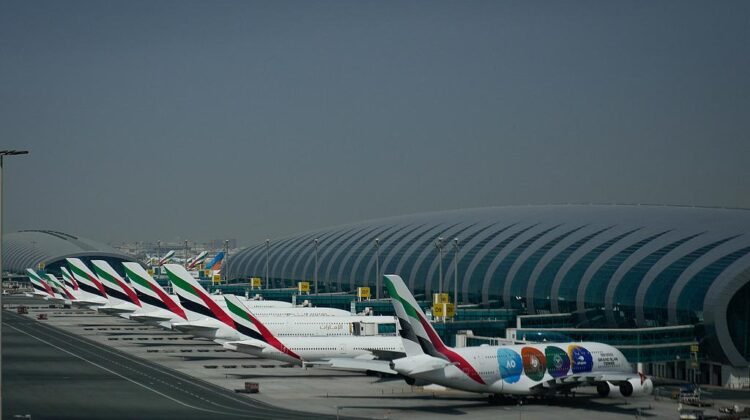
WTTC identified Dubai, Abu Dhabi, Doha and Bahrain among the major aviation hubs affected by closures and operational disruption during the escalation of the conflict. Together, these airports normally handle around 526,000 passengers a day.
When routes through the region are disrupted, the consequences extend beyond cancelled or delayed flights.
Airlines have to reroute aircraft, passengers face longer journeys and connecting itineraries become more complicated. Hotels, car-rental companies, airports, cruise operators and other tourism businesses can also experience the effects as travellers reconsider trips or postpone bookings.
For international visitors using the Gulf as a transit point, even a disruption that does not directly involve their final destination can affect the feasibility and cost of the journey.
The $600 million figure reflects lost international visitor spending
The WTTC estimate is specifically an assessment of international visitor spending affected each day. It should not be interpreted as a direct measure of tourism-company revenue losses or a calculation of the region’s total economic output lost each day.
WTTC based its assessment on its 2026 pre-conflict forecast of US$207 billion in international visitor spending across the Middle East for the year.
That distinction matters because tourism spending flows through a large network of businesses.
A visitor who does not make a trip may simultaneously remove spending from an airline, hotel, restaurant, attraction, taxi operator, retailer and tour company.
The resulting impact can therefore spread through the tourism supply chain even when individual businesses are not located near the affected airspace.
Aviation is transmitting the shock across borders
The aviation sector is at the centre of the immediate disruption.
The Middle East’s major hubs function not only as destinations but also as critical connecting points for international passengers. When aircraft cannot use established routes or when airports experience operational restrictions, airlines must adjust schedules and routing.
For travellers from South Asia heading towards Europe, North America or other regions, the consequences can include longer routing, changed connections and increased uncertainty.
The same applies in the opposite direction for international travellers using Gulf hubs to reach destinations across India, Southeast Asia and other parts of Asia.
This makes Middle Eastern aviation disruption a regional tourism issue rather than a problem confined to individual countries.
Traveller confidence becomes a second economic pressure
Airspace restrictions represent the immediate operational problem, but WTTC also identified traveller confidence as a factor affecting demand.
This can create a second layer of disruption.
Even where flights continue to operate, travellers may postpone holidays or choose alternative routes and destinations when they perceive uncertainty around safety, connections or potential cancellations.
For the travel trade, that uncertainty can affect bookings before any actual cancellation occurs.
Tour operators may see customers delay decisions, airlines may face changes in booking patterns, and hotels can experience softer demand as international visitors reassess travel plans.
Middle East tourism entered the crisis from a position of strength
The disruption is occurring against a backdrop of strong tourism performance across the region.
WTTC’s April 2026 Economic Impact Research showed that Middle East Travel & Tourism grew 5.3% in 2025, ahead of the global growth rate of 4.1%. International visitor spending increased 5.2% during the year, while the sector contributed US$385.8 billion to regional GDP and supported 7.1 million jobs.
The latest WTTC Global Trends analysis subsequently projected a sharp short-term contraction in the region’s Travel & Tourism economy as a result of the conflict and associated disruption.
WTTC said in August that Middle East Travel & Tourism GDP was forecast to decline 14.5% in 2026, from $386 billion in 2025 to $330 billion. The council nevertheless characterised the disruption as a short-term challenge within a longer-term growth story for the region.
Gulf hubs face a wider connectivity challenge
For Dubai, Abu Dhabi, Doha and Bahrain, the issue is particularly important because aviation and tourism are deeply interconnected with their economic models.
The hubs serve millions of passengers who may never leave the airport during a connection. Nevertheless, those passengers support airlines, airports, airport retailers, ground-handling companies and other aviation-related businesses.
At the same time, passengers who do stay in the region contribute to hotels, restaurants, attractions and other tourism services.
A prolonged disruption can therefore affect both transit traffic and destination tourism.
The shock reaches West and South Asian markets
The impact also extends into travel markets connected to the Middle East.
South Asian airlines and travellers have traditionally relied heavily on Gulf hubs for international connectivity. Changes to Middle Eastern airspace can therefore affect journey times, schedules and network economics for markets including India and neighbouring countries.
For travel companies, the consequences can include itinerary changes, additional operating costs and the need to identify alternative connections.
The broader lesson for the region’s travel industry is that connectivity itself has become an economic asset — and disruptions to that connectivity can rapidly affect tourism demand.
Recovery will depend on restoring confidence and connectivity
WTTC has stressed that Travel & Tourism has historically demonstrated considerable resilience following crises.
Its research into previous crises found that tourism demand following security-related incidents can recover relatively quickly when governments and industry cooperate to restore traveller confidence and support affected travellers. WTTC has cited cases where recovery occurred within roughly two months following security-related incidents.
That does not mean the current disruption will follow the same timetable.
The duration and scale of recovery will depend on security conditions, aviation access, airline schedules, government measures and traveller sentiment.
For the Middle East’s tourism industry, restoring predictable connectivity will remain one of the most important requirements for rebuilding international demand.
A regional tourism shock with global implications
The US$600 million daily estimate illustrates how closely modern tourism economies are tied to aviation networks.
The Middle East is simultaneously a destination region and one of the world’s most important international transit corridors. Disruption in one part of that system can therefore affect airlines, airports, hotels and travel companies across several continents.
The immediate challenge is geopolitical and operational. The economic consequences, however, extend across the tourism supply chain.
For the travel industry, the episode is another reminder that air connectivity, traveller confidence and tourism spending are increasingly inseparable.
#WTTC #MiddleEastTourism #AviationDisruptions #AviationEconomics #TravelIndustryNews #GlobalTourismImpact #FlightRerouting