India Launches National Digital Tourism Stack as AI Takes Centre Stage on World Tourism Day 2026
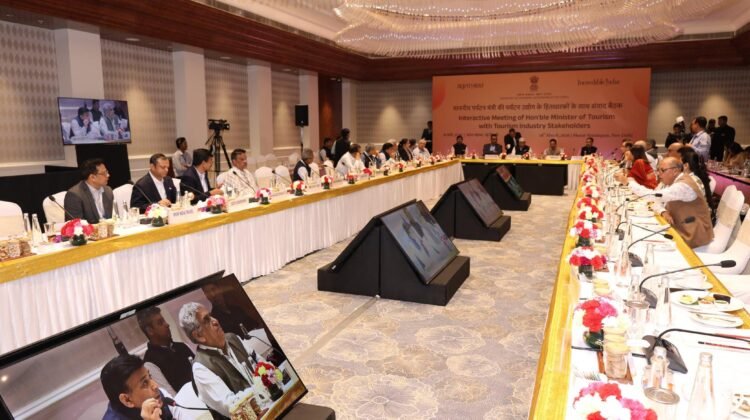
NEW DELHI: India is putting digital infrastructure and artificial intelligence at the centre of its tourism strategy as the country marks World Tourism Day 2026, with the Ministry of Tourism launching the National Digital Tourism Stack at Bharat Mandapam in New Delhi.
The initiative comes under this year’s global theme, “Digital Agenda and Artificial Intelligence to Redesign Tourism,” and represents a shift towards building a more connected digital architecture for India’s tourism ecosystem. The National Digital Tourism Stack is being positioned as an open digital public infrastructure designed to make tourism offerings more discoverable, accessible and trustworthy.
For India’s travel trade, the significance extends beyond a new consumer-facing platform. The broader digital push is bringing together destination information, tourism businesses, accommodation data, travel services and AI-enabled visitor tools into an increasingly connected ecosystem.
National Digital Tourism Stack Creates a Digital Layer for Tourism
The new National Digital Tourism Stack is intended to address one of the longstanding challenges of tourism: fragmented information and disconnected systems.
Tourism involves accommodation, transport, attractions, experiences, guides, restaurants, tour operators and destination authorities. When these components operate in isolated databases, travellers and businesses face friction in discovering and accessing products.
The Stack is intended to improve the discoverability, accessibility and trustworthiness of tourism offerings, creating a common digital layer through which tourism products can become easier to find and access.
The approach also builds on India’s earlier work towards a National Digital Tourism Mission, which envisaged interoperable information exchange between tourism stakeholders, destinations, products, experiences and travellers.
NIDHI+ Reaches 63,740 Accommodation Units
A major component of India’s existing tourism-data infrastructure is NIDHI+ — the National Integrated Database of Hospitality Industry.
As of 23 September 2026, NIDHI+ listed:
- 63,740 accommodation units
- 54 convention centres
- 215 food business operators
- 1,450 online travel aggregators
- 15,531 tourism service providers
The platform provides digital registration, recognition and classification of tourism service providers and supports online processing, integrated payments and transparent approvals.
For hotels, homestays, tour operators, OTAs and other tourism businesses, the growing database is significant because structured and verified tourism information can become increasingly useful for digital discovery and future interoperability.
AI Moves From Experiment to Tourism Infrastructure
Artificial intelligence is becoming a visible layer of India’s digital tourism strategy.
The revamped Incredible India Digital Platform already incorporates AI-enabled features designed to personalise visitor experiences. Government information says the platform can provide real-time weather information, city exploration and travel services, while connecting users with OTAs and other tourism stakeholders for bookings covering flights, hotels, cabs, buses and ASI monuments.
This changes the role of AI in tourism.
Instead of being limited to chatbots or content generation, AI is increasingly being used around the actual travel journey — from destination discovery and itinerary planning to weather information and access to services.
For travel companies, the implications are particularly relevant. Faster itinerary development, better destination discovery and more personalised recommendations can reduce manual work while allowing travel advisors to concentrate on complex requirements and client relationships.
Google Partnership Adds a Data and AI Layer
India’s tourism technology strategy is also being supported through a partnership with Google India.
The Ministry of Tourism signed an MoU with Google India in June 2026 to strengthen digital promotion of Indian tourism using digital technologies, artificial intelligence and data-driven insights.
The partnership is intended to draw on travel trends, traveller behaviour and digital engagement patterns while also supporting capacity building for Ministry officials in digital marketing, campaign optimisation, content creation and emerging technologies including AI.
For destination marketing organisations and travel businesses, the wider direction is important: tourism promotion is moving increasingly towards measurable digital behaviour rather than relying solely on conventional destination advertising.
Dekho Apna Desh 2.0 Targets Lesser-Known Destinations
The digital push is being accompanied by Dekho Apna Desh 2.0, another initiative being launched as part of the World Tourism Day programme.
The programme is focused on promoting tourism-ready but lesser-known destinations and encouraging a more balanced distribution of tourist footfall across India.
That has direct implications for the B2B travel industry.
If emerging destinations receive stronger digital visibility, tour operators and DMCs can develop new circuits instead of relying exclusively on India’s established tourism gateways.
The opportunity extends to accommodation providers, local experience companies, transport operators and community-based tourism businesses in smaller destinations.
India Already Has a Large Digital Tourism Market to Serve
The digital transformation comes as India’s tourism sector continues to expand.
According to the Ministry’s latest World Tourism Day backgrounder, tourism contributed 5.22% of India’s GDP and supported 8.46 crore jobs in 2023-24. Domestic tourist visits reached 428.55 crore in 2025, while foreign tourist visits reached 2.53 crore. Tourism foreign-exchange earnings rose to ₹2,76,831 crore in 2025.
The scale of this market makes digital infrastructure increasingly important.
Millions of domestic and international journeys involve multiple service providers and information sources. A more connected digital ecosystem can potentially reduce the friction between discovery, planning and booking.
The Travel Trade Gets a New Digital Operating Environment
For India’s travel trade, the National Digital Tourism Stack should be viewed as part of a larger structural shift rather than simply another tourism website.
Travel agencies and DMCs are increasingly working in an environment where customers expect instant information, personalised itineraries, live updates and digital booking journeys.
At the same time, suppliers need stronger digital visibility and structured information if their products are to be discovered by travellers and technology platforms.
The combination of NIDHI+, Incredible India, AI-enabled services, Google data capabilities and the National Digital Tourism Stack points towards a tourism ecosystem in which data interoperability and digital discoverability become increasingly important commercial assets.
This also connects with the wider evolution already visible in the industry, where AI travel planners are moving from simple recommendation engines towards itinerary creation, operational assistance and eventually transaction-oriented services. TheTravigator has previously examined this shift in its coverage of AI travel planning.
The Next Phase Is About Execution
The launch of the National Digital Tourism Stack does not by itself solve India’s tourism technology challenges.
The value of such infrastructure will depend on the quality, accuracy and interoperability of the information that eventually flows through it — and on how effectively tourism businesses, states, destinations and technology providers connect with the ecosystem.
The government’s own framing places technology alongside sustainability, inclusion, destination development and human-centred tourism rather than treating AI as an end in itself.
For the Indian travel trade, the direction is clear: digital discovery, structured tourism data and AI-assisted travel services are moving closer to the core infrastructure of the tourism economy.
World Tourism Day 2026 therefore arrives with a distinctly different message for the industry. India’s next tourism expansion may not only depend on building more destinations and infrastructure, but also on making the country’s tourism inventory easier to find, understand, trust and book digitally.
#WorldTourismDay #DigitalTourism #BharatMandapam #MinistryOfTourism #NIDHI #AITourism #TravelTech #OutboundTrade #IndiaTourism