
Gujarat in Stone, Faith and Colour
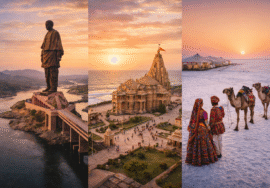
A journey through Gujarat is not simply a movement between cities. It is a passage through layers of history, faith, architecture, festivals, food and craftsmanship.
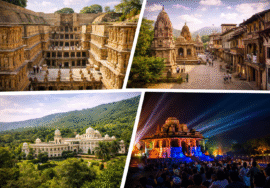
The story begins in Ahmedabad, India’s first UNESCO World Heritage City. Within its historic walled city, Jama Masjid, Sidi Saiyyed Mosque, Bhadra Fort and traditional stepwells reflect the meeting of Hindu, Islamic and Jain architectural influences. At Sarkhej Roza, tombs, palaces and a mosque reveal the artistic character of the Gujarat Sultanate.
The architectural journey continues at Champaner–Pavagadh Archaeological Park. Set against a dramatic hill landscape, the UNESCO World Heritage Site brings together ancient temples, mosques, stepwells and palaces dating from the eighth to the fourteenth centuries. At Modhera, the Sun Temple presents another remarkable example of architectural precision. Built in the eleventh century by King Bhima I, it is known for its intricate carvings, grand stepwell and alignment with the movement of the sun.
Gujarat’s history also survives in its forts and palaces. Uparkot Fort in Junagadh, believed to be around 2,300 years old, contains Buddhist caves, ancient stepwells and imposing ramparts. In Kutch, Lakhpat Fort stands as a reminder of a once-thriving trading settlement, while Vijay Vilas Palace reflects the region’s royal past through its latticework and balconies. Vadodara’s Lakshmi Vilas Palace adds another grand chapter with its Indo-Saracenic design, artworks and collection of arms and artefacts.
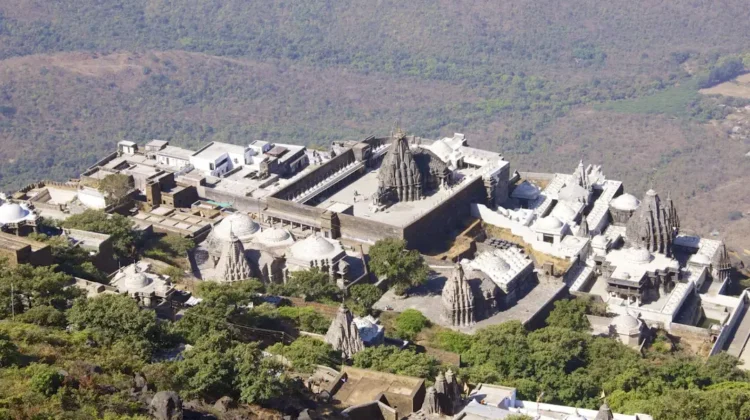
Faith forms another important route across the state. Somnath Temple, one of the twelve Jyotirlingas, stands beside the sea as a symbol of spiritual resilience. Dwarkadhish Temple connects pilgrims with the sacred traditions associated with Lord Krishna. Ambaji and Shamlaji draw devotees through their spiritual importance, while the Palitana Temples rise across the Shatrunjaya hills with more than 800 intricately carved marble temples.
Yet Gujarat’s culture is not limited to monuments and temples. It comes alive during Navratri, when Ahmedabad fills with Garba, music and traditional attire. The Rann Utsav celebrates the heritage of Kutch, while the Modhera Dance Festival places classical performances against the backdrop of an ancient temple. The Vautha Fair, Tarnetar Fair and Bhavnath Mahadev Mela offer further glimpses into the state’s rural, tribal and spiritual traditions.
Food completes the experience. A Gujarati thali brings together roti, rice, dal, kadhi, vegetables, pickles and sweets. Dhokla, thepla, undhiyu, fafda-jalebi, khandvi and shrikhand each add a different flavour to the journey.
The same spirit is visible in Gujarat’s crafts—from Bandhani and Patola silk to Ajrakh printing, Kutch embroidery, Rogan art, wooden lacquer work and metal bell craft. In Gujarat, heritage is not locked inside museums. It continues through festivals, kitchens, workshops and communities.
This report is part of TheTravigator’s continuing news coverage of the travel, tourism, aviation, and hospitality sectors. Our editorial team publishes industry news, market insights, partnerships, policy developments, and business updates relevant to the travel trade community. For press releases, partnership opportunities, advertising enquiries, or editorial collaborations, please contact our editorial desk at:
INFO@THETRAVIGATOR.COM