Corporate MICE and Financial Summits Push Indian Metros Towards Peak ADR Thresholds
India’s major metropolitan hotel markets are entering a high-pressure September as corporate travel, government movement and large-scale business events concentrate demand into relatively short booking windows. Mumbai, Delhi and other business centres are seeing stronger occupancies and higher room rates as the events calendar brings together financial conferences, corporate meetings and international business delegations.
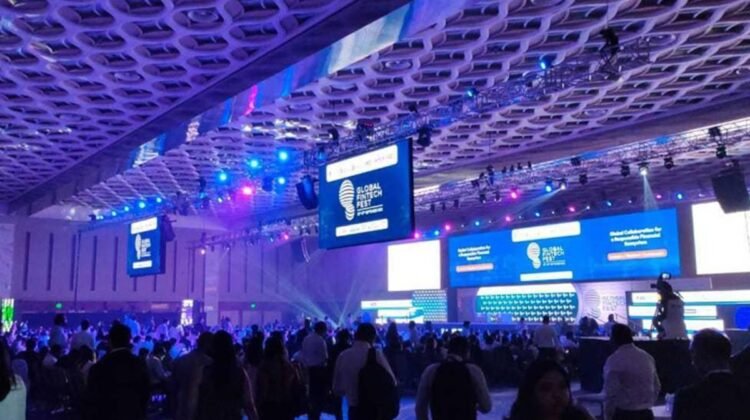
The Global Fintech Fest 2026 provided a clear example of how a major business event can reshape short-term hotel demand. Held from September 8 to 11 at Mumbai’s Jio World Centre, the seventh edition brought together policymakers, regulators, financial institutions, technology companies, investors and fintech leaders from around the world. Official event material describes participation from more than 80 countries.
The effect was visible in Mumbai’s hotel market. Industry data reported in September showed occupancies at Ibis and Ibis Styles properties in India during the first ten days of the month running 8–10% higher year-on-year, while average daily rates increased 16–18% over the same period. Mumbai was specifically identified as one of the stronger markets, with Global Fintech Fest contributing to room demand.
Events Are Becoming Short-Term Demand Multipliers
For hotel operators, the significance of the current cycle lies not simply in the number of travellers, but in the concentration of those travellers.
A large financial summit can generate demand from several segments simultaneously: speakers and delegates, exhibitors, sponsors, corporate executives, regulators, media, technology suppliers and event-production teams. Many of these travellers require accommodation within a narrow geographic radius of the venue and often prefer upper-upscale or luxury properties.
This creates a very different demand profile from conventional leisure travel.
Instead of gradually filling rooms across a destination, an event can compress hundreds or thousands of room nights into the same few dates. Once preferred properties approach capacity, corporate buyers may have to widen their search to boutique hotels, serviced accommodation and properties located further from the principal venue.
Mumbai Shows the MICE Effect
The Global Fintech Fest illustrates the commercial importance of this pattern.
The 2026 event was built around the theme “Potential to Impact: Agentic AI | Tokenisation | Quantum” and brought together stakeholders across financial services and technology. Its programme included networking, investment sessions, product demonstrations and international market-access activity, creating multiple reasons for delegates and business groups to remain in Mumbai beyond individual conference sessions.
The event’s official accommodation information also reflects the importance of hotel planning around the conference, with the organisers providing dedicated stay information for attendees.
For corporate travel managers, the lesson is increasingly straightforward: large events need to be treated as destination-wide accommodation events, not simply conference bookings.
Delhi Demonstrates the Premium-Inventory Effect
Mumbai is not an isolated case.
Delhi experienced a separate rate shock around the BRICS Leaders’ Summit in September. TheTravigator reported that several luxury properties were quoting exceptionally high peak-period rates, while market data cited by Cleartrip indicated that Delhi luxury hotel rates had risen 59% year-on-year and four-star rates by approximately 113% during the summit period. These figures represented event-specific peak pricing rather than normal citywide averages.
The distinction matters for procurement teams.
Peak-event ADR cannot be treated as a normal benchmark for the destination. However, it demonstrates how quickly premium inventory can become scarce when diplomatic, corporate and MICE demand converge.
Procurement Desks Are Being Forced to Expand the Search
For corporate travel planners, the challenge is increasingly one of inventory management rather than simply hotel selection.
A delegation may require:
- Multiple rooms for consecutive nights
- Rooms within a controlled distance from the venue
- Flexible cancellation policies
- Breakfast and business facilities
- Meeting or breakout space
- Reliable airport transfers
- Consistent corporate rates
- Last-minute rooming-list flexibility
When conventional four- and five-star inventory becomes constrained, procurement teams may have to consider smaller premium hotels and boutique properties that can provide a more controlled allocation.
This is particularly relevant for travel management companies and corporate booking platforms, because the value proposition moves beyond finding the lowest available rate. The requirement becomes finding the right combination of location, availability, service standard and contractual flexibility.
The Boutique Hotel Opportunity
The current environment also creates a potential distribution opportunity for premium independent hotels.
Boutique properties can compete for corporate demand when they offer the infrastructure required by business travellers: dependable connectivity, professional service, suitable workspaces, breakfast, transport access and transparent corporate contracting.
For hotels outside the traditional five-star ecosystem, major conferences can therefore become an acquisition channel for long-term corporate accounts rather than merely a source of short-term occupancy.
This aligns with a broader shift in India’s hotel market, where branded and managed accommodation is expanding while demand continues to spread across metropolitan and emerging business centres. TheTravigator has previously reported that hotel development is increasingly moving beyond India’s traditional metros as operators follow new demand corridors.
MICE Is Changing the Value of Location
For the hotel industry, September’s events demonstrate another important point: location premium is becoming increasingly event-specific.
A hotel that sits close to a convention centre, financial district, airport corridor or major event venue can command a different commercial value during high-demand windows.
This does not necessarily mean permanent rate inflation. Instead, it creates periods when proximity becomes significantly more valuable because the alternative cost—long transfers, traffic exposure and operational uncertainty—rises for corporate groups.
For travel buyers, this makes advance contracting and room-block negotiations increasingly important.
For hotel operators, it makes event calendars a critical revenue-management input.
From Room Nights to Revenue Management
India’s MICE market is becoming increasingly sophisticated, and hotel revenue teams are responding accordingly.
Rather than measuring event demand simply by occupancy, operators can evaluate the complete revenue opportunity across rooms, meetings, food and beverage, transfers and ancillary services.
The same event that fills a hotel’s rooms can also generate conference-room bookings, executive meetings, private dinners and networking functions.
This makes major financial and technology conferences particularly valuable to urban hotels because their delegates often have higher business-travel requirements and greater spending across the property than a conventional leisure group.
The B2B Takeaway
The September hotel market is providing a useful signal for India’s corporate travel ecosystem.
Large-scale events can create powerful short-term demand shocks, but the commercial opportunity extends beyond the headline ADR. Hotels need to manage room blocks intelligently; corporate travel managers need earlier sourcing strategies; DMCs need broader inventory networks; and independent premium properties have an opportunity to position themselves as credible alternatives when conventional corporate inventory becomes constrained.
The Global Fintech Fest, BRICS Summit and other major business events show how India’s growing MICE calendar is increasingly becoming a hotel-demand engine for its largest cities. The next competitive advantage may therefore belong not simply to destinations with the biggest hotel inventories, but to travel suppliers capable of matching corporate demand with the right inventory before the peak window arrives.
For India’s hotel and corporate travel sectors, the question is no longer whether MICE events generate demand. It is how efficiently the industry can capture, distribute and service that demand when thousands of travellers arrive at the same time.