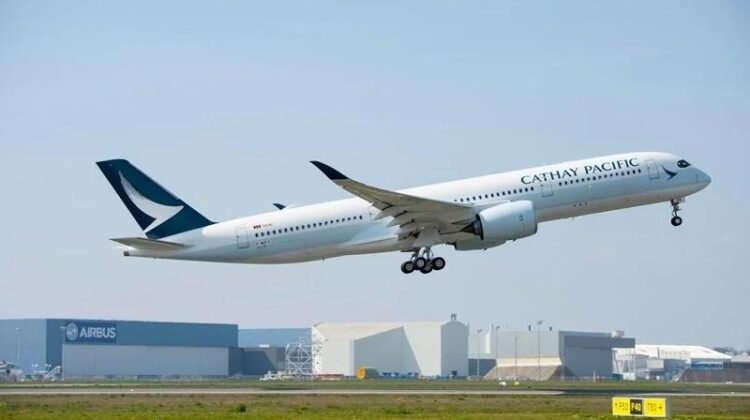
Airbus Forecasts Asia-Pacific to Drive 45% of Global Aircraft Demand Through 2045
SINGAPORE / ASIA-PACIFIC: Asia-Pacific is set to remain the principal engine of global commercial aviation growth over the next two decades, with Airbus forecasting 19,120 new passenger aircraft for the region through 2045.
The projection comes from Airbus’ latest Global Market Forecast (GMF) 2026–2045, which estimates that Asia-Pacific will account for approximately 45% of the world’s total requirement for 42,060 new passenger aircraft during the forecast period. Passenger traffic in the region is expected to grow at a 5.1% compound annual growth rate, significantly ahead of the 3.9% global average, with traffic volumes more than doubling by 2045.
For airlines, airports, aircraft lessors and aviation suppliers across the region, the forecast points to a prolonged period of fleet expansion, replacement and network development.
Asia-Pacific Becomes the Centre of Aircraft Demand
The scale of the regional requirement is significant.
Of the 19,120 aircraft projected for Asia-Pacific, approximately one-third will replace existing aircraft, while the remaining two-thirds will support passenger and network growth. That translates into roughly 6,373 aircraft for replacement and 12,747 for expansion over the 20-year period.
The demand is being driven by several structural factors, including economic development, urbanisation, rising incomes and expanding air connectivity.
Airbus expects the middle-income population across Asia-Pacific to reach approximately three billion people by 2045. The combination of this demographic expansion and rapid urbanisation is expected to increase the number of people for whom air travel becomes an increasingly important part of economic and social connectivity.
Traffic Growth Outpaces the Global Market
The difference between regional and global growth rates is central to the Airbus forecast.
Asia-Pacific passenger traffic is projected to increase at 5.1% annually, compared with 3.9% globally. Airbus expects the region’s traffic volumes to more than double during the forecast period.
At the global level, Airbus forecasts approximately 3.9% annual passenger-traffic growth, supported by GDP growth, population growth and the expansion of middle-income populations. Global air traffic is expected to reach approximately 10 billion passengers annually by 2045.
The contrast illustrates why Asia-Pacific is expected to absorb such a large proportion of the industry’s future aircraft demand.
Single-Aisle Aircraft Will Dominate Regional Growth
Much of Asia-Pacific’s aircraft requirement will come from the single-aisle segment.
Airbus projects demand for approximately 15,700 aircraft in the 100–244-seat category by 2045. The requirement reflects continued expansion of domestic and intra-regional networks, alongside fleet replacement.
This segment is particularly important for markets where airlines are developing direct links between secondary cities rather than relying exclusively on major hubs.
Aircraft such as the A220 and A321XLR are increasingly capable of making thinner routes commercially viable, allowing carriers to connect smaller and medium-sized cities directly with domestic, regional and selected long-haul destinations.
Airbus’ wider GMF also identifies the decentralisation of aviation networks as one of the defining trends of the next 20 years, as urbanisation increasingly shifts towards smaller cities.
Widebody Demand Remains Strong
Asia-Pacific’s growth story is not limited to narrowbody aircraft.
The region is projected to require approximately 3,420 new widebody aircraft through 2045 — nearly half of total global widebody demand.
That reflects the region’s importance in long-haul international aviation as well as the expansion of routes connecting Asia-Pacific with Europe, North America, the Middle East and other global markets.
Airbus says the A330neo and A350 families are positioned to address this requirement. The company also reports that its share of the regional widebody backlog has risen to 50% over the past three years.
India, Southeast Asia and China Drive Changing Traffic Patterns
The regional forecast is not based on a single market.
Airbus identifies India, Vietnam, Indonesia and Malaysia among the developing economies contributing to changing traffic patterns in Asia-Pacific. The company’s broader GMF also identifies domestic and international flows involving India, China and Southeast Asia among the fastest-growing traffic flows.
India is particularly notable within the forecast. Airbus’ GMF identifies domestic India passenger traffic growth of 9.3% as the fastest among the flows highlighted in its forecast.
This growth has implications beyond aircraft deliveries. Expanding aviation markets require additional airport capacity, maintenance infrastructure, pilot and technician capacity, ground services, digital systems and supporting tourism infrastructure.
A New Connectivity Map Is Emerging
One of the most important implications of the Airbus forecast is the potential restructuring of regional airline networks.
Historically, many international journeys across Asia-Pacific have been built around major hub airports. New-generation aircraft are changing the economics of smaller city-pairs by offering greater range and improved operating efficiency.
Airbus points to examples such as the A220 serving routes between smaller cities and the A321XLR opening longer-range connections that previously required a hub transfer. Larger aircraft such as the A330neo and A350 are also enabling new long-haul city-pairs.
For tourism, this can have a direct effect.
More point-to-point connections can make secondary destinations easier to access, potentially expanding the geographic footprint of international tourism and reducing dependence on established gateway cities.
Fleet Renewal Adds Another Layer of Demand
Not all of the 42,060 global aircraft requirement represents market expansion.
Airbus estimates that 19,820 aircraft will replace older aircraft during the 2026–2045 period, while 22,240 aircraft will be required for growth. Overall, the global passenger fleet is expected to increase from approximately 23,310 aircraft at the end of 2025 to 45,550 aircraft by the end of 2045.
The replacement cycle is increasingly important because airlines are seeking aircraft that deliver improvements in fuel efficiency and operating economics.
Airbus forecasts that almost 100% of the global fleet could consist of the newest generation aircraft by 2045, compared with around 39% in 2026.
Implications for Airports and the Travel Industry
The scale of expected fleet growth creates opportunities and challenges well beyond aircraft manufacturers.
Airports across Asia-Pacific will need to accommodate additional passengers, aircraft movements and connecting traffic. Airlines will require more pilots, cabin crew, engineers and maintenance capacity. Airports and destinations will also need to manage increasing pressure on infrastructure, airspace and sustainability.
The tourism industry stands to benefit from the expansion of connectivity, particularly where new direct routes connect emerging destinations to international source markets.
For travel companies, the commercial opportunity could increasingly lie in destinations that become accessible through new city-pairs rather than only through traditional tourism gateways.
Asia-Pacific’s Aviation Expansion Is Also a Capacity Test
Airbus’ forecast provides a long-term picture rather than a guarantee of individual airline orders or route launches. Actual fleet decisions will depend on airline economics, airport capacity, fuel costs, regulatory conditions, supply chains and broader economic developments.
Nevertheless, the direction of demand is clear within the forecast.
With 19,120 aircraft representing 45% of global new passenger-aircraft demand, Asia-Pacific is expected to account for almost one out of every two new passenger aircraft required worldwide over the next two decades.
The region’s aviation expansion is therefore becoming more than an airline-industry story. It is increasingly a story about urbanisation, tourism, trade, connectivity and the changing geography of global travel.
By 2045, the aircraft operating across Asia-Pacific will help define not only how people travel within the region, but also how the region connects with the rest of the world.
Airbus, #GMF2026, #AsiaPacificAviation, #AviationForecast ,#AircraftDemand, #AviationGrowth, #GlobalAviation, #APACAirspace