Chobe National Park vs Kruger National Park: Which African Safari Is Better?
Africa has no shortage of legendary safari destinations, but when travellers begin narrowing down a Southern Africa itinerary, two names frequently enter the conversation: Chobe National Park in Botswana and Kruger National Park in South Africa.
Both offer extraordinary wildlife encounters, but they deliver very different safari experiences.
Chobe is particularly associated with vast elephant herds, river-based game viewing and the wilderness of northern Botswana. Kruger, meanwhile, combines expansive landscapes, Big Five wildlife, established safari infrastructure, self-drive opportunities and access to renowned private reserves.
For travellers and travel advisors planning an African safari, the real question isn’t simply which park is “better”.
It is: which safari experience is better for the traveller?
Chobe National Park: Where Elephants Steal the Show
Located in northern Botswana, close to the country’s borders with Zimbabwe, Namibia and Zambia, Chobe National Park is one of Southern Africa’s most distinctive wildlife destinations.
The park covers roughly 11,700 square kilometres and includes several ecologically different areas, including the Serondela region, Savuti Marsh, Linyanti Marsh and the Nogatsaa-Tchinga area.
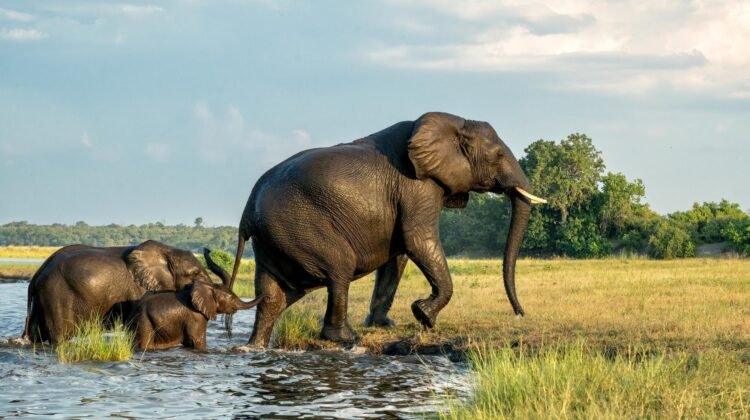
For travellers considering a Botswana safari, Chobe’s greatest attraction is its extraordinary elephant experience.
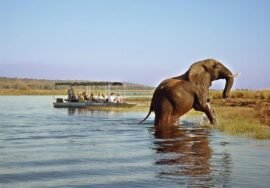
During the dry season, elephants gather around the Chobe River, creating dramatic wildlife encounters as animals come to drink, bathe and move along the water’s edge.
The Chobe River Adds Another Dimension
One of Chobe’s greatest advantages is that wildlife viewing isn’t restricted to a traditional game-drive vehicle.
The Chobe River creates the opportunity for boat safaris, allowing visitors to observe elephants, hippos, crocodiles and birdlife from the water.
That changes the rhythm of the safari.
Instead of following animals through the bush, travellers can sit quietly on the river while wildlife approaches the shoreline.
For travellers seeking a more experiential form of adventure travel, this land-and-water combination is one of Chobe’s strongest selling points.
Beyond the Elephants
Chobe isn’t only about elephants.
The park supports buffalo, lions, leopards, zebras, giraffes, antelopes and a wide range of bird species. The Savuti region is particularly associated with predator activity, including lions, hyenas, cheetahs and African wild dogs.
Birdwatchers also have plenty to look forward to, with the park supporting a rich range of resident and migratory species.
This diversity makes Chobe particularly attractive for travellers who want a safari that goes beyond a checklist of famous animals.
It also fits naturally into the growing ecotourism conversation around wildlife destinations, where the value of a safari increasingly extends beyond the photograph to conservation, landscapes and local tourism economies.
Kruger National Park: The Classic South African Safari
If Chobe represents the drama of Botswana’s riverine wilderness, Kruger National Park represents the classic South African safari.
Located in northeastern South Africa, Kruger covers approximately 19,485 square kilometres and is one of the continent’s most established wildlife destinations.
For travellers considering South Africa’s tourism landscape, Kruger remains one of the country’s most important wildlife assets.
Its biggest draw for many first-time safari travellers is the opportunity to search for Africa’s famous Big Five:
- Lion
- Leopard
- Elephant
- Buffalo
- Rhinoceros
Self-Drive Gives Kruger an Advantage
One of Kruger’s defining characteristics is accessibility.
The park has an extensive road network, allowing visitors to explore independently through self-drive safaris.
That makes Kruger particularly appealing to travellers who value flexibility and want greater control over their daily itinerary.
or travellers who prefer a guided experience, game drives with experienced guides and rangers provide another way to explore the park while gaining insight into animal behaviour, ecology and conservation.
Private Reserves Bring a Luxury Dimension
Another important difference between the two destinations is the wider safari ecosystem around Kruger.
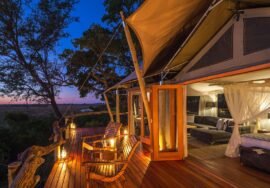
Private reserves bordering or connected to the greater Kruger landscape, including Sabi Sand and Timbavati, offer more exclusive wildlife experiences and luxury accommodation.
This makes Kruger particularly relevant to the growing luxury travel segment, where travellers increasingly want wildlife combined with high-end accommodation, personalised guiding and exclusive experiences.
Chobe vs Kruger: What Is the Real Difference?
The easiest way to understand the two destinations is to look beyond the wildlife checklist.
| Safari Factor | Chobe National Park | Kruger National Park |
|---|---|---|
| Country | Botswana | South Africa |
| Signature experience | Elephants + river safari | Big Five + classic game drives |
| River safari | Major attraction | Not the defining experience |
| Elephant viewing | Exceptional | Excellent |
| Big Five focus | Strong wildlife viewing | Major attraction |
| Self-drive | Less central | Major advantage |
| Guided safari | Available | Widely available |
| Luxury options | Strong | Particularly strong around private reserves |
| Birdwatching | Excellent | Excellent |
| Best for | Experiential wilderness and elephants | Classic safari and flexibility |
Which Is Better for Indian Travellers?
There isn’t one universal answer.
For Indian travellers looking for a premium African safari, Chobe can work exceptionally well as part of a broader Botswana or Southern Africa itinerary.
Its combination of game drives, river safaris and elephant encounters gives travellers several different ways to experience the destination.
Kruger can be particularly attractive for travellers taking their first African safari, especially those who want a combination of Big Five wildlife, established tourism infrastructure and flexible safari options.
It can also work well for luxury travellers because of the private reserves and high-end lodges surrounding the greater Kruger ecosystem.
For Indian travel advisors and tour operators, the decision should therefore be based on the traveller’s profile rather than simply choosing the more famous destination.
Chobe or Kruger: Which One Should You Choose?
Choose Chobe if your traveller wants:
- Exceptional elephant encounters
- River-based wildlife viewing
- A more immersive wilderness experience
- Birdwatching
- A Botswana-focused safari
- A land-and-water safari combination
Choose Kruger if your traveller wants:
- Big Five wildlife
- Self-drive flexibility
- Guided game drives
- Luxury private reserves
- A classic South African safari
- Easier customisation of safari styles
The Verdict: Don’t Think of Them as Rivals
The most useful conclusion may be that Chobe and Kruger shouldn’t necessarily be treated as competing destinations.
They represent two different interpretations of the African safari.
Chobe delivers the spectacle of elephants, waterways and Botswana’s wilderness character. Kruger brings together biodiversity, accessibility, flexibility and the classic Big Five experience.
For travellers with sufficient time, a broader Southern Africa itinerary can go even further — combining wildlife, landscapes, luxury accommodation and multiple safari environments.
That is where the region becomes especially powerful for the travel trade.
The question isn’t always Chobe or Kruger.
Sometimes, the better question is:
How can both destinations help create a richer African journey?