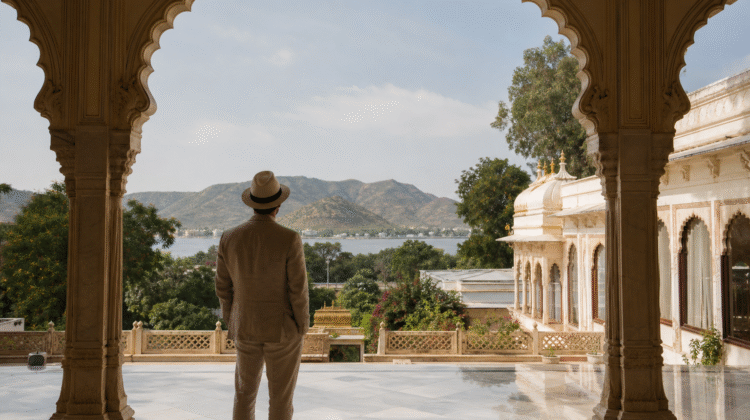
The New Maharajas How Luxury Travel Has Changed
The New Maharajas How Luxury Travel Has Changed
Luxury has moved from the privilege of owning the world to the privilege of entering it in ways few others can.
Once, luxury travel in India was defined by ownership: who you were, where you stayed and how you travelled. Maharajas moved between palaces, hunting lodges and grand residences, accompanied by ceremonial welcomes, private rail compartments, elaborate banquets and retinues of staff.
Their journeys were not merely journeys. They were public declarations of power.
Today’s luxury traveller—the “New Maharaja”—may have no royal title, but the expectations are every bit as discerning. The new definition of luxury is no longer centred on possession and display. It is shaped by privacy, personalisation, access and experience.
The transformation is profound: luxury has moved from the privilege of owning the world to the privilege of entering it in ways few others can.
The new luxury propositionFrom Grandeur to Discretion
The old Maharaja travelled with the luxury of abundance. Palatial suites, ceremonial processions, private train compartments, lavish banquets and armies of attendants were part of the experience. Every detail reinforced social hierarchy.
The New Maharaja may still appreciate a private jet, a palace suite or a chauffeured vintage car. But conspicuous consumption is no longer the only measure of indulgence. Increasingly, the most desirable experiences are discreet and difficult to access.
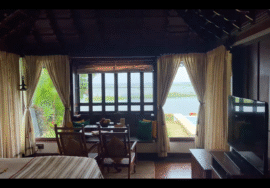
A Private Himalayan Villa
An intimate setting where privacy itself becomes part of the value proposition.A Palace Buyout
Access to a heritage property becomes the experience rather than simply its accommodation.A One-Off Culinary Journey
A chef-led experience built around a single regional cuisine and a highly personal brief.It may be a secluded villa in the Himalayas, a private buyout of a heritage palace, a chef-led meal built around a single regional cuisine, or a private viewing of an art collection after the galleries have closed.
The common thread is not extravagance. It is exclusivity.
For today’s affluent traveller, the ultimate luxury may be knowing that an experience has been created for them—and will not be repeated in quite the same way for anyone else.
Exclusivity over excessIndia’s Royal Advantage
India’s royal heritage gives the country an extraordinary advantage in this evolving market.
A newly built luxury resort can offer spectacular architecture, impeccable service and exceptional comfort. But it cannot easily manufacture centuries of memory.
A palace courtyard, an old haveli, a former royal hunting lodge or a restored colonial residence brings with it something more powerful than design: a narrative.
Heritage Transformed Into Contemporary Hospitality
This is heritage transformed into contemporary hospitality.
The opportunity, however, lies in moving beyond nostalgia. Royal India should not be presented as a museum piece or a theatrical re-creation of privilege. It should be interpreted with imagination and sensitivity for a new generation of travellers.
Make the Past Relevant to the Present
A palace stay might include a private architecture tour with a conservation expert. A royal kitchen could become the setting for a regional culinary experience. A historic library might host an intimate conversation with an author, curator or scholar.
A former royal residence could offer a small, highly personalised retreat rather than simply another luxury hotel stay.
The past becomes valuable when it is made relevant to the present.
The Luxury of Access
One of the clearest changes in luxury travel is the growing value of access.
Affluent travellers are increasingly willing to spend more on what they can do than on where they sleep. The room still matters, but the memory is often created elsewhere: during a private heritage walk, an exclusive museum visit, a conservation experience, a sunrise flight over a remote landscape or an intimate encounter with a master artisan.
This shift is especially important for India, where cultural capital is abundant but often remains fragmented across destinations and institutions.
What the New Maharaja Is Actually Buying
These are not add-ons to a luxury holiday. They are the holiday.
Service Without Friction
The modern luxury traveller also expects comforts that the old Maharaja could never have imagined: seamless connectivity, discreet security, wellness facilities, flawless logistics, thoughtful design and highly responsive service.
Luxury today is increasingly about removing friction.
Transfer Without Friction
The airport transfer works without a phone call and the journey simply flows.Room Designed Around You
The room is prepared according to individual sleep preferences and habits.Service Before the Request
The team knows what a traveller needs without making them feel managed.It is the airport transfer that works without a phone call. The room prepared according to a guest’s sleep preferences. The itinerary that allows time for discovery rather than rushing from one attraction to another. The guide who understands when to explain, when to listen and when to step back.
Technology Should Disappear Into the Experience
A guest may expect instant communication, smart-room controls and real-time itinerary support, yet the emotional experience must still feel human.
The highest form of service is often anticipation: knowing what a traveller needs before they ask, while never making them feel managed.
This is where India’s luxury hospitality sector can distinguish itself. Warmth, storytelling and personal attention have long been central to Indian hospitality. Combined with international standards of privacy, design and operational precision, they can create a proposition that is both deeply local and globally competitive.
Luxury with a Conscience
From Indulgence to Stewardship
The New Maharaja is also more conscious of the consequences of travel.
Sustainability is no longer limited to choosing an eco-friendly hotel or offsetting a flight. Increasingly, travellers want to understand how their spending supports local communities, protects heritage and preserves the landscapes they have come to experience.
This creates an opportunity for India’s luxury sector to link indulgence with stewardship.
Restoration as Responsibility
A heritage property can show how restoration protects architecture while creating employment.Private Travel, Public Value
A wildlife lodge can connect a private safari directly to conservation funding.Culture With Direct Value
An artisan visit can provide direct value to craftspeople rather than reduce culture to souvenirs.A culinary itinerary can showcase regional farmers, traditional ingredients and disappearing food practices. An artisan visit can provide direct value to craftspeople rather than reducing culture to a souvenir transaction.
The most convincing luxury is not simply rare. It is responsible.
A New Indian Luxury Story
India does not need to imitate Western models of luxury to compete at the highest level. Its strongest proposition lies in its own cultural and geographical diversity: royal architecture, living traditions, extraordinary cuisine, spiritual landscapes, wildlife, craftsmanship and generations of hospitality.
The task is to curate these assets with confidence.
What a New Maharaja Journey Could Look Like
A New Maharaja itinerary might begin with a private arrival at a restored palace, continue with a guided exploration of its architecture and family history, move into a regional dining experience and conclude with an evening performance in a courtyard illuminated by lamps.
The next morning could bring a wellness ritual, a visit to local artisans and a quiet journey through the surrounding landscape.
The itinerary would combine comfort, culture, privacy and meaning—without ever feeling over-programmed.
That is the difference between luxury as consumption and luxury as connection.
The Privilege of Access
The Maharajas once travelled because the world belonged to them. The New Maharajas travel because they want the world to feel as though it belongs exclusively to them—for a few unforgettable hours or days.
They are not necessarily seeking the largest suite, the most expensive car or the most elaborate display. They are seeking the impossible-to-replicate: the door opened after hours, the table set in a place not normally used for dining, the story told by someone who has inherited it, the moment that cannot be purchased from a catalogue.
The real evolution of luxury is not from modesty to extravagance. It is from possession to participation—from the privilege of ownership to the privilege of access.
This report is part of TheTravigator’s continuing news coverage of the travel, tourism, aviation, and hospitality sectors. Our editorial team publishes industry news, market insights, partnerships, policy developments, and business updates relevant to the travel trade community. For press releases, partnership opportunities, advertising enquiries, or editorial collaborations, please contact our editorial desk at:
INFO@THETRAVIGATOR.COM