The Great Hill Station Reinvention How India’s Colonial-Era Retreats Are Battling Their Own Success
The Great Hill Station Reinvention How India’s Colonial-Era Retreats Are Battling Their Own Success
How India’s iconic mountain destinations can move from volume tourism to value tourism without losing the history, landscapes and communities that made them famous.
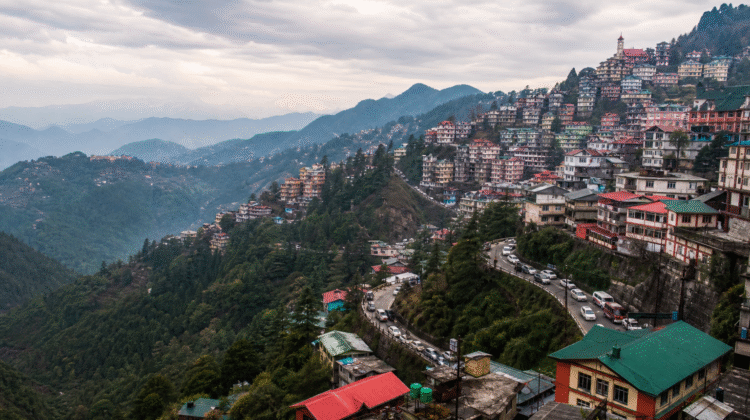
Shimla in the monsoon is a study in contrasts. The scent of wet pine mingles with the diesel fumes of congested traffic. The grand, neo-Gothic facades of the old Vice-Regal Lodge stand stoically against a backdrop of haphazard concrete construction.
It is a scene repeated across the Himalayan arc, from the tea-scented slopes of Darjeeling to the lush Nilgiri heights of Ooty.
These landscapes are iconic. They are the stuff of Bollywood dreams and childhood summer memories. But they are also a cautionary tale. For India’s hill stations are at a crossroads, caught between the romanticism of their past and the relentless pressure of their present.
Their story began not with holidaymakers, but with empire-builders seeking refuge.
A Cool Climate, A Colonial Blueprint
In the 19th century, the British Raj, wilting under the oppressive heat of the plains, looked to the mountains not just for relief, but for a psychological lifeline. These were not mere vacation spots; they were carefully engineered sanctuaries designed to replicate a slice of home.
The Original Hill-Station Blueprint
These were exclusive enclaves. Their identity was defined by clubs, churches, boarding schools, and winding promenades where the English social calendar—with its horse races and garden parties— was meticulously observed.
The architecture was deliberately foreign, a statement of permanence in a land that was, to them, temporary.
Then came 1947. The Empire retreated, but the hill stations remained. The colonial enclaves were thrown open, and a new demographic began to arrive. The Indian middle class, armed with newfound freedom and increasing prosperity, discovered these mountain retreats.
The Age of the Tourist Tsunami
The transformation was seismic. Over the decades, road networks improved, railways were connected, and air travel became more accessible. The hill stations were no longer seasonal retreats for a privileged few; they became year-round destinations for a burgeoning nation.
Today, the problem is the reverse of the colonial era. It’s no longer about how to create allure, but how to manage the overwhelming popularity.
The marketing machine has shifted into high gear. It sells experiences: Instagram-worthy sunrises, heritage walks, paragliding adventures, wellness retreats, and vibrant local festivals.
From scarcity to mass appealSocial media has turned these destinations into viral sensations, with influencers flocking to capture the perfect shot.
But success has come at a heavy price.
The Price of Popularity
The Destination Is Under Pressure
The question is no longer if the hill stations need to change, but how.
A Blueprint for the Next Chapter
The future of India’s hill stations lies not in attracting more people, but in attracting the right people. This is where the opportunity lies. The solution is to move from a model of ‘volume tourism’ to one of ‘value tourism.’
The path forward is to sell the story as much as the scenery. The colonial past is not a burden; it is a unique asset.
Four Levers for Reinvention
The Road Ahead
India’s hill stations have already reinvented themselves once—from exclusive colonial retreats to mass-market holiday destinations. Their next transformation is more critical.
It requires a collaborative effort from tourism planners, local governments, businesses, and visitors themselves.
The goal must shift from simply ‘managing crowds’ to ‘curating experiences.’ By decongesting the overcrowded centres, encouraging longer stays, and promoting lesser-known destinations, we can create a model that is both economically viable and environmentally sustainable.
Evolution, Not Extinction
The legacy of the hill stations is too rich to be squandered. The landscapes are too magnificent to be paved over.
The next chapter is ours to write—a story of evolution, not extinction.
This report is part of TheTravigator’s continuing news coverage of the travel, tourism, aviation, and hospitality sectors. Our editorial team publishes industry news, market insights, partnerships, policy developments, and business updates relevant to the travel trade community. For press releases, partnership opportunities, advertising enquiries, or editorial collaborations, please contact our editorial desk at:
INFO@THETRAVIGATOR.COM