The UAE Is Not One Tourism Market. It Is Seven Different Bets on the Future
The UAE Is Not One Tourism Market. It Is Seven Different Bets on the Future
Seven emirates, seven tourism propositions—and an increasingly connected relationship between visitors, hospitality, business, residency, real estate and foreign capital.
Look at the UAE from 30,000 feet and it is tempting to tell a simple tourism story: Dubai dominates, Abu Dhabi follows, and the other five emirates share the balance.
The reality is far more interesting.
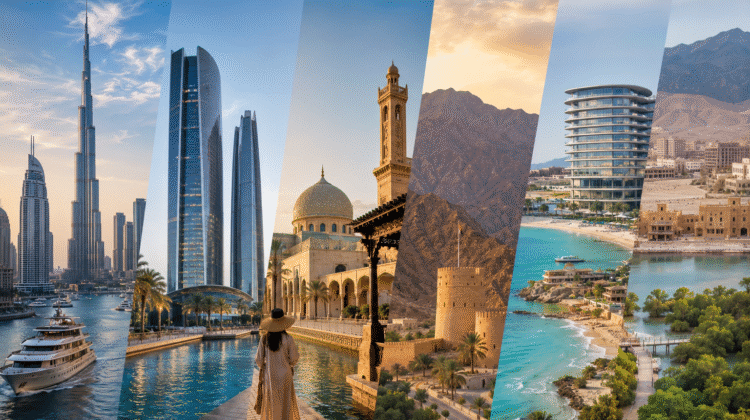
The UAE is gradually developing seven different tourism propositions, each attracting a different traveller, generating a different type of spend and, increasingly, supporting a different kind of real-estate opportunity.
But the broad hierarchy is unmistakable.
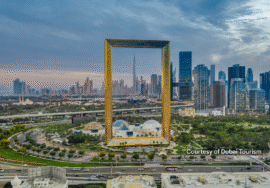
Dubai: the global machine
Dubai welcomed 19.59 million international overnight visitors in 2025, up from 18.72 million in 2024.
But the more important statistic is not the number itself. It is the diversity behind it.
Western Europe accounted for 21% of visitors, while the GCC and MENA contributed another 26%. CIS/Eastern Europe and South Asia each contributed 15%. Asia, the Americas, Africa and Australasia supplied the remainder.
India matters enormously. Russia matters. Britain matters. Saudi Arabia matters. Europe matters. But no single market controls the story.
Dubai is therefore less a destination than a global tourism platform.
Abu Dhabi: fewer visitors, bigger monetisation
Abu Dhabi welcomed 5.9 million hotel guests in 2025, up 2.2% year-on-year. Yet hotel revenues surged 19.5% to AED 9.1 billion, while average daily rates rose 19%.
This is a crucial distinction.
Dubai is demonstrating extraordinary scale. Abu Dhabi is demonstrating yield.
Its leading international markets included India, Russia, the UK and China, with India alone contributing 436,000 hotel guests.
The emirate is therefore building a tourism model around culture, entertainment, business events and premium hospitality—not simply chasing the largest possible visitor count.
Sharjah: the overlooked middle market
Sharjah’s proposition is fundamentally different.
It benefits from proximity to Dubai, a comparatively accessible price point, cultural tourism and strong regional connectivity. Its tourism growth has accelerated, while Sharjah International Airport provides an enormous connectivity advantage.
In investment terms, Sharjah does not have to beat Dubai at Dubai’s game.
Accessibility
UAE access without Dubai pricing, supported by strong regional connectivity.
Value
A comparatively accessible proposition for travellers seeking the UAE at a different price point.
Culture
Cultural tourism forms a distinct part of Sharjah’s destination proposition.
Core audiences
Particularly relevant to families, value-conscious travellers and regional visitors.
It can capture travellers who want UAE access without Dubai pricing.
That makes it particularly relevant to families, value-conscious travellers and regional visitors.
Ras Al Khaimah: the market I would watch most closely
RAK welcomed 1.35 million overnight visitors in 2025, up 6%, while tourism revenues increased 12%.
But here is where the numbers become more interesting.
Its 2025 visitor mix included Russia at 34.6%, the UK at 9%, Kazakhstan at 6.7% and India at 4.3%. At the same time, India grew 14%, China 19%, Russia 20%, Romania 41% and Poland 22%.
And the tourism story is already becoming a property story.
New resorts, branded hotels, mixed-use communities and Wynn Al Marjan Island are turning tourism demand into a development ecosystem. RAK’s stated ambition is 3.5 million visitors by 2030.
This is why I would watch RAK more closely than its current 1.35 million visitor figure suggests.
The smaller emirates have a role too
Fujairah
Can own the mountain, beach and nature proposition.
Ajman
Can compete on value, family travel and accessibility.
Umm Al Quwain
Has the opportunity to build around low-density coastal, nature and experiential tourism.
Differentiation
They do not need Dubai’s 20 million visitors to succeed. They need a clearly differentiated reason to visit.
And then comes India
This is perhaps the most important cross-emirate story.
Indian travellers are not simply filling UAE hotel rooms. They are becoming part of the tourism strategy of multiple emirates simultaneously.
India is a major market for Dubai and Abu Dhabi, an important market for Sharjah and an increasingly important growth market for RAK.
That creates something bigger than tourism.
Indian visitor → hotel stay → airline demand → retail spending → business exposure → expatriate movement → property interest → capital.
This is why the recent UAE incentives aimed at Indian travellers deserve attention.
A complimentary visa tied to a hotel stay is not merely a tourism discount.
It is a mechanism for converting mobility into economic activity.
The real UAE tourism story
The mistake is to ask:
The better question is:
Dubai wins on global volume.
Abu Dhabi is increasingly winning on spend.
Sharjah wins on accessibility.
RAK is winning on destination creation and growth.
And the smaller emirates are searching for specialised niches rather than trying to imitate Dubai.
That is the UAE’s real tourism advantage.
It is not one destination competing with the world.
It is seven destinations, each building a different proposition—while sharing the same airlines, infrastructure, visa ecosystem and international brand.
And increasingly, tourism is not the final product.
It is the front door to hospitality, business, residency, real estate and foreign capital.
This report is part of TheTravigator’s continuing news coverage of the travel, tourism, aviation, and hospitality sectors. Our editorial team publishes industry news, market insights, partnerships, policy developments, and business updates relevant to the travel trade community. For press releases, partnership opportunities, advertising enquiries, or editorial collaborations, please contact our editorial desk at:
INFO@THETRAVIGATOR.COM