
The Paperless Border: The Economics of India’s Visa-Free Outbound Surge
The Paperless Border: The Economics of India’s Visa-Free Outbound Surge
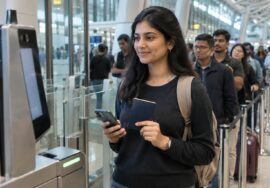
Featured image: AI-generated representative scene.
On a humid Friday night at Mumbai’s Chhatrapati Shivaji Maharaj International Airport, the international departures hall resembles an exchange floor during the final frantic minutes of the trading week.
At check-in Counter K, an executive from an advertising agency in Lower Parel presents a digital boarding pass on her smartphone. Beside her on the luggage scale rests a single canvas weekend bag. She booked her flight to Kuala Lumpur barely fifty-four hours ago, prompted by an unexpected gap in her Monday schedule and the liberating knowledge that between her apartment and the boarding gate, there was not a single consular appointment, no notarized bank statements, no courier fees, and no three-week wait for a passport stamp.
“A few years ago, a spontaneous long weekend meant Goa, Jaipur, or Udaipur,” she explains as her bag disappears down the conveyor belt. “Now, if I have four days to spare, flights to Malaysia or Thailand are directly price-competitive with heritage hotels in Rajasthan. And I don’t have to surrender my passport to an embassy clerk.”
Three thousand kilometres to the east, at Bangkok’s Suvarnabhumi Airport, the physical consequence of that domestic substitution arrives in relentless nocturnal waves. Around two in the morning, three wide-body aircraft from Delhi, Mumbai, and Chennai touch down within twenty-five minutes of each other. A dense stream of travellers empties onto the concourse, funneled toward the immigration hall under bright banners welcoming international guests.
Yet the physical infrastructure struggles to keep pace with the policy. The lines stretch back past the duty-free perfume counters and out onto the moving walkways. For hundreds of families traveling with tired children, the promise of frictionless, borderless mobility resolves into a ninety-minute standing queue under humming fluorescent tubes.
Over the past two years, the geometry of Indian outbound travel has undergone a structural transformation. Across Southeast Asia, the Indian Ocean, and East Africa, sovereign governments have systematically lowered their administrative drawbridges for Indian passport holders.
Tourism promotion boards invariably frame these measures as tributes to civilizational friendship, diaspora goodwill, or bilateral harmony. The underlying economic reality, however, is far more calculated: unilateral visa liberalisation is an aggressive liquidity capture. Facing a subdued, structural slowdown in outbound Chinese tour groups following the pandemic, regional host economies recognized that India’s rapidly expanding, salaried middle class represents the fastest-growing pool of outbound discretionary consumer expenditure in the Eastern Hemisphere. By stripping away consular friction, host destinations have launched a competitive scramble to redirect Indian disposable income into their domestic hotels, shopping malls, and aviation networks.
Yet this surge in mobility brings its own economic contradictions. It has widened an intriguing divergence between passenger volumes and outward dollar remittances, exposed the hard limits of civil aviation infrastructure, and tested the delicate boundaries of sovereign diplomacy.
The shifting mechanics of the border
To understand the durability of this outbound boom, one must first look past the marketing slogans and examine the shifting legal mechanics of the borders themselves. Travel commentary often treats visa waivers, digital pre-authorisations, and visas-on-arrival as interchangeable. In practice, the regulatory environment is an unstable patchwork of executive orders, temporary pilot programs, and mandatory digital screens.
Consider the remarkable policy trajectory of Thailand, long the bellwether of Southeast Asian tourism. In mid-2024, the Thai government introduced a temporary 60-day visa exemption for Indian ordinary passport holders in an urgent bid to revive post-pandemic arrival figures. Indian travellers remained on that generous 60-day exemption list through early 2026.
Then the bureaucratic pendulum swung. On May 19, 2026, the Thai Cabinet abruptly decided to scrap the 60-day exemption, prompted by domestic security reviews regarding overstays and informal employment. Following intense lobbying from hotel associations and regional airlines, the Cabinet reversed course on July 14, 2026, formally placing India onto a restructured 30-day visa exemption list.
This new 30-day regime took formal effect on September 15, 2026. But the paperless border came with strict administrative caveats. Entering Thailand without a visa now requires travellers to carry a confirmed return air ticket, possess verifiable proof of financial means—stipulated at a minimum of 10,000 Thai Baht per person or 20,000 Baht per family—and complete the mandatory Thailand Digital Arrival Card (TDAC) online prior to departure, a digital portal that formally replaced the decades-old paper TM6 immigration card.
Across the Malacca Strait, Malaysia has pursued policy stability by extending its 30-day visa waiver for Indian citizens through December 31, 2026. Yet here too, entry is governed by digital friction: travellers must complete the electronic Malaysia Digital Arrival Card (MDAC) within three days prior to arrival, transforming the physical visa queue into an algorithmic compliance check.
In Sri Lanka, where tourism earnings are critical for foreign exchange solvency, the government instituted a 30-day free tourist visa under an Electronic Travel Authorization (ETA) pilot program for Indian nationals. The visa fee is waived, but travelers must secure prior clearance through the state's digital portal before boarding. Further west, Kenya instituted an Electronic Travel Authorisation (ETA) system, discarding consular visits in favor of a universal digital clearance and administrative processing fee.
Crucially, these entry schemes are not reciprocal bilateral treaties carved into international law. They are unilateral executive concessions granted by host states. What a foreign cabinet grants by administrative decree to boost quarterly tourism revenues can be amended, restricted, or revoked overnight whenever domestic politics, security assessments, or labor considerations shift.

Spontaneity and the holiday budget
The sudden removal of visa friction has reshaped consumer behavior across different demographics, altering the microeconomics of the Indian holiday.
For couples, the collapse of administrative barriers has dramatically shortened planning horizons. Historically, an international holiday required an eight-week logistical runway: scheduling embassy appointments, obtaining bank balance certificates, and waiting for passport returns. Today, the booking window for a couple departing from Delhi or Bengaluru to Bangkok or Kuala Lumpur has collapsed from forty-five days to less than a week.
This spontaneity triggers a psychological shift known in behavioral economics as mental accounting. The ₹15,000 to ₹25,000 that a couple previously spent on consular fees, visa agency charges, and courier services is rarely saved. Instead, it is treated as "found money" within the vacation budget, reallocated directly to premium room upgrades, private beachfront dining, or curated spa experiences in the host country.
For the solitary traveller, visa-free access represents near-total demand elasticity. Solo travellers—freelancers, tech consultants, and young professionals—are uniquely sensitive to administrative friction. If an overseas trip requires taking a weekday off to visit a visa application centre, the solo traveller defaults to a domestic destination. When that barrier disappears, the solo traveller books on impulse.
Yet the economics of solo travel contain an inherent penalty: the single supplement. While a couple divides the fixed cost of airport transfers, hotel suites, and private excursions across two wallets, the solo traveller absorbs the entire capital overhead. As a result, while solo travellers represent the fastest-growing demographic taking advantage of visa-free access, their daily expenditure is heavily skewed toward budget boutique accommodation, co-working spaces, and ride-hailing services.
The group travel equation
The dynamic reverses entirely when extended family clans and corporate groups enter the market.
For a multi-generational Indian family comprising twenty relatives spanning three generations, or an enterprise organizing an annual MICE (Meetings, Incentives, Conferences, and Exhibitions) retreat for fifty sales managers, the elimination of visa paperwork is an immense administrative relief. Gathering twenty physical passports from relatives scattered across Lucknow, Pune, and Ahmedabad used to be an operational nightmare.
However, group spontaneity collides with the ruthless mathematics of airline revenue management. Airline pricing algorithms are built on yield curves: as the departure date nears and seat inventory dwindles, seat prices rise exponentially. When a family of twenty attempts to book flights to Phuket or Langkawi five days before Diwali, the algorithm detects an acute spike in demand and moves available seats into top-tier fare buckets. The money saved on visa fees is instantly swallowed by airline yield algorithms. The paperless border makes group travel administratively effortless, but economically punishing for those who do not plan far in advance.
More journeys, fewer dollars
When these behavioral shifts are aggregated at the national level, they reveal an intriguing macroeconomic paradox in India’s balance of payments.
According to Ministry of Tourism figures, outbound departures by Indian passport holders expanded 5.9 percent in 2025 to reach 3.27 crore, up from 3.09 crore in 2024. Yet across the same period, foreign exchange outflows recorded by the Reserve Bank of India told an entirely different story. Under the RBI’s Liberalised Remittance Scheme (LRS), outward remittances for overseas travel stood at $17.00 billion in FY24 (accounting for 53.56 percent of total LRS remittances of $31.74 billion), and $16.96 billion in FY25 (accounting for 57.37 percent of total LRS remittances of $29.56 billion).
By FY26, total LRS remittances moderated to approximately $28.98 billion, with travel outlays settling between $16.4 billion and $16.87 billion. Early central bank data for April and May of FY27 indicates an additional 8 percent year-on-year contraction in outbound travel remittances.
How can outbound departures rise to historic records while outward dollar spending contracts?
The explanation lies in the economics of destination substitution. Driven by currency depreciation against the dollar, high long-haul airfares, and visa-free access, Indian holidaymakers have substituted expensive, two-week European and North American vacations for shorter, budget-conscious trips to Southeast Asia and Central Asia. A three-night stay in Pattaya or Langkawi generates an outbound departure in immigration statistics, but requires a fraction of the foreign exchange remittance demanded by a fortnight in London or Zurich. Indian travellers are travelling more frequently, but spending fewer dollars per journey.
Meanwhile, India’s inbound tourism ledger has generated intense domestic debate. In 2025, Foreign Tourist Arrivals (FTAs) to India fell 9.4 percent to 90.2 lakh, widening the ratio between inbound foreign tourists and outbound Indian travellers to 1:3.6.
Yet viewing this as a simple deficit obscures critical structural nuances. The contraction in 2025 inbound arrivals was overwhelmingly driven by a 73 percent collapse in visitor numbers from neighboring Bangladesh, following violent political upheaval and border restrictions in Dhaka. Historically, Bangladeshi nationals represent 17 to 18 percent of all foreign tourist arrivals to India, crossing primarily for medical treatment, business, and family visits. If one strips out Bangladesh, inbound arrivals from the rest of the world actually expanded by 4.25 percent in 2025, with steady inflows from the United States, the United Kingdom, Australia, and Canada.
Moreover, the official FTA metric excludes Non-Resident Indians (NRIs). Total International Tourist Arrivals (ITAs), which encompass diaspora visitors holding foreign passports or overseas residency, stood at roughly 20.1 million in 2025 and 20.6 million in 2024. The diaspora component represents ten to eleven million annual visitors whose spending on domestic retail, family ceremonies, and real estate injects vital foreign exchange into the domestic economy.
Sovereignty and reciprocity
Despite pressure from domestic hospitality lobbies to mirror Southeast Asia by granting unilateral visa waivers to foreign tourists, New Delhi has steadfastly refused. India maintains a digital e-Visa platform covering over 150 nationalities, but adheres strictly to the doctrine of sovereign reciprocity. Bilateral visa-free entry is reserved almost exclusively for citizens of Nepal and Bhutan under long-standing special treaties.
To Indian policymakers, visa policy is not a promotional loss-leader to be cheapened for seasonal tourism gains; it is an instrument of national security vetting and sovereign parity. India will not dismantle its border controls unilaterally while Indian passport holders continue to endure intrusive financial vetting and long appointment delays for Western visas.
The limits of aviation capacity
If sovereign diplomacy forms one boundary of the outbound boom, civil aviation infrastructure forms the other.
A visa waiver eliminates paper friction, but it cannot expand airport runways. The explosive demand for travel to Southeast Asia has run headlong into the tight regulatory framework of bilateral Air Services Agreements (ASAs) administered by the Ministry of Civil Aviation (MoCA).
International aviation does not operate in a free market. Under the Chicago Convention, the number of flights and seats permitted between two nations is strictly governed by bilateral government negotiations. While Gulf carriers operate under heavy capacity constraints—Dubai’s carriers are capped at 66,000 seats per week, and Abu Dhabi at 50,000 seats per week—Southeast Asian routes are similarly governed by negotiated seat quotas.
In recent bilateral consultations, New Delhi has resisted demands from Southeast Asian carriers to drastically expand seat quotas or grant direct landing rights into non-metro cities like Lucknow, Coimbatore, and Indore. This resistance is strategic: the Indian government is determined to nurture domestic international network carriers—most notably Air India and IndiGo—and build global transit hubs within Indian territory. Granting unlimited point-to-point access to foreign carriers would surrender lucrative outbound traffic to overseas operators.
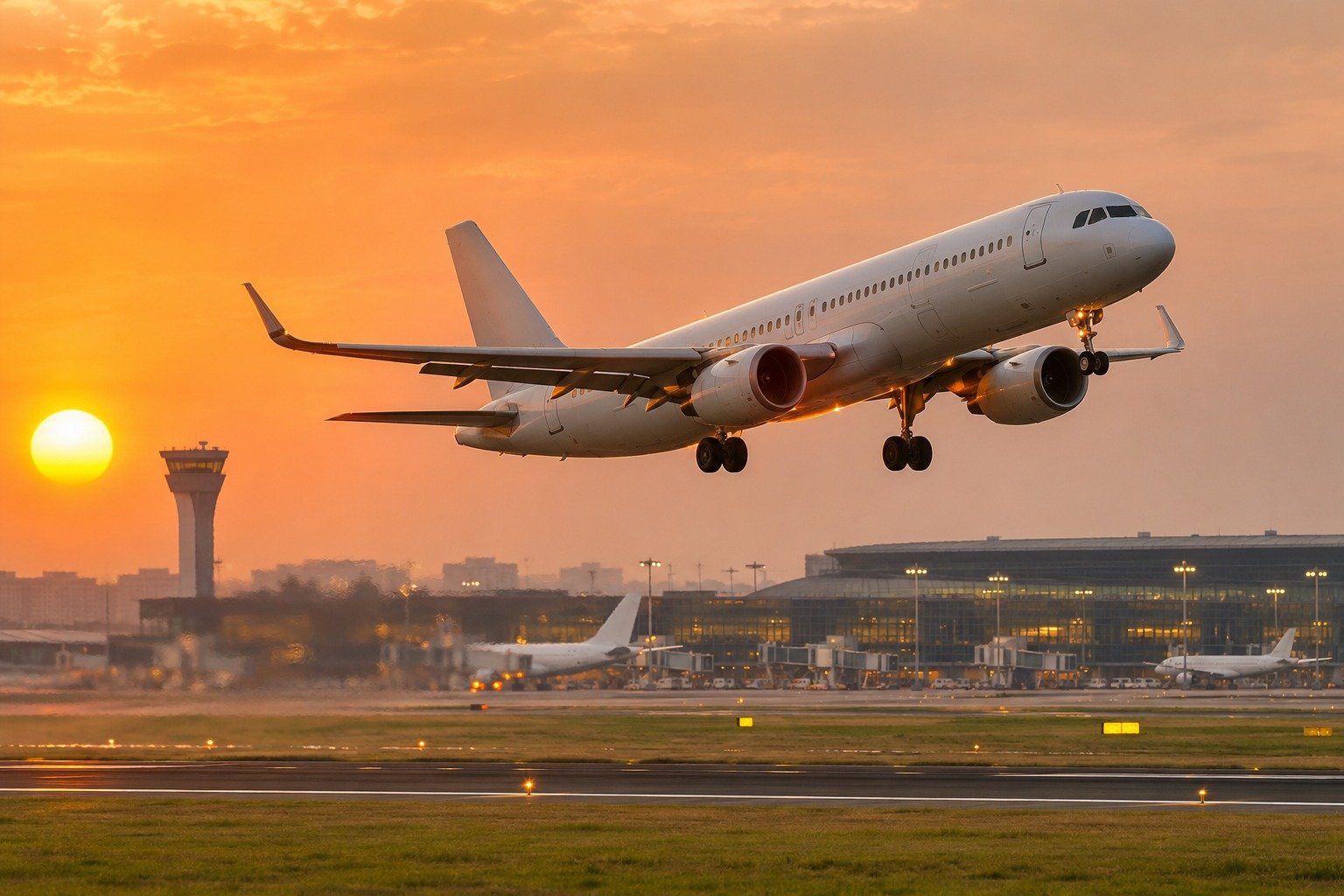
The economic consequence of this supply constraint is immediate: high load factors and elevated airfares. With seat capacity capped and demand soaring due to visa waivers, airlines operate at over 85 percent capacity, pushing average economy fares upward and eroding the consumer surplus created by the visa exemption.
At the host destinations, the sudden influx of short-haul Indian travellers brings its own economic challenges. In tourism economics, visitor volume does not automatically equal high economic yield. In hubs like Phuket, Pattaya, and Langkawi, the surge of short-stay, price-conscious travellers strains local infrastructure—roads, water treatment, and waste management—while generating lower net spending per day than traditional long-stay European winter visitors. Furthermore, because a significant share of Indian group tours rely on pre-paid packages booked through centralized travel agencies, a substantial portion of the economic yield leaks back to overseas booking platforms rather than reaching local family-owned businesses.
Friction moves; it does not disappear
As dawn breaks over Suvarnabhumi Airport, the last passengers from the Mumbai flight finally clear the automated fingerprint kiosks and step out into the tropical morning heat.
The paperless border is one of the most successful commercial innovations in modern regional tourism. It has democratized international travel for millions of Indian citizens, proving that when administrative gatekeeping is dismantled, human capital moves with extraordinary velocity.
Yet the border without paper is not a border without limits. The friction has simply migrated: from consular desks to crowded airport concourses, from physical application forms to digital arrival portals, and from bureaucratic waiting rooms to the complex calculus of sovereign security and bilateral aviation quotas. The modern Indian traveller has unlocked the region, but navigating it will always require paying the price of physical reality.