The Carbon Balance Sheet: The Economic Collision of Climate Mandates and Corporate Mobility
The Carbon Balance Sheet: The Economic Collision of Climate Mandates and Corporate Mobility
The corporate travel budget is no longer managed solely by procurement officers analyzing hotel night caps and contracted discount tiers. Across Frankfurt, London, and Paris, the ultimate gatekeeper of corporate itineraries is now the independent financial auditor examining disclosures under the European Union Corporate Sustainability Reporting Directive. Scope 3 Category 6 greenhouse gas emissions, representing business travel, have completed their transition from discretionary public relations metrics into legally binding corporate liabilities.
For any multinational company operating within the European regulatory perimeter, every flight taken in a premium cabin now carries a direct financial friction that lands squarely on the audited income statement.
The Global Business Travel Association projects worldwide corporate travel spending to reach an unprecedented 1.71 trillion dollars in 2026, an expansion of 7.2 percent over the previous year. Yet underlying trip volumes reveal a starkly divergent reality, creeping forward by a meager 1.3 percent to 1.84 billion trips. That widening divide exposes what chief financial officers now call the corporate travel value gap. Organizations are spending substantially more cash to execute nearly identical physical movement.
General lodging inflation and elevated aviation operating expenses account for a portion of this spread, but a primary structural driver is the cost of regulatory environmental compliance.
Fuel mandates and carbon costs
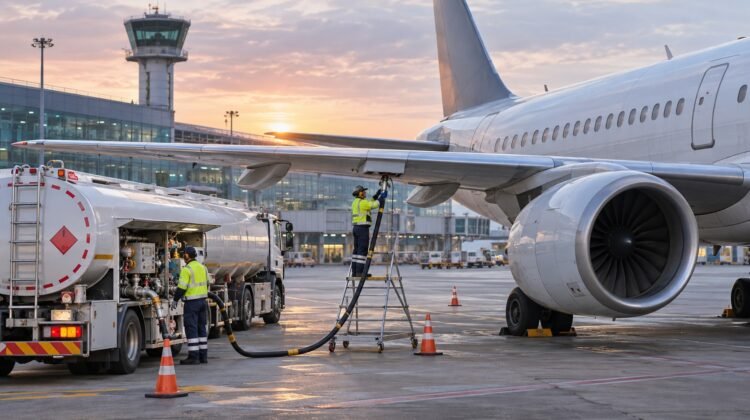
The financial pressure begins directly at the airport fuel manifold. Under the ReFuelEU Aviation mandate, which took effect across the European Union on January 1, 2025, aviation fuel suppliers at European airports were legally required to ensure that at least two percent of supplied jet fuel consisted of Sustainable Aviation Fuel. Data published by the European Union Aviation Safety Agency confirms that suppliers surpassed that statutory floor, delivering approximately 2.8 percent sustainable fuel across 121 monitored airports. Yet the market reality beneath that compliance milestone has hit enterprise buyers hard.
Hydroprocessed Esters and Fatty Acids, the primary commercially available sustainable fuel pathway, trades at a persistent price premium of 2.8 to 3.4 times the cost of conventional fossil kerosene. Synthetic e-fuels, which face aggressive blending quotas toward the end of the decade, remain in early commercial development and command prices multiple times above fossil parity.
Aviation groups, including the Lufthansa Group, Air France-KLM, and International Airlines Group, responded by institutionalizing environmental surcharges. These mandatory fees add between one euro and seventy-two euros to individual tickets depending on route distance and cabin selection. On long-haul transatlantic and Asian corridors departing from hubs such as London Heathrow, Paris Charles de Gaulle, and Frankfurt, carriers have embedded these charges into corporate contracted fares without room for procurement negotiation.
This fuel friction compounds under European Sustainability Reporting Standards ESRS E1, which governs climate disclosures. Historically, enterprise sustainability leads relied on spend-based emission factors, multiplying total dollars spent with a travel management company by a generic carbon coefficient. That accounting methodology is no longer acceptable to compliance officers. Independent auditors from major accounting firms refuse to sign off on spend-based approximations for companies subject to mandatory assurance. Auditors require primary, activity-based data: flight distances, aircraft engine variants, load factors, and seat geometry.
Carbon accounting reshapes travel policy
Under international Greenhouse Gas Protocol standards, a business-class seat carries an emissions weighting three to four times heavier per passenger-kilometer than an economy seat. That calculation is driven by floor space geometry: lie-flat seating configurations occupy real estate that could otherwise hold multiple economy rows. In earlier fiscal cycles, corporate travel policies routinely permitted lie-flat seating on flights exceeding six hours. Today, that luxury directly exhausts enterprise emissions quotas.
To navigate this regulatory ceiling, corporate finance departments have adopted internal shadow carbon pricing. Global management consultancies, enterprise software vendors, and multinational financial institutions now assign internal carbon charges between eighty euros and one hundred and fifty euros per metric ton of carbon dioxide equivalent generated by corporate mobility. When a London-based senior executive books a round-trip business-class flight to Singapore, that internal mechanism levies a phantom charge of roughly nine hundred euros directly against the originating division’s operational profit and loss statement.
This internal fiscal mechanism has altered booking habits. Travel managers have instituted tiered triage protocols. Revenue-generating sales meetings and emergency engineering deployments receive funding without hesitation. Conversely, internal executive summits, cross-regional alignment meetings, and intra-company conferences have been eliminated or diverted to regional high-speed rail networks. Corporate mobility is being rationed by executive balance sheets seeking to avoid public non-compliance penalties and protect investor credit ratings.
The airline response to carbon budgets
Network airlines face the mirror image of this corporate triage. Premium business-class travelers represent roughly twelve to fifteen percent of global airline passenger volume, yet they account for more than half of passenger revenue and up to fifty-five percent of operating profits on prestigious intercontinental routes. If corporate accounts pare back long-haul premium travel by even eight to ten percent to meet corporate carbon budgets, the underlying profitability of widebody aircraft operations begins to erode.
Airlines have responded by packaging voluntary corporate decarbonization partnerships through book-and-claim registries. Major international carriers allow corporate clients to purchase sustainable aviation fuel certificates directly, providing independently verified documentation that satisfies the Roundtable on Sustainable Biomaterials framework. Yet this corporate mechanism remains an expensive commitment. Corporate travel benchmarks indicate that purchasing certified sustainable fuel to neutralize flight emissions can add fourteen to twenty-two percent to an organization’s annual air travel procurement bill. While sovereign wealth funds and balance-sheet giants can absorb that surcharge, mid-tier enterprises cannot justify the capital expenditure.
Related posts:
 The Commercial Floorplate Shift: Hybrid Mobility and the Architectural Reallocation of Hotel Capital
 The Frictionless Treasury: Virtual Payment Rails and Currency Risk Mitigation in Mid-Market Corporate Travel
 The Unbundled Ledger: How Airline Ancillary Retailing Distorts Corporate Travel Procurement
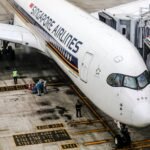 Singapore Airlines secures sustainable aviation fuel supply from Aether Fuels