The Unbundled Ledger: How Airline Ancillary Retailing Distorts Corporate Travel Procurement
The Unbundled Ledger: How Airline Ancillary Retailing Distorts Corporate Travel Procurement
Corporate procurement directors invest months conducting intense bilateral negotiations with global commercial airlines. They demand eighteen percent discounts on published coach fares, contractual waivers for routine ticket changes, and volume-based rebates on core international business routes. Once signatures are affixed to multi-year enterprise agreements, corporate executives celebrate their hard-won pricing discipline. Then they watch their overall travel budgets expand well beyond initial projections.
The source of this budgetary inflation is the aggressive expansion of unbundled ancillary revenue models across the enterprise travel ecosystem.
The ancillary revenue model
Data compiled in late 2026 by IdeaWorksCompany and CarTrawler indicates that global airline ancillary revenue reached a historic high of 157 billion dollars, accounting for 15.7 percent of total worldwide airline turnover. A decade ago, unbundled retail pricing was confined to low-cost regional airlines like Ryanair, Spirit, and AirAsia. Today, major legacy network airlines function as sophisticated consumer retail platforms that operate aircraft as fulfillment mechanisms. While ultra-low-cost carriers like Frontier Airlines generate an extraordinary 60.2 percent of total operating revenue from ancillary fees, full-service network carriers now dominate the absolute financial volume.
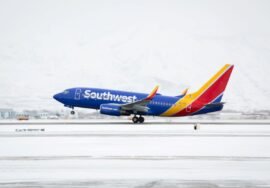
United Airlines generates more than 11.5 billion dollars annually from non-ticket revenue, with American Airlines, Delta Air Lines, and Southwest Airlines operating comparable retail systems.
For corporate procurement departments, this universal unbundling has largely neutralized negotiated base-fare discounts. An enterprise agreement with a major carrier typically applies a percentage reduction to published booking fare classes. However, modern airline inventory systems have stripped virtually every component of the travel experience out of that foundational fare.
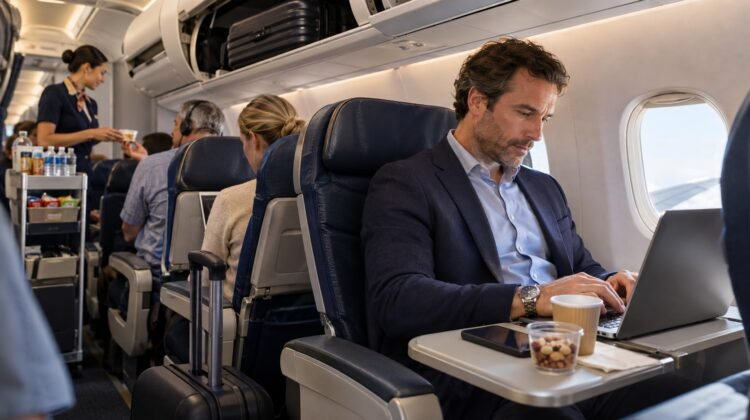
What was once considered standard corporate air travel has been fragmented into distinct, fee-bearing micro-products. Preferred seating in the forward section of the economy cabin or seats offering extra legroom now command premiums between forty-five dollars and one hundred and sixty dollars per flight leg. For an employee traveling with a laptop, access to that space is not a luxury; it is the physical baseline required to work during a four-hour transcontinental flight.
Checked baggage fees, in-flight broadband connectivity passes, priority boarding privileges to secure overhead bin space, and same-day confirmed flight changes have all been converted into transactional add-ons.
When an employee purchases these unbundled amenities using a corporate card or personal expense account, the spending bypasses corporate procurement oversight. Travel directors review neat quarterly dashboards displaying contracted ticket savings, while employee expense reports absorb millions of dollars in untracked charges filed under miscellaneous travel expenses. Procurement benchmarking derived from corporate travel audits demonstrates that this ancillary leakage adds between fourteen and twenty-two percent to the true cost of contracted corporate aviation programs.
Ancillary retailing and direct distribution
Airlines designed this retail structure with deliberate commercial intent. By withholding seat selection, priority boarding, and flexible fare bundles from traditional corporate booking tools, carriers forced corporate travelers to complete transactions on direct airline digital channels. On those proprietary mobile apps and websites, airlines present targeted offers for premium upgrades, airport lounge admissions, and co-branded financial products.
This direct-channel strategy accomplished two distinct commercial goals for airline revenue chiefs. First, it reduced carrier distribution fees paid to third-party technology providers. Second, it systematically obscured the total cost of enterprise travel from corporate procurement managers, significantly weakening corporate leverage during subsequent contract negotiations.
The economic incentive driving airlines toward retail unbundling becomes obvious upon examining operating margins. Across the global aviation industry, the net profit margin on pure passenger transportation remains notoriously slim, hovering between two and six percent in stable operating environments. Volatile jet fuel expenses, heavy capital expenditure on aircraft debt service, and rigid labor contracts leave airlines vulnerable to sudden market downturns.
Ancillary fees operate under entirely different financial dynamics. Charging a corporate traveler seventy-five dollars for an extra-legroom seat incurs zero additional jet fuel consumption, requires no incremental flight crew labor, and demands negligible computing expenditure. Ancillary seat fees and luggage charges yield operating margins between seventy-five and ninety percent.
Loyalty economics and procurement controls
An even more lucrative ancillary stream sits entirely outside the physical aircraft cabin: the sale of frequent flyer miles to co-branded credit card issuers. In the United States, industry analyses by IdeaWorksCompany indicate that the four largest network airlines generate more than 27.9 billion dollars in annual cash flow from banking partnerships with financial giants like American Express, Chase, Citi, and Barclays, with Delta Air Lines alone drawing multi-billion-dollar annual infusions through its American Express franchise.
These loyalty programs are so heavily capitalized that Wall Street analysts regularly value the frequent flyer divisions higher than the operational passenger airlines themselves.
Regulatory efforts to check unbundled fee expansion have faced formidable legal headwinds. In April 2024, the United States Department of Transportation issued a comprehensive final rule mandating upfront disclosure of critical ancillary fees, including baggage and seat selection charges, at the very first point of search. However, a coalition of major commercial carriers and the trade group Airlines for America immediately challenged the regulation in federal court.
The Fifth Circuit Court of Appeals issued an administrative stay and subsequently vacated key provisions of the Department of Transportation’s disclosure rule, delivering a major legal victory to airline commercial lobbies.
Related posts:
 Algorithmic Pricing Under Regulatory Siege: The Legal and Financial Scrutiny of Behavioral Yield Management
 Distribution Architecture Under Strain: The Collision of Airline Direct Retailing and Corporate Intermediation
 The Carbon Balance Sheet: The Economic Collision of Climate Mandates and Corporate Mobility
 The Frictionless Treasury: Virtual Payment Rails and Currency Risk Mitigation in Mid-Market Corporate Travel