Punjab’s Tourism Revolution: From Pilgrimage Pit-Stop to Experiential Powerhouse
Punjab’s Tourism Revolution: From Pilgrimage Pit-Stop to Experiential Powerhouse
With heritage, rural experiences, culinary tourism and strategic investment, Punjab is positioning itself as a deeper, higher-value tourism destination.
CHANDIGARH – Let’s be honest. For decades, Punjab has been India’s most under-monetised tourism asset. A state with a globally recognised cultural identity, a diaspora spanning three continents, and a food heritage that needs no introduction—yet the average international itinerary treats it as a 48-hour footnote: Delhi to Amritsar, Golden Temple, Wagah ceremony, departure.
That narrative is about to change. And the travel trade should pay attention.
The Punjab government is quietly executing a strategic pivot that could transform this culturally rich state from a pilgrimage stopover into a multi-day experiential destination. The opportunity? Not reinventing Punjab, but finally doing justice to what it already has.
The Heritage Anchor—and Beyond
Yes, the Golden Temple and Amritsar remain the crown jewels. But the government’s institutional framework—through the Punjab Heritage and Tourism Promotion Board—is increasingly focused on spreading the visitor economy geographically. Think Anandpur Sahib, Patiala, Sultanpur Lodhi, Fatehgarh Sahib. For tour operators, this is the difference between selling one city and selling an entire cultural circuit.
The Border Experience Gets an Upgrade
One of the most commercially compelling developments is the ₹24.65 crore Border Tourism Experience project at Attari. The Attari-Wagah ceremony is already a powerful draw. The opportunity now is to evolve it from a single scheduled event into a complete visitor ecosystem—interpretation, culture, food, retail, and storytelling. For international visitors, this could become a definitive “only in Punjab” product.
Rural Tourism: Punjab’s Hidden Ace
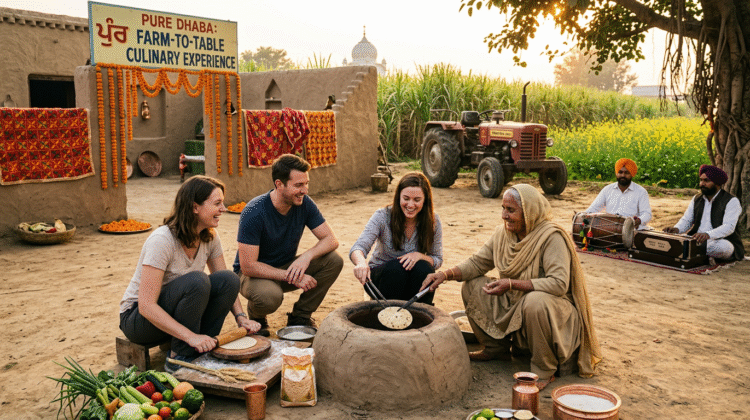
Here is where Punjab has a genuine competitive advantage. The Farm Tourism Scheme is already operational, and it aligns perfectly with global travel trends: immersive experiences, authentic communities, food journeys, and slow travel. For operators, this opens a rich vein of possibilities—farm stays, Punjabi cooking experiences, village walks, agricultural immersion, folk performances, farm-to-table dining. This could become Punjab’s highest-value experiential tourism proposition if professionally packaged.
Farm stays, Punjabi cooking experiences, village walks, agricultural immersion, folk performances and farm-to-table dining could become Punjab’s highest-value experiential tourism proposition if professionally packaged.
Culinary Tourism: The Low-Hanging Fruit
Punjab arguably owns India’s most recognisable food identity. The Pure Dhaba Policy has already recognised this, but the real opportunity lies in a complete culinary journey—dhabas, Amritsari cuisine, village kitchens, tandoor traditions, langar experiences. Food can be the bridge between heritage and contemporary experiential travel.
Festivals, PPPs, and the Ecosystem Play
The Rangla Punjab Festival in Amritsar (2026) signals a broader strategy: using events to generate repeat visitation and seasonal demand. Meanwhile, tenders for PPP-led development of heritage properties like Banasar Ghar at Patiala suggest the government is actively creating opportunities for private operators to activate tourism assets commercially.
What This Means for the Trade
The real story here is about changing the itinerary. Instead of Delhi → Amritsar → Golden Temple → Wagah → departure, the ambition is:
That changes Punjab from a short-stop into a destination ecosystem.
What to Watch Next
For B2B operators, I’d monitor five things: international marketing campaigns targeting diaspora markets, air connectivity into Amritsar, conversion of heritage assets into bookable experiences, professional packaging of farm/rural tourism, and the emergence of a unified Punjab destination brand.
Punjab is taking an already powerful cultural identity and converting it into a deeper, higher-value tourism economy.
For the trade, the message is clear: Punjab is no longer a one-night stop. It’s a destination waiting to be sold properly.
EDITORIAL NOTE — THETRAVIGATOR.COM
This report is part of TheTravigator’s continuing news coverage of the travel, tourism, aviation, and hospitality sectors. Our editorial team publishes industry news, market insights, partnerships, policy developments, and business updates relevant to the travel trade community. For press releases, partnership opportunities, advertising enquiries, or editorial collaborations, please contact our editorial desk at:
INFO@THETRAVIGATOR.COM
This report is part of TheTravigator’s continuing news coverage of the travel, tourism, aviation, and hospitality sectors. Our editorial team publishes industry news, market insights, partnerships, policy developments, and business updates relevant to the travel trade community. For press releases, partnership opportunities, advertising enquiries, or editorial collaborations, please contact our editorial desk at:
INFO@THETRAVIGATOR.COM