The UAE Isn’t Just Selling Holidays. It Is Selling Confidence.
The UAE Isn’t Just Selling Holidays. It Is Selling Confidence.
Why tourism incentives are becoming a strategic tool for protecting connectivity, investment, business activity and the UAE’s wider economic story.
There is something revealing about the UAE’s response to a period of regional uncertainty: it is not retreating from tourism. It is doubling down on it.
The strategic signalAbu Dhabi is offering complimentary UAE entry visas to as many as 20,000 Indian travellers who book qualifying holidays, while Dubai, airlines and hotels are rolling out incentives to bring visitors back.
At first glance, this looks like a straightforward attempt to revive hotel occupancy.
It is much bigger than that.
The UAE Is Protecting Something Bigger Than Visitor Numbers
The country is trying to protect confidence in the destination itself — confidence that supports tourism, connectivity, business activity and investment.
Record Tourism Was Never Just About Tourism
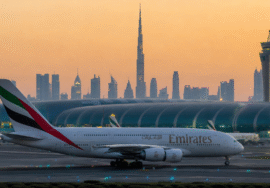
Before the disruption, Dubai had just delivered another record tourism year. In 2025, the city welcomed 19.59 million international overnight visitors, up 5% from 2024. DXB handled an extraordinary 95.2 million passengers, its busiest year ever.
Those numbers tell us something important: tourism is not a side business for Dubai. It is part of the infrastructure through which the emirate maintains its position as a global hub.
And that is why the current response matters.
Tourism as economic infrastructureTourists Are Not the End Customer. Confidence Is.
Consider the economic chain.
The Confidence Chain
→ expatriate population → property demand → foreign capital.
This is why tourism promotion during troubled times should not be viewed purely through the lens of visitor numbers.
When a traveller lands in Dubai, stays in a hotel, eats at a restaurant and takes a taxi, that is the visible economic impact.
But there is an invisible impact too.
Every Visitor Is a Small Vote of Confidence
Every international visitor is also a small vote of confidence in the destination.
If millions continue to arrive, businesses continue to operate, restaurants remain open, flights continue to connect the city to the world and people continue to invest, the message is powerful:
That message matters enormously to investors.
And India Is Not a Random Target
The decision to put India at the centre of the latest visa incentive is particularly revealing.
India is already one of Dubai’s most important international markets. DXB’s 2025 data shows India was the airport’s largest destination country, with 11.9 million passengers travelling between the two markets.
So why offer a free visa to a market that is already so strong?
Because the objective isn’t simply to discover new tourists. It is to accelerate recovery from a market that already has a proven propensity to travel to the UAE.
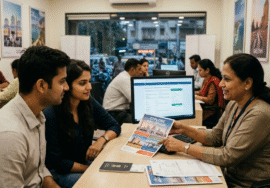
Targeted recoveryThe Abu Dhabi programme reportedly links the visa benefit to a minimum three-night hotel stay and a return flight from India. That is clever policy design.
“Come to Abu Dhabi. Your visa is free.”
The incentive is not designed merely as a travel giveaway.“Come, stay, spend and keep the tourism ecosystem moving.”
The design links the traveller to accommodation, connectivity and wider local spending.And the signal travels much further than the hotel lobby.
Tourism and Real Estate Are More Connected Than They Appear
This is where the story becomes particularly interesting for anyone watching UAE property.
Dubai’s property boom has been fuelled substantially by international buyers, expatriates, entrepreneurs and global investors.
But property investors do not buy a city merely because buildings exist. They buy into a thesis about the future of the city.
Will people continue to move here?
Population confidence shapes long-term demand.Will businesses continue to open?
Commercial activity reinforces the city’s economic proposition.Will airlines continue to connect it to the world?
Global access is fundamental to Dubai’s investment case.Will hotels remain occupied?
Visitor demand is a visible indicator of destination health.Will restaurants and retail continue to thrive?
A functioning consumer economy supports the broader city proposition.Will international professionals continue to choose Dubai?
Human capital sustains business and property demand.Tourism provides evidence for many of those questions.
That is why Dubai’s own government explicitly describes tourism as a key driver of economic diversification and says the sector helps attract investment, talent and new businesses.
The causal relationship therefore runs deeper than:
Tourism → GDP.
The conventional viewThe Bigger Chain
The Real Competition Is Psychological
This may be the most overlooked part of the story.
In periods of geopolitical uncertainty, destinations compete not only for travellers but for perception.
A city that appears empty feels vulnerable.
A city where airports are operating, hotels are welcoming guests, taxis are moving, restaurants are full and international events continue feels resilient.
The city’s greatest asset is increasingly not its skyline, but the feeling that life continues normally.
Perception as destination infrastructureThe numbers reinforce that perception. Even after the disruption, Dubai’s tourism strategy remains focused on global partnerships, connectivity and attracting visitors from a diversified range of markets. In 2025, Western Europe accounted for 21% of Dubai’s international visitors, while South Asia and CIS/Eastern Europe each contributed 15%.
This diversification itself is a form of risk management.
The Bigger Message
So, is the UAE giving away visas simply because it needs tourists?
I don’t think that is the most interesting interpretation.
The more strategic reading is this:
The UAE is defending the perception of continuity.
Tourists keep the physical economy moving.
But more importantly, they help demonstrate that the UAE remains connected to the world.
And that matters to the next person who is deciding whether to relocate a family, open a company, launch a hotel, buy an apartment, invest in a development, establish a regional headquarters, or move capital into the country.
That is why the tourism push matters far beyond tourism.
The UAE Isn’t Merely Trying to Fill Hotel Rooms
It is trying to make sure the world keeps believing in the UAE’s economic story.
And in uncertain times, confidence may be the most valuable product the country can sell.
This report is part of TheTravigator’s continuing news coverage of the travel, tourism, aviation, and hospitality sectors. Our editorial team publishes industry news, market insights, partnerships, policy developments, and business updates relevant to the travel trade community. For press releases, partnership opportunities, advertising enquiries, or editorial collaborations, please contact our editorial desk at:
INFO@THETRAVIGATOR.COM