

Bangus Valley: Kashmir’s Untouched Paradise and India’s New Ecotourism Dream
Bangus Valley: Kashmir’s Untouched Paradise and India’s New Ecotourism Dream
Hidden deep in the mountains of north Kashmir, surrounded by dense forests, rolling grasslands, and snow-covered peaks, lies Bangus Valley — a place so untouched that many Indians have never even heard of it.
For years, Kashmir’s tourism story revolved around famous destinations like Gulmarg, Pahalgam, and Sonamarg. These places attracted millions of tourists, boosted local economies, and became symbols of paradise on earth. But there was also a heavy cost. Rapid commercialization, overcrowding, traffic, plastic waste, and uncontrolled construction slowly began damaging the fragile Himalayan ecosystem.
Now, the Jammu & Kashmir government wants to avoid repeating the same mistake. Instead of turning Bangus Valley into another overcrowded tourist hotspot, the government is attempting something entirely different—building it as a carefully protected ecotourism destination where nature comes before commercialization. If successful, Bangus Valley could become one of India’s most important models for sustainable tourism.
Part OneA Valley Few Have Seen: Raw & Unexplored Beauty
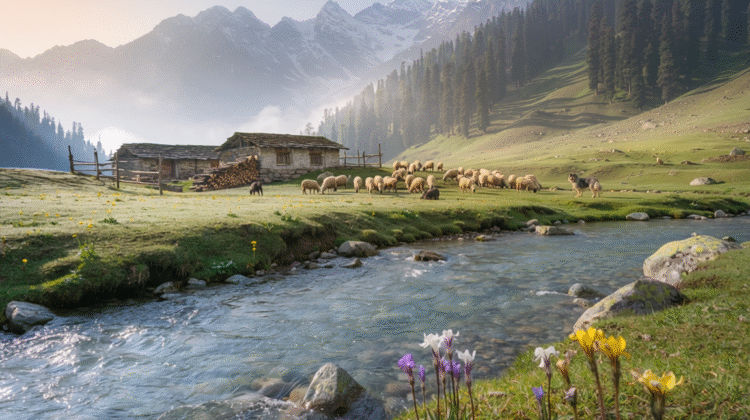
Located in the Kupwara district near the Line of Control (LoC), Bangus Valley feels almost unreal in its beauty. At nearly 10,000 feet above sea level, the valley stretches across vast bowl-shaped meadows surrounded by thick pine forests and towering mountains. Crystal-clear streams cut through the grasslands while rare wildlife quietly thrives in the untouched ecosystem.
Unlike Kashmir’s more famous tourist destinations, Bangus has remained largely unexplored for decades. Part of the reason was geography; the valley is remote and difficult to access. Another reason was security. Historically, the region was considered sensitive because of its proximity to the LoC and was often associated with militant infiltration routes. But over the years, improved security and infrastructure have slowly opened the region to visitors. Similar border destinations like Gurez, Keran, and Machil have already started attracting travelers looking for raw, unexplored beauty. Bangus Valley now appears ready to join that list. Yet this time, the government insists tourism must grow differently.
What Makes Ecotourism Different?
- Focus entirely on forests, wildlife, rivers, and mountains.
- Conservation of biodiversity and fragile ecosystems.
- Educational travel to build awareness about local culture.
- Direct employment for local residents.
- Involvement of indigenous communities in decision-making.
- Profits remain within the localized economy.
- Highly controlled and eco-friendly development.
- Strict bans on mass concrete construction.
- Waste management integrated at the source.
India’s Ecological Wealth — And Its Fragility
India is one of the world’s 17 megadiverse countries, supporting thousands of species found nowhere else on Earth. It contains four globally recognized biodiversity hotspots: The Himalayas, The Western Ghats, The Indo-Burma Region, and The Sundaland Region (Nicobar Islands). However, rapid urbanization, climate change, deforestation, pollution, and unregulated tourism are threatening these fragile ecosystems. In Himalayan regions especially, uncontrolled tourism has intensified environmental degradation. Bangus Valley represents a vital opportunity to take a different path before irreversible damage occurs.
The Government’s Vision: Controlled Development
The Jammu & Kashmir government has made it abundantly clear that Bangus Valley will not be developed like conventional tourist destinations. Authorities are introducing strict environmental safeguards to ensure that tourism infrastructure does not damage the valley’s ecosystem. Any tourism-related construction will require environmental scrutiny and forest clearance through the government’s Parivesh Portal. The absolute focus is on controlled development rather than aggressive commercialization.
| Ecotourism Objective | Strategic Purpose for Bangus Valley |
|---|---|
| Controlled Infrastructure | Prevent environmental degradation from mass hotel builds. |
| Forest Clearance Regulations | Ensure sustainable construction through strict scrutiny. |
| Biodiversity Conservation | Protect local forests, native flora, and vulnerable wildlife. |
| Local Employment | Create sustainable, long-term livelihoods for nearby communities. |
Pioneers of Indian Ecotourism
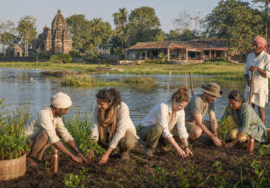
Bangus Valley is not India’s first experiment with ecotourism. Several regions across the country have already proven that sustainable tourism can thrive.
The Global Shift Towards Sustainable Travel
The world is fundamentally changing how it travels. Modern travelers seek meaningful, environmentally responsible experiences. Recognizing this macroeconomic shift, the United Nations declared 2021–2030 as the “Decade on Ecosystem Restoration.” Countries like Costa Rica have demonstrated how ecotourism can become a major economic engine while protecting biodiversity. India now has the opportunity to build a similar legacy.
Catalysts for Tourism Growth
The government has launched multiple sweeping initiatives to support tourism growth nationwide:
Swadesh Darshan 2.0
Focusing on responsible tourism development
PRASHAD Scheme
Heritage and pilgrimage infrastructure
Dekho Apna Desh
Promotion of diverse domestic tourism
UDAN Scheme
Improving deep regional air connectivity
E-Visa Expansion
Ensuring easier international travel access
More Than Just a Tourist Destination
Bangus Valley is not simply another scenic location waiting to be commercialized. It represents a larger question India must answer. For decades, infrastructure development and nature conservation were often treated as polar opposites. But ecotourism bridges this divide. The industry’s rapid expansion—with international tourist arrivals rising steadily and India improving its World Economic Forum’s Travel and Tourism Development Index rank—means sustainability can no longer be an afterthought; it must be the core operational strategy.
B2B Intelligence: Operating in Ecotourism Zones
For Hospitality Developers
Traditional concrete builds are obsolete in these regions. Success requires mastering zero-impact architecture, renewable energy integration, and navigating stringent Parivesh Portal clearances.
For Tour Operators
Shift product offerings from generic sightseeing to highly curated, educational travel. Partner deeply with indigenous communities to provide authentic, low-impact tracking and wildlife guiding.
For Policy Makers
Implement and strictly enforce carrying-capacity limits. Revenue must be measured by the quality and yield of the visitor experience, not merely the volume of footfall.
Why This Matters
Tourism is one of India’s fastest-growing industries, projected to contribute a staggering USD 512 Billion to the GDP by 2028 while generating 53 million jobs. But as this sector expands, sustainability becomes its most critical vulnerability. If implemented carefully, Bangus Valley could become a definitive blueprint for the future of tourism in India—proving that massive economic gain does not require ecological sacrifice.
The Final Word
The ultimate vision for Bangus Valley is a future where forests remain untouched, rivers stay clean, wildlife survives, and local communities prosper—all while travelers experience nature in its absolute purest form. And perhaps that is exactly what modern tourism needs most.
This report is part of TheTravigator’s continuing news coverage of the travel, tourism, aviation, and hospitality sectors. Our editorial team publishes industry news, market insights, partnerships, policy developments, and business updates relevant to the travel trade community. For press releases, partnership opportunities, advertising enquiries, or editorial collaborations, please contact our editorial desk at:
INFO@THETRAVIGATOR.COM