
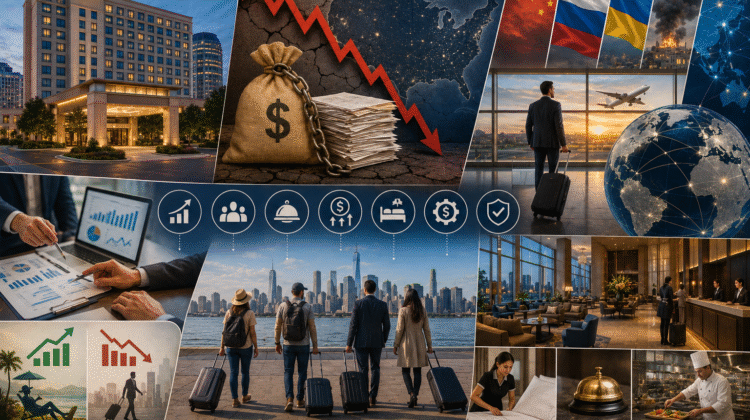
Upside or Downturn? Inside the U.S. Hospitality Shake-Up and What It Means for India’s Travel Trade
The recent sale of the Embassy Suites in Dallas for just $17 million is not merely another hotel transaction in America’s crowded hospitality market. For global travel professionals, investors, tourism boards, airlines, and hotel operators, it is a flashing indicator of a deeper shift underway inside the U.S. hospitality sector one shaped by debt pressure, geopolitical uncertainty, changing travel behaviour, and a post-pandemic economic reset.
For the Indian travel fraternity, especially the B2B ecosystem of tour operators, outbound specialists, hotel representation companies, MICE planners, and aviation stakeholders, this moment deserves close attention.
The U.S. remains one of the most aspirational long-haul markets for Indian travellers. Yet beneath the glitter of luxury brands and record ADRs lies a more complex reality: rising operational costs, stressed hotel owners, weakening commercial travel patterns, and global political tensions are beginning to reshape America’s hospitality economics.
The Dallas Deal That Sparked Industry Attention
The Embassy Suites by Hilton Dallas Near the Galleria was recently sold by Ashford Hospitality Trust for approximately $17 million. Industry observers immediately viewed the deal as a distress-led transaction rather than a strategic disposal.
Why?
Because the proceeds largely went toward repaying debt obligations tied to the property. The hotel had undergone renovations recently, yet still fetched a value many analysts considered below replacement cost for a full-service branded asset in Dallas.
In hotel industry language, this usually signals one thing: pressure.
And this pressure is not isolated.
Across the United States, hotel owners who borrowed heavily during the low-interest-rate era are now facing refinancing shocks. Many commercial real estate loans are maturing in a high-interest environment where debt servicing has become dramatically expensive.
The result is visible across key markets:
Hotel assets being sold below expectations
Brands separating from ownership risks
Investors becoming cautious
Secondary markets showing early distress signals
America’s Hospitality Boom Has a Hidden Crack
On the surface, U.S. hospitality still looks strong.
Luxury hotels are charging premium rates. Major cities continue hosting conventions. Leisure travel demand remains healthy during peak seasons.
But internally, the economics are tightening.
Labour costs in the U.S. hospitality industry have surged significantly since COVID-19. Staffing shortages continue to impact operations. Insurance costs in many states have jumped sharply due to climate-related risks. Utility and maintenance expenses are climbing.
Meanwhile, consumers are changing how they travel.
Corporate travel — once the backbone of premium urban hotels — has not fully returned. Hybrid work culture means fewer conferences, fewer weekday stays, and lower predictable occupancy patterns.
For many hotels, weekends remain profitable, but weekday business remains uneven.
This creates a dangerous mismatch:
Hotels built for stable year-round corporate demand are now surviving on fluctuating leisure demand.
Geopolitics Is Quietly Reshaping Global Travel
The hospitality downturn conversation cannot be separated from geopolitics.
Several global developments are influencing travel confidence and investment behaviour:
U.S.–China tensions
Russia–Ukraine conflict
Middle East instability
Rising protectionism
Visa uncertainty in Western economies
Election-year policy unpredictability in America
International travellers are becoming more cautious with long-haul spending.
Businesses are also reassessing travel budgets globally. Many multinational companies are prioritising regional meetings over expensive intercontinental gatherings.
For Indian outbound travel companies, this matters immensely.
A slowdown in U.S. commercial travel eventually affects:
Hotel contracting rates
Airline pricing strategies
MICE movement
FIT luxury demand
Student travel sentiment
Trade fair participation
The Real Story: Brands Are Fine, Owners Are Not
One of the biggest misconceptions in global hospitality is assuming hotel brands and hotel owners are the same.
They are not.
Brands like Hilton, Marriott, Hyatt, and IHG often continue earning management and franchise fees even when the property owner struggles financially.
This means consumers may still see strong branding and polished marketing while the underlying ownership structure faces severe financial stress.
That is the real inside story of America’s hospitality sector today.
The logos remain powerful.
The balance sheets underneath are becoming fragile.
This distinction is critical for Indian travel professionals dealing with overseas contracting, partnerships, and destination planning.
What Should Indian B2B Travel Players Watch?
Indian outbound travel to the U.S. remains resilient, especially in:
VFR (Visiting Friends & Relatives)
Luxury FIT
Educational travel
Cruise extensions
Corporate incentive travel
However, pricing volatility is likely to increase.
Hotels under financial pressure may:
Offer aggressive wholesale deals
Reduce service quality
Cut operational staffing
Delay renovations
Become acquisition targets
This creates both opportunity and risk for Indian travel businesses.
Smart travel companies may secure better rates and inventory deals in the short term. But they must also carefully evaluate supplier stability and operational reliability.
Airlines and Tourism Boards Are Watching Closely
The U.S. hospitality slowdown also intersects with aviation economics.
If hotel profitability weakens across major American cities, destination competitiveness changes. Airlines may rebalance routes, convention traffic could soften, and international marketing priorities may shift.
Tourism boards are likely to increase trade engagement with emerging outbound markets like India because India still represents one of the few large outbound markets with strong long-term growth potential.
That means:
More roadshows
Stronger trade partnerships
Joint promotions
MICE incentives
Faster destination marketing collaborations
For Indian travel media and B2B networks, this opens a strategic window.
Is This a Crisis or a Correction?
At present, the U.S. hospitality sector is not collapsing.
But it is entering a correction phase.
The ultra-cheap money era is over.
Operational costs are structurally higher.
Traveller behaviour has permanently changed.
The winners will likely be:
Asset-light hotel brands
Luxury experiential properties
Leisure-driven destinations
Tech-enabled operators
Financially disciplined ownership groups
The vulnerable segments include:
Midscale urban convention hotels
Debt-heavy ownership groups
Secondary-market corporate hotels
Older properties requiring major upgrades
Final Word for India’s Travel Trade
For India’s B2B travel fraternity, the Dallas Embassy Suites sale is less about one hotel and more about reading the direction of global hospitality economics.
The message is simple:
Global hospitality is entering a smarter, leaner, more cautious phase.
Indian travel companies that understand global financial signals — not just destination marketing will gain a competitive edge in the coming years.
Because in modern travel business, geopolitics, finance, aviation, tourism, and hospitality are no longer separate industries.
They now move together.
U.S. Hospitality Outlook
America’s hotel sector remains operationally active but financially stressed. Rising interest rates, refinancing pressure, labour inflation, and uneven business travel recovery are squeezing property owners. Branded hotels may appear stable externally, yet many underlying assets face valuation pressure, especially in secondary markets. Expect more strategic disposals, mergers, and distressed opportunities ahead.
Geopolitical Impact on Travel
Global geopolitical instability is increasing uncertainty in long-haul travel planning. Wars, election cycles, visa scrutiny, and economic nationalism are impacting traveller confidence and corporate mobility. International tourism flows are becoming more regionalised. Hospitality businesses dependent on predictable international corporate demand may face prolonged volatility across several global gateway destinations.
Impact on Indian B2B Travel Trade
Indian travel companies may gain stronger contracting leverage as U.S. hotels seek occupancy support. However, supplier stability checks become essential. Opportunities exist in luxury FIT, student travel, VFR, and MICE partnerships. Tourism boards and destinations are likely to intensify trade outreach towards India, recognising its growing outbound travel importance.
This report is part of TheTravigator’s continuing news coverage of the travel, tourism, aviation, and hospitality sectors. Our editorial team publishes industry news, market insights, partnerships, policy developments, and business updates relevant to the travel trade community. For press releases, partnership opportunities, advertising enquiries, or editorial collaborations, please contact our editorial desk at:
INFO@THETRAVIGATOR.COM








Pingback: US World Cup Scare: Hotels Face Soft Demand Two Months Out - TheTravigator