
The Luxury of Having Time: Why Laos Could Become Southeast Asia’s Most Meaningful Slow-Travel Destination
Laos · DESTINATION FEATURE | SLOW TRAVEL • WELLNESS • BUDDHIST HERITAGE • NATURE
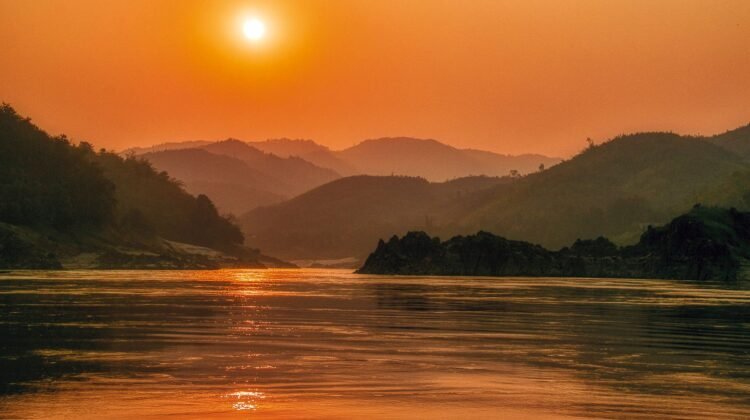
Featured photo: Sunset over the Mekong River in Bokeo Province, Laos. Photo by Dick Hoskins / Pexels.
In an age when travel itineraries are increasingly measured by how many attractions can be covered in five days, Laos offers a refreshing alternative. Here, the most memorable experience might be a morning spent beside the Mekong River, a conversation with a local craftsperson, a leisurely bicycle ride through a traditional village or simply watching the sun disappear behind distant limestone mountains. Laos does not compete with its neighbours through extravagant resorts or internationally recognised beaches. Its strongest appeal is the ability to slow down.
For India’s Generation Z travellers, backpackers, wellness enthusiasts and remote-working professionals, this landlocked Southeast Asian country offers a different definition of luxury: time, simplicity, cultural immersion and a closer relationship with nature.
A familiar spiritual philosophy with a distinctly Lao identity
Laos is predominantly shaped by Theravada Buddhist traditions, which influence its temples, community practices, festivals and everyday social life. For Indian travellers, Buddhism provides an interesting historical connection, although Lao religious culture has developed its own local traditions and expressions.
One of the most recognisable sights in Luang Prabang is the early-morning alms-giving ceremony. Monks walk through the streets collecting offerings from devotees. The ritual reflects Buddhist values of merit-making, generosity and spiritual discipline.
Visitors should observe respectfully, maintain appropriate distance and avoid turning a religious practice into a photography spectacle.
Laos also has a fascinating tradition of baci, a community ceremony in which white cotton strings are tied around a person’s wrist to express blessings, goodwill and protection. It is commonly associated with important life events, welcomes and family gatherings.
For Indians familiar with ceremonial threads, blessings and rituals involving family elders, this tradition offers a point of cultural recognition, although its meaning and practice are specifically Lao.
Luang Prabang: A town that invites you to stay longer
The natural starting point is Luang Prabang, a UNESCO-listed town situated at the meeting point of the Mekong and Nam Khan rivers.
Its character comes from the combination of Buddhist temples, traditional wooden houses, French colonial architecture and riverside neighbourhoods. Wat Xieng Thong is among its most celebrated religious landmarks, while the Royal Palace Museum provides an introduction to the country’s royal history.
But the real charm lies in everyday experiences. Walk through the morning markets, visit traditional textile workshops, explore independent cafés and spend an evening watching the Mekong change colour at sunset.
A trip to Kuang Si Falls adds a spectacular natural dimension, with turquoise pools, forest surroundings and walking trails.

A culinary journey built around simplicity
Lao cuisine is one of Southeast Asia’s most interesting but relatively underexplored food cultures.
The foundation of many meals is khao niao, or sticky rice, traditionally eaten by hand. It is often accompanied by laap, a minced meat or fish salad prepared with herbs, lime, spices and toasted rice powder.
Another favourite is tam mak hoong, a spicy green papaya salad, while mok pa features fish steamed in banana leaves with herbs and seasoning. Khao piak sen, a comforting noodle soup, is particularly popular as a breakfast option.
Unlike some of its neighbours, Lao cuisine often places considerable emphasis on fresh herbs, fermented ingredients and distinctive bitter, sour and spicy flavours.
tourismlaos.org
Night markets are ideal for exploring traditional snacks and regional preparations. Vegetarians should communicate their requirements carefully because fish sauce, fermented fish and shrimp paste are common ingredients.
For younger culinary explorers, joining a cooking class or visiting a local market with a knowledgeable guide can turn a simple meal into a cultural lesson.
Festivals: When Laos celebrates its traditions
The most important celebration is Pi Mai Lao, the Lao New Year, generally held in April. It is associated with cleansing, purification, merit-making and welcoming a new beginning. Buddha images are ritually cleansed, homes are cleaned and water is poured over elders and loved ones as a gesture of blessings. The celebrations also include music, processions and lively public water festivities.
The Boun Bang Fai, or Rocket Festival, traditionally involves launching homemade rockets to encourage rainfall before the agricultural season. It brings together village communities through music, processions and colourful celebrations.
Another important occasion is the That Luang Festival in Vientiane, associated with the country’s most revered golden stupa. Buddhist ceremonies, religious offerings and community celebrations make it an interesting cultural experience.
These celebrations are particularly attractive to culturally curious young travellers who want to understand the agricultural and spiritual foundations of local life.
Beyond Luang Prabang: The freedom to explore
Vang Vieng has evolved from a backpacker nightlife destination into a broader adventure and nature tourism location. Its limestone karsts, caves, lagoons, kayaking opportunities and trekking trails attract young international travellers.
Vientiane, the capital, offers an introduction to contemporary Lao urban life, with Pha That Luang, Patuxai and traditional markets.
Further south, Champasak is home to Wat Phou, a remarkable heritage complex associated with the ancient Khmer cultural sphere. The Four Thousand Islands, or Si Phan Don, offer a relaxed experience along the Mekong, particularly attractive to travellers wishing to escape busy cities.
The Laos–China Railway has also improved opportunities for multi-stop travel, making it easier to consider northern and central destinations in one itinerary.
The digital nomad and slow-travel proposition
Laos is best suited to travellers who do not need a packed daily schedule. Boutique accommodation, guesthouses, cafés and riverside stays provide a relaxed environment for longer holidays.
Remote-working executives should research internet speed, power backup, workspace facilities and accommodation location before booking. Laos should not automatically be marketed as a fully developed digital-nomad hub; its stronger proposition is a slower cultural escape with selected opportunities for working remotely.
What does the journey cost?
| Traveller segment | Indicative six-day budget |
|---|---|
| Backpacker | ₹35,000–₹50,000 |
| Couple | ₹85,000–₹1.20 lakh |
| Family of four | ₹1.35–₹1.90 lakh |
These are the supplied 2026 planning estimates, including return flights from India.
The opportunity for India’s travel trade
Laos offers scope for Buddhist heritage programmes, wellness retreats, river journeys, adventure tourism, village experiences and premium small-group itineraries. It can also be combined with northern Thailand or Vietnam, provided travellers are given enough time to appreciate its distinctive character.
TheTravigator’s verdict: Laos is not a destination to conquer in six days. It is a destination to experience. In a generation increasingly overwhelmed by speed, notifications and crowded itineraries, its greatest selling point may be the opportunity to rediscover the pleasure of travelling slowly.
Beyond the Beaches: About this series
Reimagining Southeast Asia for Generation Z, backpackers, slow travellers and the new generation of location-independent professionals.
Southeast Asia is no longer simply an affordable international holiday option for Indian travellers. It is becoming a region of discovery for a generation that wants to experience destinations rather than merely visit them. Young Indians are increasingly interested in street-food trails, cultural neighbourhoods, music and festivals, traditional crafts, nature-based adventures and accommodation that allows them to stay longer without exhausting their budgets.
For Generation Z and travellers under 30, the appeal lies in authenticity, affordability and experiences worth sharing. Backpackers want freedom to explore. Slow travellers want time to understand local communities. Remote-working executives want reliable connectivity, interesting surroundings and a lifestyle that combines professional commitments with cultural exploration.
Interestingly, Southeast Asia has several cultural connections with India. Hinduism, Buddhism, ancient maritime trade, migration, spices, traditional healing systems and centuries of cultural exchange have shaped the region. Yet every country has interpreted these influences differently, creating distinctive identities, cuisines, festivals and traditions.
For India's outbound travel industry, this presents an opportunity to move beyond conventional sightseeing packages and develop experience-led itineraries for a younger, more independent and increasingly discerning traveller.
The following seven destination features explore not just where to go, but how to experience each country through its food, traditions, festivals, cultural connections and emerging travel lifestyles.
Related posts:
 The Art of Getting Lost: Where Street-Food Adventures, Ancient Traditions and Digital Nomad Dreams Come Together
 LAOS: THE ART OF SLOW TRAVEL IN SOUTHEAST ASIA
 CAMBODIA: THE KINGDOM WHERE ANCIENT CIVILISATIONS MEET MODERN TRAVEL
 PHILIPPINES: AN ARCHIPELAGO OF ISLANDS, CULTURES AND CULINARY SURPRISES