

Sri Lanka’s Tourism Rebound: A B2B Travel Opportunity Emerges
Sri Lanka’s Tourism Rebound: A B2B Travel Opportunity Emerges
The island nation is rewriting its tourism playbook—turning challenges into a strategic pivot toward high-value, sustainable growth. For B2B travel professionals, Sri Lanka’s transformation represents one of South Asia’s most compelling opportunities.
Sri Lanka recorded 1.54 million foreign tourist arrivals during January–August 2026, with India firmly holding the top source market position at 385,483 visitors. The United Kingdom followed with 149,989 arrivals, while China crossed the 100,000 mark with 100,828 visitors. Germany and Russia rounded out the top five with 90,001 and 80,845 arrivals respectively.
Yet the headline numbers mask a more complex reality. Tourism earnings fell 11.5% year-on-year to US$1.79 billion in the first seven months of 2026, leaving the industry needing to average roughly US$480 million monthly for the remaining five months to hit the revised US$4.2 billion target. Average daily spending by Indian tourists has risen to approximately US$154, above Sri Lanka’s overall average of US$148—a trend that underscores the value of targeted market segmentation.
The Geopolitical Disruptor
The Middle East conflict dealt a severe blow to arrivals in March and April 2026. March recorded a sharp decline of 19.8% to 183,979 arrivals, while April saw an even steeper contraction of 22.3% to 135,643 arrivals. The sector recovered in May, with arrivals climbing to 145,745—a year-on-year increase of 9.6%.
Tourism Deputy Minister Prof. Ruwan Ranasinghe acknowledged that disruption to regional air connectivity caused by the Middle East conflict forced the government to downgrade its 2026 targets from 3 million visitors and US$4 billion to 2.7 million arrivals and US$4.2 billion in earnings.
The Colombo Reinvention
The World Bank is betting on Colombo as a destination in its own right—not merely a gateway. THRIVE Colombo, the first of three planned operations with a combined investment of approximately US$200 million, aims to transform the capital into a 48-to-72 hour stay destination.
World Bank Lead Private Sector Specialist Natasha Kapil revealed that only 5–10% of visitors to Sri Lanka actually stay in Colombo, with the average length of stay only about half a day. This represents a significant untapped opportunity, particularly given that Colombo has the country’s largest concentration of five-star hotel rooms.
Two major tourism “loops” have been identified: a Fort-centric loop connecting the waterfront, Galle Face Green, and heritage buildings; and a nature-centric loop around Colombo’s wetlands. The strategy also recognises the need for a Tourism Entrepreneurship Fund to finance events, creative activities, and experiences that can give visitors reasons to stay longer.
Strategic Marketing: Rs. 1.5 Billion Interim Campaign
Sri Lanka Tourism Promotion Bureau has launched an interim digital and PR campaign worth Rs. 1.5 billion, running from August 2026 to April 2027. The campaign targets six priority markets: Australia, the UK, Germany, India, China, and Russia.
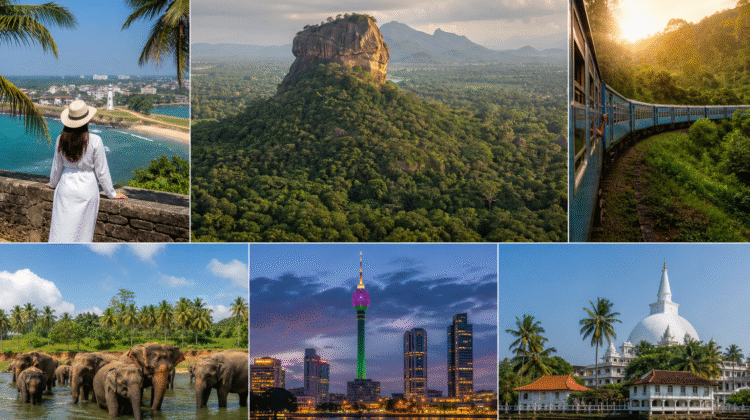
SLTPB Chairman Buddhika Hewawasam outlined a four-goal strategy: higher arrivals, increased earnings, product diversification, and geographic expansion. The campaign promotes lesser-known destinations, especially in the Northern and Eastern provinces, alongside wildlife, adventure, wellness, culinary tourism, train journeys, and community-based experiences.
“This is much more than a tourism project,” Kapil said, describing THRIVE as a platform for the government’s wider tourism agenda, encompassing investment as well as policy reforms.
Value Over Volume: Sri Lanka’s tourism authorities have increasingly focused on retaining more tourism expenditure within the domestic economy. A 2026 SLTDA assessment estimated that around US$1 billion in tourism-related expenditure leaks out of Sri Lanka each year—imported inputs, international supply chains, and offshore bookings contributing to this leakage.
The WTTC’s latest long-term forecast shows visitor exports rising from US$3.73 billion in 2025 to US$4.49 billion in 2026, reaching US$6.46 billion in 2036. This is US$3.54 billion short of the government’s target of US$10 billion in tourism revenue by 2030. The sector must focus on longer stays, higher visitor spending, product diversification, and spreading tourism activity beyond traditional destinations.
| Sri Lanka Tourism at a Glance | Figure |
|---|---|
| Arrivals (Jan–Aug 2026) | 1.54 million |
| India arrivals (Jan–Aug) | 385,483 |
| UK arrivals (Jan–Aug) | 149,989 |
| China arrivals (Jan–Aug) | 100,828 |
| Tourism earnings (Jan–Jul 2026) | US$1.79 billion |
| Revised arrivals target (2026) | 2.7 million |
| Revised revenue target (2026) | US$4.2 billion |
| Interim campaign budget | Rs. 1.5 billion |
| World Bank tourism investment | US$200 million |
| Colombo 5-star room inventory | Highest in Sri Lanka |
| Current Colombo visitor stay | ~0.5 day average |
- India remains the engine of growth. Strategic partnerships with Indian travel trade must be prioritised, with tailored offerings for wedding travellers, weekend-break seekers, and high-value leisure segments.
- Colombo is the new frontier. Early movers in creating 48-to-72 hour Colombo itineraries that combine heritage, arts, and wetland experiences will capture a market underserved by existing product.
- Beyond the southern coast. The Northern and Eastern provinces are being actively promoted for adventure, community-based, and wellness tourism. Product development in these regions is a genuine competitive advantage.
- Value, not volume. The era of mass tourism is over. Sri Lanka is targeting higher-spending visitors who stay longer and engage deeper. B2B operators who align with this strategy will thrive.
This piece is written for B2B travel professionals, tour operators, destination marketers, and hospitality investors seeking to understand Sri Lanka’s strategic repositioning in the South Asian tourism landscape. For partnership inquiries or bespoke destination intelligence, connect via TheTravigator.
This report is part of TheTravigator’s continuing news coverage of the travel, tourism, aviation, and hospitality sectors. Our editorial team publishes industry news, market insights, partnerships, policy developments, and business updates relevant to the travel trade community. For press releases, partnership opportunities, advertising enquiries, or editorial collaborations, please contact our editorial desk at:
INFO@THETRAVIGATOR.COM