India’s Interior Is Open for Business
India’s Interior Is Open for Business
For most of the last decade, India’s hotel story was a story about eight cities. Mumbai, Delhi, Bengaluru, Hyderabad, Chennai, Pune, Kolkata and Ahmedabad absorbed the bulk of branded supply, institutional capital and management attention. Everything else was afterthought.
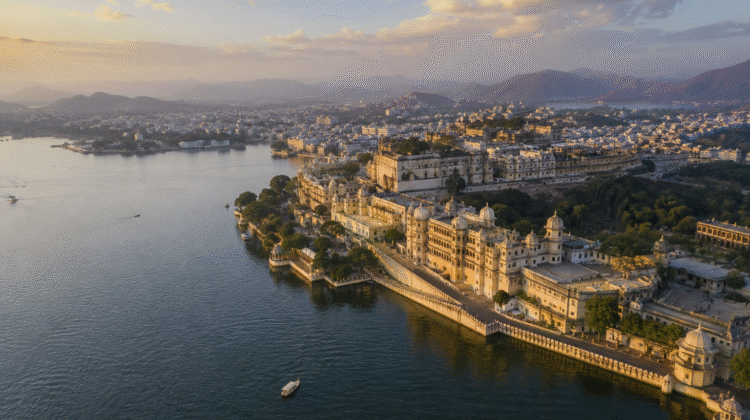
That calculus has changed, and changed fast. More than half of all new hotel signings over the past three years landed outside major metros. In 2025 alone, over 19,000 rooms entered the supply chain across India through new builds, conversions of existing properties and brand affiliations — largely in cities that, until recently, had no branded hotel at all.
Three forces converging at once
The first force is infrastructure. Regional aviation has expanded significantly — new airports, upgraded terminals and increased frequencies on tier 2 routes have compressed travel times that once made a weekend trip to Varanasi or Coimbatore an ordeal. Expressways have further opened corridors that previously had no hospitality catchment.
The second is digital discovery. OTAs and social media have dramatically shortened what the industry calls “destination adoption cycles” — the time from when a traveller first hears of a place to when they actually book a room there. An Instagram reel of a heritage haveli in Jodhpur or a yoga retreat in Rishikesh now converts to bookings within weeks, not years.
The third, and arguably the most structural, is the rise of the domestic traveller. Domestic bookings now account for 65% of hotel demand nationally, with mobile bookings reaching 55% of all reservations. These travellers are younger, more experience-driven and increasingly willing to travel beyond the beaten path.
“Wellness, spiritual and cultural tourism is expanding at roughly 20% CAGR — drawing higher-yield stays, longer lengths of stay and a traveller profile that did not exist at scale five years ago.”
MMT-CRISIL / McKinsey synthesis, FY2025Where the rooms are going
The spiritual corridor alone — Rishikesh, Varanasi, Bodh Gaya, Ayodhya and Hampi — has become one of the most contested battlegrounds for branded supply. Foreign independent travellers, who now represent 38% of inbound visitors to India, increasingly route their itineraries through these destinations, favouring boutique and heritage properties over the large-format business hotels that dominate metro markets.
Asset-light models accelerate the land grab
The operating playbook for this expansion is almost uniformly asset-light. Marriott is scaling via its Series brands and franchise structures. Wyndham has leaned hard into conversion franchising — signing existing independent hotels under its flags rather than waiting for greenfield builds. Accor, Taj and ITC have similarly prioritised conversions and management contracts that require minimal capital from the chain itself.
Institutional ownership now covers roughly 45% of chain-affiliated rooms in India — a figure that has climbed steadily as private equity and real-estate funds recognise the spread between acquisition costs in tier 2 markets and the RevPAR trajectories available there.
The problems money alone cannot solve
What this means for travel industry players
For corporate travel managers, MICE buyers and tour wholesalers, the shift creates both opportunity and operational complexity. Metro-centric rooming lists and preferred-hotel programmes are increasingly disconnected from where Indian demand is actually flowing.
Players who pivot to regional cluster strategies — packaging wellness, heritage or spiritual experiences with local operators — will have access to a yield profile that metro inventory simply cannot match.
The strategic imperatives are clear: distribution control matters more than room count. Operators who build direct-booking capability and reduce OTA dependency will generate structurally better returns. Workforce upskilling, not just recruitment, is the moat that will separate professional platforms from the proliferating crowd of flag-and-forget conversions.
Three scenarios for 2026–2028
India’s hospitality renaissance beyond the metros is real, measurable and accelerating.
But it will not be won by whoever signs the most flags. It will be won by whoever builds the deepest operational moat in the fewest markets — and has the governance discipline to hold it.
India’s interior is open for business — and hospitality capital is finally paying attention.
This report is part of TheTravigator’s continuing news coverage of the travel, tourism, aviation, and hospitality sectors. Our editorial team publishes industry news, market insights, partnerships, policy developments, and business updates relevant to the travel trade community. For press releases, partnership opportunities, advertising enquiries, or editorial collaborations, please contact our editorial desk at:
INFO@THETRAVIGATOR.COM