
IATA Trials Prove Global Aviation Is Ready for Seamless, Contactless Travel

IATA Director General
In a major step toward frictionless international travel, the International Air Transport Association (IATA) has declared that the aviation industry is now ready to replace paper documentation with digital identity and biometric-enabled, contactless journeys.
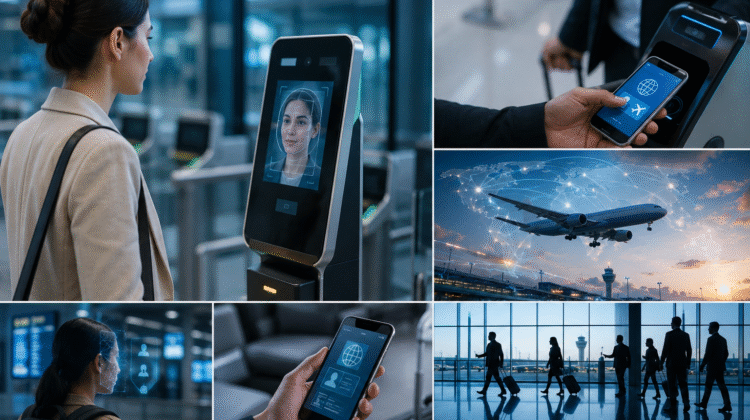
The announcement came from IATA Director General Willie Walsh during an April 8 press conference in Singapore, where he highlighted the successful completion of several proof-of-concept (PoC) trials under the IATA Strategic Partnerships Program. These trials, supported by airlines, airports, technology partners, and governments across Europe and Asia-Pacific, demonstrated how digital identity stored in mobile wallets—combined with biometric verification—can power seamless passenger journeys without repeated manual document checks.
Crucially, the trials proved that system interoperability has matured significantly. Multiple carriers and different digital identity platforms—including Digital ID in Apple Wallet for US passport holders, Google ID pass for UK and US travelers, and India’s homegrown Digi Yatra program—can now work together smoothly within a single journey.
Three real-world trials validated this progress
-
- Japan Airlines tested an international connecting journey from Tokyo Haneda to Hong Kong to a European airport. Passengers shared identity data in advance via digital wallets, enabling biometric processing at departure gates and transfer points.
-
- Air New Zealand ran a trial from Auckland to Hong Kong, where passengers used the airline’s own digital wallet to share identity data during booking and check-in, allowing remote biometric enrolment and contactless processing at both airport and customs touchpoints.
-
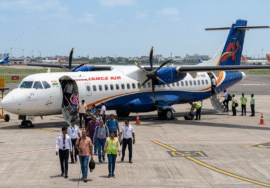
- IndiGo , operating out of Bengaluru, demonstrated cross-provider interoperability by showing that different digital identity solutions—ranging from national programs like Digi Yatra to international wallet credentials—could function together seamlessly from airport entry right through to boarding. The bottom line: The technology is ready. The systems can talk to each other. And the era of standing in long queues with paper passports and boarding passes may finally be coming to an end.
B2B Travel Fraternity – Industry Analysis
Sharp Take: IATA’s biometric trials signal end of paper documents for international travel. B2B players must invest in interoperability or risk obsolescence. Corporate travel, luxury segments, and transit hubs will gain most. Digi Yatra’s global compatibility is a competitive advantage for India outbound.
This report is part of TheTravigator’s continuing news coverage of the travel, tourism, aviation, and hospitality sectors. Our editorial team publishes industry news, market insights, partnerships, policy developments, and business updates relevant to the travel trade community.
For press releases, partnership opportunities, advertising enquiries, or editorial collaborations, please contact our editorial desk at:
INFO@THETRAVIGATOR.COM