Vietnam Speedboat Tragedy Puts Tourist Safety Under the Spotlight
A Holiday That Ended in Tragedy
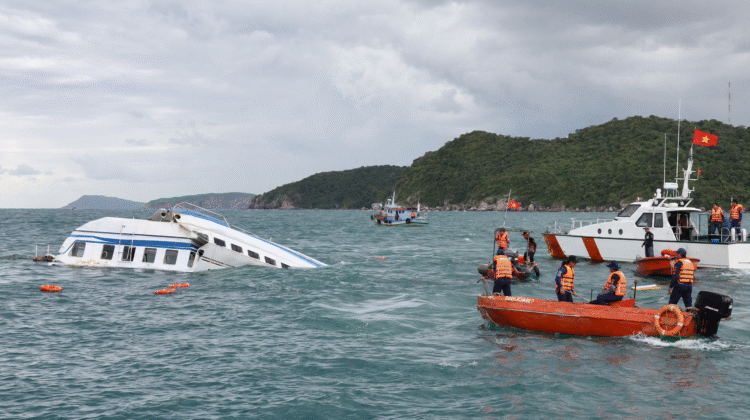
A sightseeing trip near Vietnam’s Phu Quoc Island turned into a tragedy on 11 July 2026 when a tourist speedboat carrying 32 Indian travellers and four Vietnamese crew members capsized near Hon May Rut Ngoai Island.
The vessel was returning towards An Thoi Port when it overturned a short distance from the island. Fifteen Indian tourists—13 men and two women—lost their lives, while 21 people were rescued. The passengers reportedly included employees and channel partners of Indian electronics company Lava International who were visiting Vietnam as part of a company-organised trip.
Local boat operators, jet skis, border guards and rescue personnel joined the emergency operation. Most survivors were subsequently discharged, while one seriously injured passenger continued receiving treatment in Ho Chi Minh City. The mortal remains of the victims were later repatriated to India with support from Vietnamese authorities and the Indian Embassy.
Latest Investigation Findings
Vietnamese authorities have opened a criminal investigation into the accident. The speedboat’s 57-year-old captain, Nguyen Hong Hai, was detained on suspicion of violating waterway transport safety regulations.
Investigators are examining the vessel’s technical condition, operating permissions, passenger-safety arrangements and the decision to sail during deteriorating weather. They are also expected to determine whether passengers received an adequate safety briefing and whether properly fitted life jackets were being worn when the boat overturned.
Vietnam’s government has ordered a comprehensive investigation and directed the relevant authorities to review the safety procedures governing tourist vessels around Phu Quoc. However, the final cause of the accident has not yet been officially established.
What May Have Caused the Capsizing?
Rough weather remains the leading explanation. Reports from the area described strong winds, turbulent water and waves reportedly reaching approximately three metres. One survivor recalled that a sudden storm and a large wave created panic shortly before the speedboat overturned.
Investigators must now determine whether the weather changed without sufficient warning or whether the vessel continued operating despite unsafe conditions. The boat’s speed, stability, passenger distribution and the captain’s response to the waves may also form part of the investigation.
Questions have additionally emerged over the availability and use of life jackets. Survivor accounts suggesting that some passengers were not wearing them require official verification. Until the investigation concludes, poor weather, operational judgement and possible safety lapses remain theories rather than confirmed causes.
Safety Measures Needed After the Incident
Tourist-boat safety must begin before passengers board. Operators should obtain weather clearance before every departure and continuously monitor marine forecasts. Authorities must establish strict thresholds for suspending services when winds, waves or visibility become dangerous.
Every passenger should receive a correctly sized life jacket and be required to wear it throughout the journey. Multilingual safety briefings must explain emergency exits, flotation equipment and the correct response if a vessel overturns.
Tourist boats should also carry GPS tracking, functioning radios, emergency distress equipment, verified passenger manifests and first-aid supplies. Captains and crew members must receive recurring training in CPR, water rescue, evacuation and crisis communication. Regular technical inspections and surprise safety audits should be mandatory.
Indian tour organisers sending groups overseas must verify the local operator’s licence, insurance, safety record, vessel certification and emergency plan instead of relying solely on a destination partner or the lowest available quotation.
Lessons from ATOAI’s Risk-Management Initiative
The Adventure Tour Operators Association of India held its National Seminar on “Indian Adventure Tourism: Risk Management” in New Delhi on 18 May 2026. The event brought together government representatives, operators, rescue specialists, insurers, legal experts and adventure-tourism professionals.
Discussions covered safety protocols for land-, air- and water-based activities, equipment inspection, guide certification, insurance, incident response and ISO 21101, the international standard for adventure-tourism safety-management systems. A key outcome was the formulation of recommendations for a National Roadmap for Adventure Tourism Risk Management.
What Indian Businesses and Government Must Do
Following ATOAI’s “3Gs”—Guidelines, Gear and Guides—businesses must verify operators, inspect equipment, monitor weather and maintain written emergency plans. Guides and crew should receive regular first-aid, CPR, rescue and evacuation training. The government should mandate operator registration, common safety procedures and periodic surprise audits. A national database of licensed operators, accidents and compliance records would help businesses and travellers make safer choices. States should adopt a common framework aligned with ISO 21101 and suspend operators that repeatedly violate safety requirements.
The Phu Quoc tragedy is a warning for the entire tourism industry: safety cannot depend on verbal assurances. It must be supported by trained personnel, certified equipment, documented procedures and a tested emergency-response system.
This report is part of TheTravigator’s continuing news coverage of the travel, tourism, aviation, and hospitality sectors. Our editorial team publishes industry news, market insights, partnerships, policy developments, and business updates relevant to the travel trade community. For press releases, partnership opportunities, advertising enquiries, or editorial collaborations, please contact our editorial desk at:
INFO@THETRAVIGATOR.COM