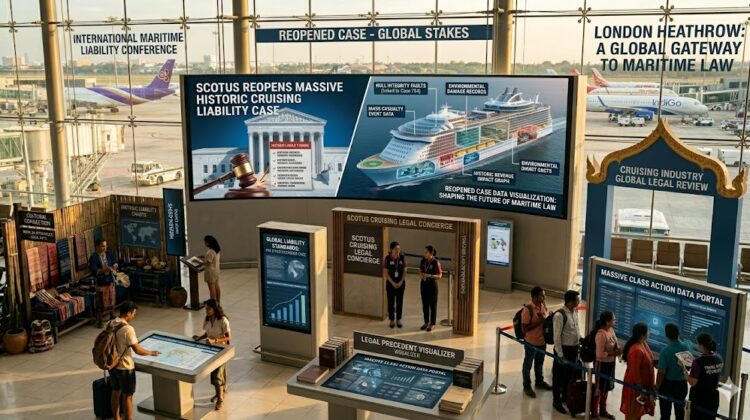
SCOTUS Reopens Massive Historic Liability Case
In a landmark 8-1 ruling, the U.S. Supreme Court (Havana Docks Corp. v. Royal Caribbean Cruises, Ltd., et al.) handed down a major defeat to four of the world’s largest cruise operators Carnival, Royal Caribbean, Norwegian, and MSC.
The court ruled that the cruise lines “trafficked in confiscated property” when they utilized the Havana Cruise Port Terminal between 2016 and 2019 property that was nationalized by Fidel Castro’s Cuban government in 1960.
The Legal Ripple Effect
The cruise lines fiercely argued they weren’t liable because Havana Docks’ original commercial concession to operate the piers was set to expire in 2004 anyway. The Supreme Court soundly rejected that defense, clarifying that under the 1996 Helms-Burton Act, the physical property itself remains legally “tainted” indefinitely if seized unlawfully.
The case now heads back to lower courts, reviving dynamic claims that exceed $400 million in total penalties. This sets a heavy legal precedent for international maritime operators regarding the historical chain of ownership for global port infrastructure.
This report is part of TheTravigator’s continuing news coverage of the travel, tourism, aviation, and hospitality sectors. Our editorial team publishes industry news, market insights, partnerships, policy developments, and business updates relevant to the travel trade community. For press releases, partnership opportunities, advertising enquiries, or editorial collaborations, please contact our editorial desk at:
INFO@THETRAVIGATOR.COM