

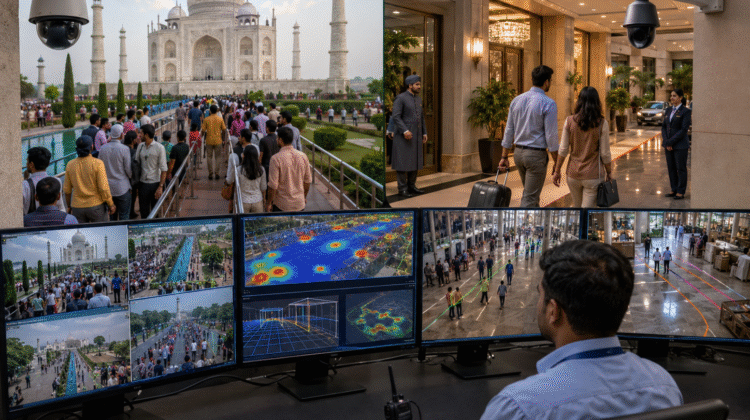
AI-Enabled CCTV: Redefining Guest Safety and Crowd Management in Tourism
AI-enabled CCTV is becoming a core layer of guest safety in travel, tourism, and hospitality, not just a passive recording tool. At major heritage sites, pilgrim routes, hotels, and event venues, it now helps monitor crowds, detect unusual behavior, improve queue flow, and support faster response to incidents.
CCTV has evolved from a simple crime-prevention device into an operational intelligence system for the tourism sector. In heritage and high-footfall destinations, cameras are increasingly used to protect visitors, preserve assets, and manage movement in real time. The Taj Mahal is a strong example the Archaeological Survey of India is set to install 20 AI-enabled cameras with facial recognition, pedestrian tracking, heat mapping, queue management, and sound detection to strengthen security and improve visitor flow at a site that receives nearly 69 lakh visitors a year. This shows how surveillance can serve both protection and service efficiency.
The same logic applies to pilgrimages and major gatherings. On routes such as Amarnath Yatra, layered surveillance systems, identity controls, and live monitoring help authorities manage risk in dense, time-sensitive environments. For festivals, MICE events, and transport hubs, CCTV helps prevent stampede-like congestion, identify bottlenecks, and give organizers a live view of crowd behavior. In tourism, where large numbers of strangers move through shared spaces, visibility is a form of safety.
Hotels are also using CCTV in more sophisticated ways. Beyond theft prevention and access control, AI video analytics can help detect suspicious behavior, protect staff, and identify VIPs or returning guests for personalized service. In this sense, surveillance is no longer only about stopping threats it can also improve service quality, operational planning, and guest confidence. However, the same technology can create concerns about privacy, data retention, and over-monitoring, so hotels must use it transparently and proportionately.
The future of CCTV in hospitality will depend on balance. Smart surveillance can reduce risk, support smoother movement, and help staff respond before incidents escalate. But systems must be designed with clear policies, secure storage, and limits on data use. In a sector built on comfort and trust, technology works best when it protects guests without making them feel watched.
License or certification
For commercial CCTV installation and operation , requirements vary by country, but the main obligations usually involve compliance with local privacy/data laws, security-system licensing rules, and any permissions required for biometrics or facial recognition. In India, heritage or public-site surveillance typically needs government authorization, procurement compliance, and adherence to applicable privacy and technology rules rather than a single universal “CCTV license”. If facial recognition is used, additional legal review is usually needed because biometric monitoring is more sensitive than ordinary video recording.
For a hotel or tourism business, the practical checklist is:
- Use an authorized security integrator or vendor.
- Follow local CCTV and data-protection rules.
- Put up visitor notices where required.
- Limit retention and access to footage.
- Get special approvals for biometric analytics if the law demands it.
This report is part of TheTravigator’s continuing news coverage of the travel, tourism, aviation, and hospitality sectors. Our editorial team publishes industry news, market insights, partnerships, policy developments, and business updates relevant to the travel trade community. For press releases, partnership opportunities, advertising enquiries, or editorial collaborations, please contact our editorial desk at:
INFO@THETRAVIGATOR.COM