


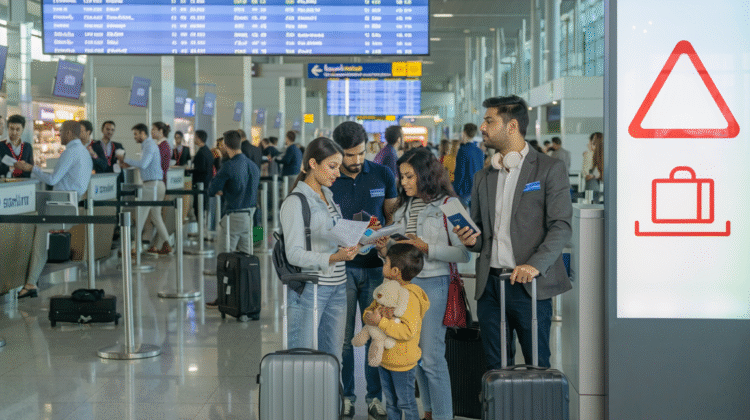
The 95% Unprotected Nation: Why India’s ₹1,500 Crore Travel Insurance Blind Spot Is a Crisis Waiting to Explode
The 95% Unprotected Nation: Why India’s ₹1,500 Crore Travel Insurance Blind Spot Is a Crisis Waiting to Explode
The highway out of Delhi toward Manali is clogged with SUVs, their roofs stacked with bicycles, their trunks packed with sleeping bags. Inside, families chat over biryani containers, kids scroll through phones, and no one thinks twice about the hairpin bends ahead. None of them are insured.
They’re not alone.
For every 100 Indians packing bags for a domestic trip, only 5 bother to buy travel insurance. The remaining 95% drive, fly, and trek across one of the world’s most chaotic travel landscapes — completely unprotected.
The math is staggering. India recorded an estimated 4.5 billion domestic tourist visits in 2025, a number expected to exceed 9.5 billion by 2030. Yet the domestic travel insurance segment generated a paltry ₹125.53 crore in premiums, covering just 1.62 lakh policies despite ostensibly protecting 43.31 crore “lives” on paper.
This is not a market. This is an accident waiting to happen on four wheels, two wings, and a thousand treacherous hill roads.
The Great Indian Disconnect: Travel Boom vs. Insurance Bust
Picture this: A college group squeezes into an overnight Volvo to Goa, laughing over music and snacks. A senior citizen pilgrimage tour files through the Andhra heat. A corporate team boards a domestic flight for a weekend offsite in Pune.
Now ask: Who among them is insured?
The answer, according to industry data, is almost nobody.
“Domestic journeys account for just one per cent of our travel insurance portfolio,”
TATA AIG Analysis (noting that 99% of their travel policies are purchased exclusively for international trips)
This means the &x203A;₹17.3 billion travel insurance market—projected to grow to ₹41.7 billion by 2031—is almost entirely propped up by Indians flying abroad, not those traveling at home. The moment you remove mandatory visa requirements for Schengen countries or the US, the entire edifice of India’s travel insurance sector collapses like a house of cards.
Scenario 2: The Black Night Is Already Here
Industry analysts have long warned of “Scenario 2”—where a government appeal to avoid unnecessary foreign travel, combined with a depreciating dollar, triggers a massive domestic tourism surge. For travel insurers, this scenario was supposed to be a “big black night.”
But here’s the uncomfortable truth: That night has already fallen. We are living in it right now.
Domestic tourism is booming like never before. The government’s “Dekho Apna Desh” initiative has worked almost too well. But has the insurance sector capitalized on this? No.
| Metric | International Travel | Domestic Travel |
|---|---|---|
| Insurance Penetration | High (driven by visa mandates) | Abysmally Low (5%) |
| Premium Value | High (₹1,000 – ₹5,000+) | Dirt Cheap (₹50 – ₹500) |
| Claim Awareness | High (medical emergencies abroad) | Almost Non-existent |
| Portfolio Share | 99% (for major insurers) | 1% |
As one insurance broker put it, “Many domestic passengers assume travel insurance is only for rare events like accidents.” They don’t realize it covers flight delays, baggage loss, road mishaps on dangerous ghats, or medical evacuations from remote hill stations.
Why India Says “No Thanks” to Coverage
To understand why 95% of domestic travelers are raw-dogging their journeys, you have to understand the Indian mindset. We are a nation that loves a deal but hates paying for “nothing.”
Narendra Bharindwal, President of the Insurance Brokers Association of India, explains the structural rot:
“In most developed markets, travel insurance is seamlessly embedded at the time of ticket booking through airlines, OTAs, or card-linked benefits. In India, the purchase journey is still largely optional and unprompted.”
The result is a perfect storm of ignorance and apathy:
“It’s just a weekend trip to Manali. Nothing will happen.” Famous last words. India’s hill stations are becoming death traps of congestion and road accidents, yet the perception of “low risk” for short durations persists.
When booking on platforms like MakeMyTrip or Paytm, the insurance checkbox is often hidden, unticked, or relegated to fine print. Unlike the West where it’s a default opt-out, here it is an opt-in that requires conscious effort.
While metros are slowly waking up to risk management, financial literacy in smaller towns remains a hurdle. As one report notes, “Many travelers in tier-2 cities and rural areas remain unaware of the benefits of travel insurance or perceive it as non-essential.”
Indians have a high tolerance for chaos. We accept delays, broken baggage, and missed connections as part of the “travel experience.” We rarely calculate the financial cost of these disruptions.
The ₹125 Crore Reality Check
Let’s look at the raw numbers. Irdai data from FY24 reveals a shocking disparity:
- Overseas Travel Insurance: 23.23 lakh policies covering 7.5 million lives → Premium: ₹1,099 crore
- Domestic Travel Insurance: 1.62 lakh policies covering 43.31 crore lives → Premium: ₹125.53 crore
Do the math. Forty-three crore Indians were nominally “covered” by domestic policies in a year when 4.5 billion trips were taken. That coverage figure is likely a statistical mirage, probably representing bulk group policies for corporate travel or institutional tours.
The reality is that hundreds of millions of road-trippers, bus passengers, and domestic flyers are flying blind.
What Happens When (Not If) the Crisis Hits?
Imagine this: A 50-seater bus full of tourists skids off a ghat road in Himachal Pradesh. Among the 50 passengers, perhaps 2 have insurance. The rest face lakhs in medical bills, no evacuation coverage, and zero compensation for trip interruption.
Or consider the recent IndiGo crisis that left thousands stranded at airports. Those without travel insurance had to eat the cost of hotels, last-minute alternate flights, and meals out of pocket.
The travel insurance industry in India currently contributes less than 1% to the general insurance industry’s nearly ₹3-lakh-crore gross premium pool. That is not just a niche; that is an irrelevance. But it doesn’t have to be.
The Silver Lining (Or Wake-Up Call)
The good news is that the needle is moving — glacially, but moving. Policy issuance for travel insurance grew 15% year-on-year in 2025, and purchases rose 43%. There is a growing recognition that travel insurance is transitioning from an “optional add-on” to a “travel essential.” However, this growth is still overwhelmingly international.
Here is the wake-up call for the sector: If domestic tourism hits 9.5 billion visits by 2030, and penetration remains at 5%, you have left over 9 billion uninsured trips on the table. That is not a missed opportunity. That is professional negligence by the insurance industry.
The Blueprint for Survival
To avoid the “Black Night” scenario, insurers need to stop treating domestic travel like an afterthought. They need to:
Make domestic travel insurance a default inclusion at checkout, not an optional add-on. Make users uncheck the box if they don’t want it.
A ₹49 policy for a 2-day road trip. A ₹99 policy for a bus journey. Pocket-change pricing that feels like “nothing” to lose.
Create “Hill Station Special” policies that explicitly cover altitude sickness and ghat road accidents. “Pilgrimage Covers” for the elderly traveling to Vaishno Devi or Tirupati.
The industry needs a collective campaign — “Pack Insurance Like You Pack Your Bags” — to change the perception from “luxury” to “necessity.”
Use the airline crisis and the rising frequency of flight delays as marketing material. Show people the cost of not having insurance.
The Bottom Line
India is on the cusp of becoming the world’s largest domestic travel market. Families are hitting the roads in record numbers. The government is cheering the tourism boom. But the travel insurance sector is asleep at the wheel.
Right now, a bus full of uninsured tourists is navigating a dangerous highway. Right now, a domestic flight is being delayed for six hours, and none of the passengers will see a rupee of compensation.
How many accidents, medical emergencies, and financial devastations will it take for India to wake up? The data is clear. The path forward is clear. The only question is: Will the insurers pivot aggressively, or will they wait for a catastrophe to force their hand?
This report is part of TheTravigator’s continuing news coverage of the travel, tourism, aviation, and hospitality sectors. Our editorial team publishes industry news, market insights, partnerships, policy developments, and business updates relevant to the travel trade community. For press releases, partnership opportunities, advertising enquiries, or editorial collaborations, please contact our editorial desk at:
INFO@THETRAVIGATOR.COM