

Trapped in the Gulf
The Harrowing 48-Hour Ordeal of Indian Families Stranded in a War Zone
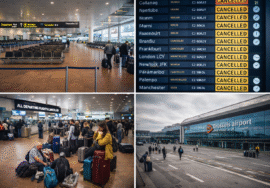
Behind the statistics of cancelled flights and airspace closures lies a far more devastating reality — thousands of Indian families stranded in uncertainty, fear, and financial distress across the Gulf region.
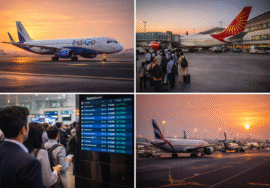
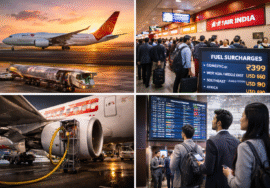
As Middle East airspace disruptions triggered mass flight cancellations, Indian nationals became the largest affected group. What began as holidays, business trips, educational tours, and corporate outings quickly spiraled into survival-mode scenarios.
A Child’s Dream Vacation Turns Into Fear
For a four-year-old from Noida, the trip was meant to be magical — visits to the Burj Khalifa and Ferrari-themed attractions in Dubai. Instead, his family’s February 28 flight was abruptly cancelled.
Hotel announcements urged guests to remain indoors. Phone alerts buzzed with emergency advisories. Parents tried to shield their child from anxiety as explosions echoed in the distance.
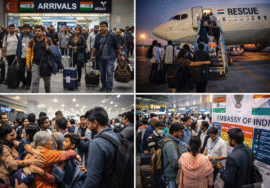
After days of uncertainty, they finally returned to India aboard a special Air India relief flight — relieved, but shaken.
Senior Citizens Stranded Without Funds
In another case, 23 travellers from Thane — including 12 senior citizens and women — remain stranded in a Dubai hotel. Their prepaid tour funds have been exhausted. With extended stays and limited clarity, they have appealed to authorities for urgent financial and logistical assistance.
One stranded woman described watching drones and flashes in the night sky from her hotel window while families back home panicked.
For elderly travellers, prolonged uncertainty amplifies both physical and emotional strain.
Medical Emergencies and Financial Stress
A college principal from Punjab, stranded in Sharjah, ran out of local currency and essential blood pressure medication after spending funds allocated for her final travel day. Others report falling ill amid stress and supply shortages.
With payment cards failing and currency exchange services limited, even basic necessities have become a challenge.
Corporate Groups in Disarray
A Mumbai-based finance professional was part of a 400-member corporate incentive trip when operations were suddenly suspended. Groups were scattered across hotels, unsure who had departed and who remained.
In desperation, one traveller undertook a six-hour road journey to Oman, paying four to five times the usual airfare for a last-minute ticket home.
The chaos highlights how quickly structured itineraries collapse in crisis conditions.
Students and Young Professionals in Limbo
Eighty-four MBA students from Pune remain stranded alongside faculty members. A 22-year-old professional from Delhi admitted he returned only because his parents were “extremely panicked.”
Even public figures have been caught in the turmoil. A former Madhya Pradesh MLA shared videos of smoke rising near his Dubai hotel, describing the atmosphere as tense and unpredictable.
Gaps in Official Support
Confusion over accommodation support has worsened anxiety.
Authorities in Abu Dhabi reportedly directed hotels to extend stays free of charge. However, many Dubai properties claim they have received no such instruction. Guests report inconsistent messaging and a lack of clarity regarding government-backed extensions.
This disconnect has left many Indians uncertain about how long they can remain in their hotels without additional financial burden.
Families Waiting Back Home
The emotional toll extends beyond those stranded.
In Lucknow, one man has lost contact with 15 relatives in Iran after explosions forced them into bunkers. Across India, families remain glued to news updates, waiting for calls or confirmations.
With thousands of flights cancelled regionally and over a thousand Indian international flights grounded, the humanitarian dimension of this crisis continues to unfold.
What This Means for the Travel B2B Fraternity
This crisis underscores a harsh truth: itinerary management alone is no longer enough.
Travel businesses must prepare for geopolitical volatility with structured contingency planning.
Immediate Strategic Lessons:
- Build formal emergency communication protocols with hotel partners
- Pre-negotiate contingency accommodation rates in high-risk regions
- Maintain updated client emergency contact databases
- Offer comprehensive travel insurance covering conflict-related disruptions
- Establish direct coordination channels with Indian embassies and consulates
- Create evacuation and crisis-response SOPs for group travel
The ability to respond swiftly during crisis will define brand trust in the years ahead.
These articles are part of our ongoing coverage of emerging travel trends affecting the Indian B2B travel industry. For collaboration, advertising, or content partnerships, contact our editorial team …INFO@THETRAVIGATOR.COM.