Slow Travel: How Extended Stays Are Changing Indian Holiday Economics
In a world obsessed with speed, a growing number of travelers are choosing to slow down.
Instead of racing through multiple destinations in a few days, Indian travelers are beginning to embrace a different philosophy—slow travel. This approach focuses on experiencing a destination deeply rather than simply checking it off a list.
For B2B travel companies, this shift is reshaping how holidays are packaged, marketed, and priced.
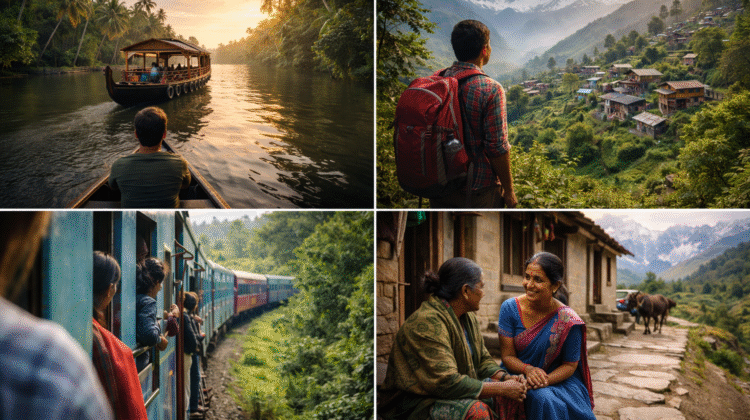
Slow travel means spending a week in one village instead of seven cities in seven days. It means taking local trains instead of rushing through airports, eating at family-run restaurants instead of hotel buffets, and actually understanding a place rather than just photographing its landmarks.
Moving Beyond the Package Tour Mindset
For decades, Indian holidays were defined by the classic package tour formula: five cities in ten days, tightly packed schedules, and every meal pre-planned.
Slow travel requires unlearning this mindset.
Instead of asking “How many places can we see?”, travelers now ask “How deeply can we experience one place?”
The difference is profound.
Travelers return home not exhausted from constant movement, but energized—having made local connections, learned a few phrases, and discovered hidden corners that rarely appear on guidebooks.
The destination becomes more than a memory. It becomes an experience that stays with them.
Longer Stays Are Becoming the Norm
Indian travel companies are reporting a noticeable shift toward longer holiday durations, particularly trips lasting 10 to 14 days.
Instead of quick weekend escapes or rushed itineraries, travelers are opting for extended stays that allow them to immerse themselves in local culture and rhythm.
Nature and wildlife experiences are especially well suited to this style of travel.
A wildlife safari, for example, demands patience. You cannot rush a tiger sighting. You wait quietly, observe the forest, and appreciate the moment when nature reveals itself.
Slow travel encourages that patience—and rewards it.
Sustainability Driving the Trend
Slow travel also aligns closely with the growing demand for sustainable tourism.
Longer stays often result in:
- Fewer flights and reduced transportation emissions
- Lower overall environmental impact
- Greater spending within local communities
Instead of passing quickly through destinations, travelers contribute more meaningfully to local economies by supporting family-run businesses, artisans, and independent guides.
In this way, slow travel shifts tourism from consumption to contribution.
A New Opportunity for Travel B2B Companies
For tour operators, destination management companies, and travel planners, slow travel presents a new way to design and market experiences.
Rather than selling rapid-fire sightseeing tours, companies can focus on week-long immersion experiences.
Strategic Approaches for B2B Operators
Develop longer destination-focused itineraries instead of multi-city rush tours
Partner with local artisans, farmers, and guides to create authentic cultural experiences
Design nature-led and wildlife itineraries that reward patience and observation
Target senior travelers, remote workers, and wellness seekers who value flexible schedules
By emphasizing depth over breadth, travel companies can create more meaningful experiences while increasing per-trip value.
The Future of Travel at a Slower Pace
As travel habits evolve, slow travel is becoming more than a trend—it is a shift in mindset.
Indian travelers are beginning to value connection over speed, immersion over sightseeing, and experiences over itineraries.
For the travel industry, this means designing journeys that allow travelers to truly absorb the places they visit.
Because sometimes the best way to see the world is not to move faster—but to slow down.
THETRAVIGATOR.COM—- EDITORIAL NOTE
These articles are part of our ongoing coverage of emerging travel trends affecting the Indian B2B travel industry. For collaboration, advertising, or content partnerships, contact our editorial team …INFO@THETRAVIGATOR.COM.