

Salvaged Stays: Finding Beauty in Reclaimed Spaces
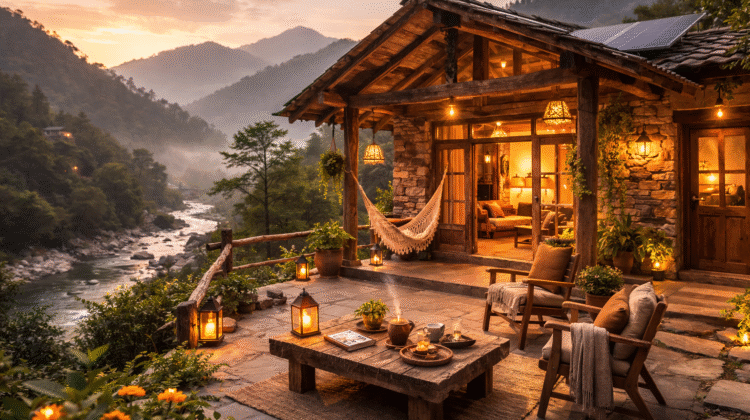
Imagine opening the door to a cottage where the wooden beams once belonged to a century-old house, the table is crafted from reclaimed timber, and the tiles beneath your feet were rescued from a demolished building.
Nothing feels manufactured. Nothing feels identical.
Every corner carries a quiet story.
This is the essence of salvaged stays—accommodations built using reclaimed materials where sustainability meets thoughtful design. For travelers increasingly conscious about their environmental footprint, these stays offer a rare balance: comfort without guilt and luxury without excess.
What Are Salvaged Stays?
Salvaged stays are hospitality properties created using recycled or reclaimed construction materials.
Instead of building entirely new structures, designers repurpose elements such as:
- Reclaimed wood from old houses
- Recycled bricks and tiles
- Repurposed doors and windows
- Upcycled furniture and décor
- Locally sourced natural materials
The result is not just sustainable architecture but spaces filled with character, texture, and individuality.
Unlike standardized hotels, salvaged stays often feel deeply personal—places where design reflects creativity rather than mass production.
The Experience: Slow Living in Reclaimed Spaces
The appeal of salvaged stays goes beyond environmental responsibility.
These properties naturally encourage slower, more mindful travel.
Guests wake to quiet surroundings, enjoy meals prepared with local ingredients, and spend evenings under open skies rather than in crowded resort lounges.
The atmosphere invites travelers to pause rather than constantly move.
The materials themselves contribute to this feeling. Weathered wood, uneven stone floors, and handmade furniture create spaces that feel warm and lived-in.
Imperfection becomes part of the charm.
Tirthan Valley: A Leading Example
In Himachal Pradesh’s Tirthan Valley, several boutique properties have embraced the salvaged stay philosophy.
These cottages are often built by passionate founders who carefully source reclaimed materials and collaborate with local artisans.
Visitors find:
- Upcycled furniture with unique histories
- Handmade interiors crafted by local carpenters
- Organic food grown or prepared on-site
- Quiet riverside settings far from urban noise
Days begin with walks along the river, while nights unfold under clear mountain skies.
Rather than offering endless activities, these properties create environments where travelers simply exist in the moment.
A Growing Trend Across India
The concept of salvaged stays is spreading across multiple regions of India.
In Kerala’s backwaters, some homestays incorporate reclaimed wood from traditional houseboats and historic buildings.
In Rajasthan’s desert camps, recycled textiles and upcycled furniture create warm, colorful interiors that reflect the region’s craft traditions.
In Maharashtra’s countryside, farm stays are being built with reclaimed wood and locally sourced stone, blending naturally with the rural landscape.
Each region adapts the concept differently, but the common theme remains the same: sustainability with authenticity.
Why Travelers Are Drawn to Salvaged Stays
For environmentally conscious travelers, salvaged stays represent more than just eco-friendly architecture.
Each property carries an invisible calculation—construction waste diverted from landfills, reduced carbon emissions, and local craftsmanship preserved.
But guests rarely experience this as sacrifice.
Instead, they discover beauty in aged wood, warmth in handcrafted furniture, and meaning in spaces that feel thoughtfully created rather than mass-produced.
In an era of uniform hotels, salvaged stays offer something rare: a sense of individuality and story.
The Challenge of Scaling
Unlike large hotel chains, salvaged stays are typically small, owner-operated properties.
Their design depends heavily on local materials, artisan craftsmanship, and personal vision.
This makes them difficult to scale or replicate on a large commercial level.
Yet this limitation is also their greatest strength.
Travelers seeking genuine connection often prefer these intimate properties precisely because they cannot be duplicated everywhere.
Each stay feels unique to its location.
What This Means for the Travel B2B Fraternity
For travel agents, tour operators, and experience curators, salvaged stays represent an opportunity within the rapidly growing sustainable travel segment.
Strategic opportunities include:
- Identifying unique salvaged properties and adding them to curated travel inventory.
- Partnering with property owners for exclusive access or limited-stay experiences.
- Promoting the sustainability credentials of these stays to eco-conscious travelers.
- Designing itineraries around slow travel and sustainable tourism.
- Offering photography and storytelling support to highlight the architectural and design features of reclaimed spaces.
As travelers increasingly seek authenticity and environmental responsibility in their journeys, salvaged stays demonstrate that sometimes the most beautiful places to stay are those built from pieces of the past.
THETRAVIGATOR.COM—- EDITORIAL NOTE
These articles are part of our ongoing coverage of emerging travel trends affecting the Indian B2B travel industry. For collaboration, advertising, or content partnerships, contact our editorial team …INFO@THETRAVIGATOR.COM.