Russia’s Luxury Travel Mart Signals Resilience: CIS Outbound Rebuilds Through Structured Demand
Introduction
The Luxury Travel Mart Moscow 2026 underway in Moscow is sending a clear message to the global travel trade: the CIS outbound market is not retreating—it is restructuring.
With over 260 international suppliers and an expected 13,000 pre-scheduled meetings, this is not a symbolic gathering. It is a highly functional marketplace, designed to convert demand into business despite geopolitical complexity.
Insights
The CIS luxury traveler has not disappeared—they have adapted.
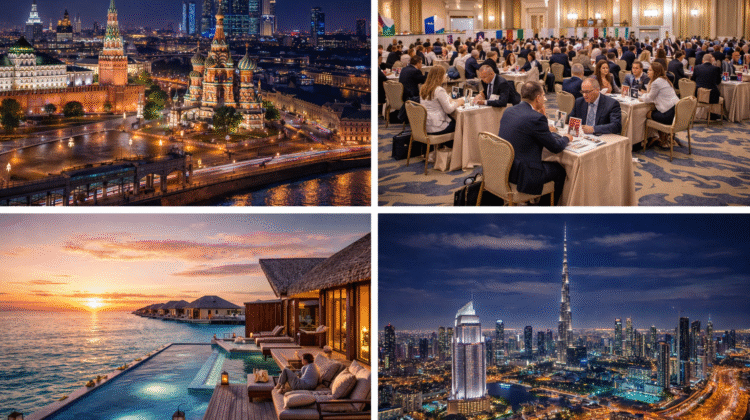
Travel patterns have shifted toward destinations that offer ease of access, visa flexibility, and political neutrality. This explains the strong supplier presence from the UAE, Maldives, and parts of Southern Europe.
What’s notable is the intent density. Unlike traditional trade shows, LTM’s structured meeting format ensures that buyers attending are active, high-value, and ready to transact.
For global suppliers, this creates a focused opportunity: fewer distractions, higher conversion probability.
Industry Analysis
From a B2B perspective, three clear dynamics are emerging:
1. Demand Is Concentrated, Not Declining
Outbound from Russia and CIS markets is becoming more selective. Fewer travelers, but higher spend per traveler—particularly in the luxury segment.
2. Destination Mix Is Being Redefined
Traditional Western Europe circuits are facing friction, while destinations like the UAE and Maldives are capturing a larger share due to accessibility and strong air connectivity.
3. Structured Trade Platforms Are Gaining Importance
In uncertain markets, efficiency matters more than ever. Events like LTM, with pre-scheduled meetings, are outperforming open-format trade shows in delivering real business outcomes.
For Indian outbound professionals, this is a key learning: complex markets reward structured engagement.
Strategic Takeaway
This is not just about Russia—it is about how markets behave under constraint.
For Indian travel companies:
- There is an opportunity to collaborate with CIS buyers for joint luxury movements
- Suppliers should diversify beyond traditional European dependence
- Structured B2B engagement models (like LTM) should be prioritized over generic exhibitions
For MICE and luxury FITs, cross-market synergies can emerge—particularly in destinations like the Maldives and Dubai, where Indian and CIS travelers overlap.
The larger takeaway: resilience in travel is not about volume—it is about adaptability and alignment.
Verdict
Luxury Travel Mart Moscow proves that outbound travel does not stop under pressure—it evolves.
For the global travel trade, and especially for Indian outbound stakeholders, this is a reminder that opportunity often lies in markets others perceive as difficult.
This report is part of TheTravigator’s continuing news coverage of the travel, tourism, aviation, and hospitality sectors. Our editorial team publishes industry news, market insights, partnerships, policy developments, and business updates relevant to the travel trade community. For press releases, partnership opportunities, advertising enquiries, or editorial collaborations, please contact our editorial desk at:
INFO@THETRAVIGATOR.COM