Italy: Volume vs. Sustainability — The Battle Defining Indian Outbound
Introduction
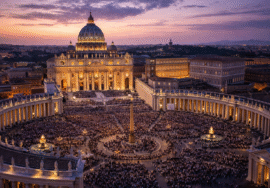
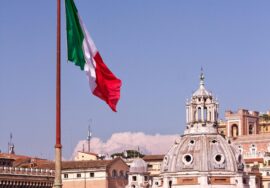
Few destinations command the same universal demand as Italy. For Indian outbound, it remains non-negotiable—anchored by Rome, Florence, and Venice.
But Italy today is no longer just a dream—it’s a capacity crisis. Demand is accelerating across segments (leisure, MICE, weddings), while supply—especially in historic cities—remains structurally limited.
This has created a defining tension:
chase volume, or pivot to sustainability-driven profitability.
Insights
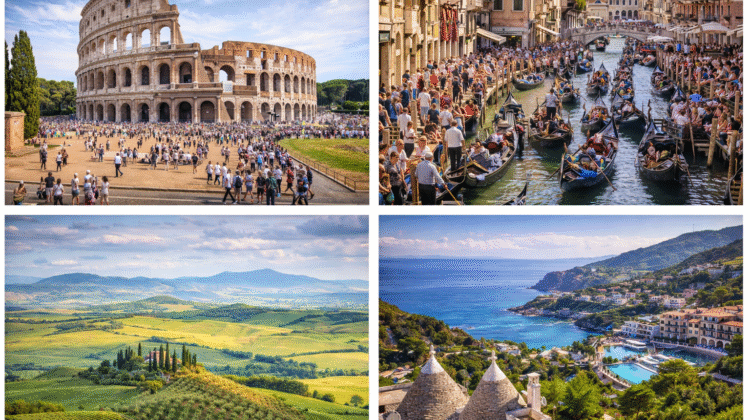
Indian travelers still want the icons—and that isn’t changing anytime soon. The Colosseum, canals of Venice, and Renaissance Florence remain essential checkpoints.
However, the experience is shifting. Overcrowding, rising prices, and operational constraints are beginning to impact satisfaction, particularly for premium clients expecting seamless travel.
This is where the narrative is evolving. Regions like Tuscany (beyond Florence), Puglia, and Sicily are emerging as pressure-release valves—offering space, authenticity, and a more curated Italian experience.
For Indian travelers, especially repeat Europe visitors, this shift is not a compromise—it’s an upgrade.
Industry Analysis
Italy’s inventory strain is arguably the most severe in Europe.
In cities like Rome and Venice:
- Hotel supply is fixed due to heritage constraints
- Group-friendly inventory is shrinking
- Pricing volatility is increasing
- Regulatory pressure (especially in Venice) is tightening access
The recent group restrictions in Venice are not an isolated move—they are a signal of what’s coming across Europe’s high-density destinations.
For Indian operators, this creates a strategic fork:
- Volume model → large groups, high deposits, thin margins, higher operational risk
- Sustainable model → smaller groups / FITs, diversified geography, stronger margins
Southern Italy and rural regions offer a clear advantage:
- Better hotel availability
- More flexible contracting
- Lower operational pressure
- Higher experiential value
From a B2B perspective, the shift is already underway. Operators who continue to rely solely on the Rome–Florence–Venice triangle are facing margin compression and execution challenges.
Strategic Takeaway
Italy needs to be sold differently. The future is not about removing the icons—but rebalancing them.
The winning pitch is:
“Iconic Italy, without the chaos.”
For agents and DMCs:
- Retain Rome/Florence as anchor stops (shortened stays)
- Expand into Tuscany countryside, Puglia, and Sicily for depth and margin
- Position southern Italy as exclusive, not alternative
This hybrid model allows operators to protect margins while improving client experience—a rare alignment in today’s European market.
Verdict
Italy remains indispensable—but it is no longer straightforward.
The era of easy volume is ending, replaced by a more complex landscape where sustainability, inventory control, and smart routing define success.
For Indian outbound, the opportunity is clear:
those who adapt will unlock higher margins, differentiated products, and stronger client satisfaction.
Those who don’t will remain stuck in a system where demand is high—but profitability is increasingly fragile.
This article is part of TheTravigator’s ongoing editorial coverage of trends, developments, and business opportunities within the Indian travel and tourism industry. Our editorial content is intended to inform travel professionals, industry stakeholders, and partners about market movements, policy changes, partnerships, and innovation shaping the sector. For editorial collaborations, advertising opportunities, press releases, or content partnerships, please contact our editorial team at:
INFO@THETRAVIGATOR.COM