Drone Tourism Greenlight: What It Means for B2B Travel & Tech
The Ministry of Civil Aviation has formally green‑lit drone tourism trials in Goa and Kerala for aerial heritage, eco‑circuit, and coastal‑experience tours, positioning India as one of the first major markets to integrate drones into regulated, revenue‑generating tourism experiences. [dgca.gov](https://www.dgca.gov.in)
Where and how it will roll out
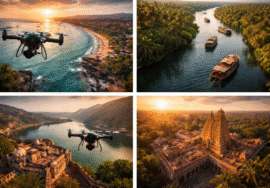
Goa : The trials will focus on aerial heritage circuits around Old Goa’s UNESCO‑linked churches and forts, plus curated coastal‑bay routes (e.g., Mormugao, Sinquerim to Baga) where drone‑only perspectives add real value. Goa’s existing Drone Policy (2022) and designated “free‑fly zones” make it a natural sandbox for licensed tourism‑drone operators.
[SOURCE : krishijagran]
Kerala : In Kerala, the focus is on backwater and biosphere‑linked heritage routes , including aerial views over the Kabini‑Brahmagiri‑Nilgiri corridor and select temple clusters. The state already has over 1,300 registered drones , giving it a strong base of pilots and service providers to plug into this tourism model.
[SOURCE :economictimes]
Regulatory & licensing framework (for B2B clarity)
Permissions will run through the DGCA‑Digital Sky platform , with operators needing:
– Remote Pilot Certificate (RPC) registered under Drone (Amendment) Rules 2023 , which now allow simpler ID proof (e.g., voter ID, driving licence) instead of a passport.
[SOURCE :government.economictimes.indiatimes]
– A UAOP (Unique Air Operator Permit) ‑type add‑on module for “tourism aerial sightseeing”, with pre‑approved flight‑corridors and no‑drone zones around critical heritage sites defined by ASI and local authorities.
[SOURCE :tourmyindia](https://www.tourmyindia.com/blog/flying-drones-guidelines-india/)
– Each state tourism board will designate “drone‑tour zones” with caps on daily flights, altitude limits (typically 120–150 m), and noise‑impact norms, aligning with Goa and Kerala’s existing environmental regulations.
[SOURCE :civilaviation.gov.in]
Types of products and experiences being piloted
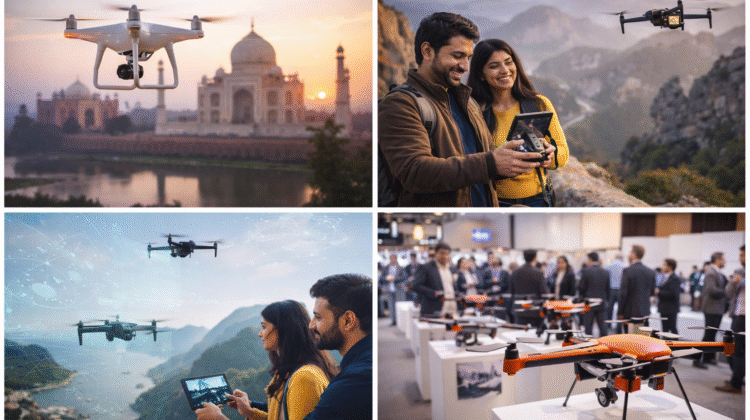
– Aerial heritage tours : Short, 10–15‑minute drone‑riding or “chase‑cam” experiences over churches, forts, temple complexes, and riverfronts, marketed as premium add‑ons to existing sightseeing packages.
– Eco‑tourism and wildlife overflights : Fixed‑altitude routes over reserves such as the Western Ghats belt (Kerala) and coastal‑forest corridors (Goa), emphasising non‑invasive, data‑driven observation and tie‑ups with conservation NGOs. [SOURCE :aerialphoto]
– “Virtual‑to‑reality” packages : B2B partnerships with OTAs and DMCs to sell VR‑drone previews online (monuments, beaches, backwaters) and later convert them into on‑ground drone‑assisted tours at the destination. [SOURCE :nsventures.in]
Why this is a big B2B opportunity
– New revenue streams for operators : DMCs and inbound tour companies can bundle drone‑supported heritage tours into MICE, luxury, and FIT products, charging 1.5–2x the cost of standard sightseeing.
– Tech integration : Demand will spike for AI‑drone platforms that integrate booking, real‑time flight tracking, liability insurance dashboards, and post‑flight galleries—perfect for Indian and global SaaS‑style travel‑tech firms.
– Local‑community partnerships : State tourism boards and ITDC‑type bodies are expected to prioritise bids from local‑owned drone enterprises and homestay clusters, creating “last‑mile” digital‑tourism micro‑businesses.
[SOURCE :aerialphoto]
Potential risks and friction points (for strategic planning)
– Security and airspace conflicts : Goa has seen recent local drone bans around sensitive areas such as Dabolim‑INS Hansa and major events, so operators must factor in dynamic “no‑fly” windows and coordination with state police and DGCA.
[SOURCE :complinity]
–
Heritage and heritage‑sensitive zones : ASI and conservation bodies are likely to push for strict geofencing around monuments, so any “drone‑tour” near sites like the Old Goa churches must be pre‑approved and minimally intrusive.
[SOURCE :thinkrobotics]
–
Data privacy and liability : As drone‑based footage is stored and monetised, B2B partners will need clear contracts on image rights, storage, and liability —especially for celebrity‑heavy or corporate‑client scenarios.
This article is part of TheTravigator’s ongoing editorial coverage of trends, developments, and business opportunities within the Indian travel and tourism industry. Our editorial content is intended to inform travel professionals, industry stakeholders, and partners about market movements, policy changes, partnerships, and innovation shaping the sector. For editorial collaborations, advertising opportunities, press releases, or content partnerships, please contact our editorial team at:
INFO@THETRAVIGATOR.COM