
Denmark: The Sustainable Luxury Indian Travelers Are Willing to Pay For
Introduction
In the hierarchy of European destinations, Denmark has never been about mass appeal—and that’s precisely its strength. For Indian outbound, Denmark sits in a rare category: high-cost, high-conviction travel.
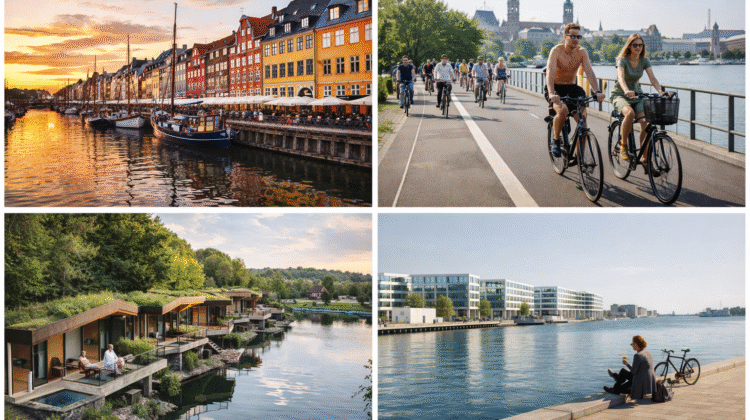
At the center of it all is Copenhagen—a city that doesn’t try to impress with excess, but with intent. Clean design, seamless infrastructure, and a deeply embedded sustainability culture make it one of the most future-facing destinations Indian travelers can experience today.
Insights
The Indian luxury traveler is evolving. It’s no longer just about five-star stays and iconic landmarks—it’s about how responsibly those experiences are delivered. Denmark is one of the few destinations that naturally aligns with this shift.
Copenhagen’s bike-first culture, carbon-conscious urban planning, and widespread adoption of green hotels create a travel experience that feels progressive, not performative. This resonates strongly with younger Indian HNIs and global-facing families who want their travel choices to reflect their values.
There’s also a subtle exclusivity at play. Denmark doesn’t try to accommodate large tourist volumes, which means Indian travelers who do choose it feel like they’re accessing something more curated, less commercial.
Industry Analysis
Denmark is unapologetically expensive—and that immediately filters its audience. For Indian operators, this is not a volume destination. It’s a precision product.
The cost structure—hotels, dining, experiences—is among the highest in Europe. But unlike other expensive destinations, Denmark offers a clear value narrative: sustainability, quality of life, and design-led experiences.
This is where Denmark becomes strategically relevant for B2B:
- It aligns perfectly with ESG-driven corporate travel policies, increasingly adopted by Indian multinationals
- It fits into educational and exposure-based itineraries (architecture, urban planning, sustainability tours)
- It attracts high-intent luxury travelers, leading to stronger conversion and repeat potential
The key challenge lies in execution. Operators need DMC partners who are not just logistics providers, but who understand CSR integration, green certifications, and sustainable storytelling. Without that, Denmark risks being sold as just another expensive European stop—which it isn’t.
Strategic Takeaway
Denmark should never be positioned as a standalone “tourist destination.” It works best when framed as an experience with purpose.
The winning pitch is clear:
“Travel that reflects who you are—not just where you go.”
For agents and DMCs:
- Target corporate MICE with ESG mandates
- Build short, high-impact itineraries (2–4 nights in Copenhagen)
- Integrate sustainability-led experiences—cycling tours, green architecture walks, eco-certified stays
This is a low-volume, high-yield segment. The focus is not on scaling numbers, but on maximizing value per traveler.
Verdict
Denmark is not trying to compete with mainstream Europe—and it doesn’t need to.
For the Indian outbound market, it represents a new category altogether: travel that is premium, purposeful, and future-aligned. The high cost is not a barrier—it’s part of the positioning.
For operators willing to curate it correctly, Denmark offers something rare:
a destination where luxury and responsibility are not opposites—but the same product.
This article is part of TheTravigator’s ongoing editorial coverage of trends, developments, and business opportunities within the Indian travel and tourism industry. Our editorial content is intended to inform travel professionals, industry stakeholders, and partners about market movements, policy changes, partnerships, and innovation shaping the sector. For editorial collaborations, advertising opportunities, press releases, or content partnerships, please contact our editorial team at:
INFO@THETRAVIGATOR.COM