Air India’s West Asia Push Signals Demand That Refuses to Slow
Introduction
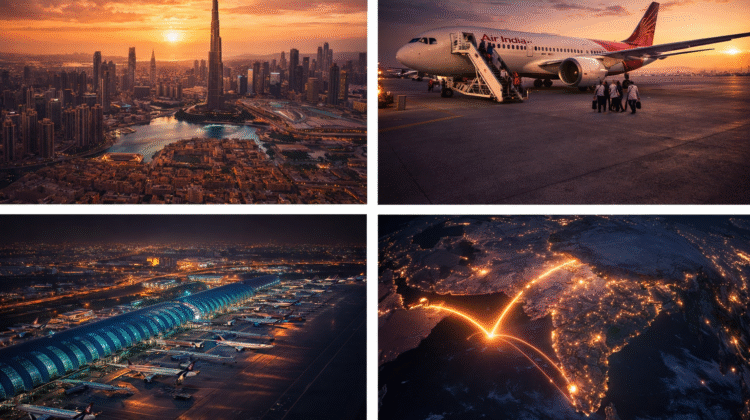
Even amid airspace disruptions and rising operational costs, one corridor continues to outperform—the India–West Asia route. With the Air India Group operating 30 scheduled and non-scheduled flights to the region in a single day—including 16 additional services to the United Arab Emirates—the message is clear: demand is not just holding, it is accelerating.
For the travel trade, this is not a temporary spike. It is structural resilience driven by deep-rooted travel behavior across VFR (Visiting Friends & Relatives), business, and leisure segments.
Insights
The India–Dubai corridor has evolved into more than just a route—it is an ecosystem.
Dubai remains one of the most consistent outbound drivers for Indian travelers. Its strength lies in diversity: short-haul convenience, visa accessibility, retail appeal, and strong diaspora links. Even when external pressures—like airspace detours—increase costs, the demand base remains intact.
Non-scheduled flights are particularly telling. They indicate flexibility in supply to match spikes in group travel, corporate movements, and seasonal demand. This is not reactive—it is strategic capacity deployment.
Industry Analysis
From a B2B perspective, West Asia continues to function as India’s most reliable international corridor.
MICE demand remains robust. Dubai, in particular, offers scalability—large venues, seamless logistics, and predictable execution. Corporate planners are willing to absorb moderate cost increases because the destination delivers consistency.
The VFR segment provides a steady baseline, ensuring airlines maintain high load factors even during off-peak leisure periods. This stabilizes pricing and supports frequency expansion—benefiting the entire ecosystem.
Leisure travel, especially short-duration premium trips, is evolving. Indian travelers are increasingly opting for curated experiences—luxury retail, desert resorts, and event-driven travel. This aligns well with Dubai’s positioning as a high-frequency, repeat-visit destination.
The key challenge is margin pressure. Fuel costs and rerouted flight paths are increasing operational expenses. However, strong demand allows partial cost absorption without significantly impacting volumes—an uncommon advantage in global aviation right now.
Strategic Takeaway
For travel agents and DMCs, West Asia should be treated as a volume-plus-margin hybrid market.
The opportunity lies in layering. Standard Dubai packages are no longer enough—value must be added through experiences, upgrades, and niche offerings. Desert luxury, private experiences, and event-based travel can significantly enhance yield without relying solely on pricing.
Non-scheduled capacity opens doors for group movements. Agents who can aggregate demand—whether for MICE, weddings, or large leisure groups—will benefit from flexible inventory and better commercial terms.
Most importantly, this corridor rewards speed. Demand moves quickly, and operators who can respond in real time will outperform slower competitors.
Verdict
The India–West Asia corridor is proving to be one of the most resilient travel markets globally. Despite operational challenges, demand remains strong, diversified, and commercially viable.
For B2B players, this is not just a safe market—it is a strategic one.
This report is part of TheTravigator’s continuing news coverage of the travel, tourism, aviation, and hospitality sectors. Our editorial team publishes industry news, market insights, partnerships, policy developments, and business updates relevant to the travel trade community. For press releases, partnership opportunities, advertising enquiries, or editorial collaborations, please contact our editorial desk at:
INFO@THETRAVIGATOR.COM