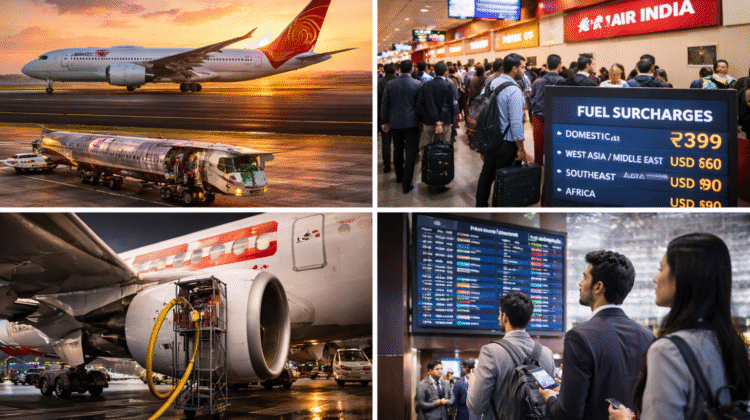
Air India Makes Flying Costlier: Fuel Surcharge Hiked from Today
Air travel costs are set to rise as the Air India group has implemented a fuel surcharge increase effective March 12, 2026, responding to the sharp surge in Aviation Turbine Fuel (ATF) prices triggered by supply disruptions across the Gulf region.
The move comes as airlines globally face rising operating costs due to volatile fuel prices—one of the largest expense components in aviation.
New Fuel Surcharge Structure
Under Phase 1 of the revised pricing structure, the airline has introduced the following surcharges:
- Domestic flights: ₹399 fuel surcharge introduced
- West Asia / Middle East routes: USD 10 surcharge
- Southeast Asia: Increased from USD 40 to USD 60
- Africa: Increased from USD 60 to USD 90
- Singapore routes: A new surcharge has now been introduced
These surcharges will be applied to tickets issued from March 12 onward, impacting both leisure and corporate travelers.
Impact on Corporate and Business Travel
For corporate travel managers and travel agents, the immediate implication is higher ticket prices across several key international routes, particularly those connecting India with West Asia and Southeast Asia.
Industry estimates suggest that the updated surcharges could push overall ticket prices 5–10% higher, depending on the route and fare class.
Travel companies and corporate booking teams will now need to requote existing travel inquiries and adjust travel budgets accordingly.
Possible Market Reactions
In the short term, some travelers may shift toward lower-cost carriers or alternative routing options in order to manage rising travel expenses.
However, as fuel costs remain volatile, similar pricing adjustments from other airlines could follow—making the surcharge increase a broader industry trend rather than an isolated move.
B2B Takeaway
Air India’s revised fuel surcharge will immediately increase corporate travel costs. Travel agents and corporate booking managers should reprice pending itineraries and advise clients to budget 5–10% higher for Gulf and Asia routes. Companies may temporarily explore alternative airlines or route combinations to control travel expenses. ✈️
These articles are part of our ongoing coverage of emerging travel trends affecting the Indian B2B travel industry. For collaboration, advertising, or content partnerships, contact our editorial team …INFO@THETRAVIGATOR.COM.