The Hidden Link Between Climate, Water and the Places We Love
Some destinations impress us with their landscapes.
Others leave us with something far more valuable a new way of thinking.
Over the years, I have been fortunate enough to travel to places that are breathtaking in completely different ways. Yet, looking back, I realise the memories that stay with me the most are not always the famous viewpoints or postcard photographs. They are the small moments when a destination quietly reminds me that its beauty survives only because someone is protecting it.
One such place is Sikkim.
It remains one of those destinations I genuinely hope never loses its identity. During my visit, what stood out wasn’t just the snow-capped mountains or peaceful monasteries. It was the collective effort to protect the environment. The use of polythene was heavily discouraged, and almost everywhere I went, visitors were reminded not to litter. Plastic bottles were not casually discarded along roads or viewpoints. Dustbins were placed thoughtfully, and there was a visible effort to encourage responsible behaviour rather than simply cleaning up after careless tourists.
It wasn’t about enforcing rules.
It was about creating a culture where protecting the destination felt like everyone’s responsibility.
A similar lesson came thousands of kilometres away in Langkawi.
I chose to explore the islands on a small luxury boat carrying no more than fifteen passengers. Before we even left the harbour, the crew gathered everyone for a short briefing. Along with the usual safety instructions came an unexpected request. We were asked not to throw any plastic into the sea—especially food wrappers or packaging that still carried traces of food. The crew explained that marine animals often mistake these plastics for food, consume them and eventually die because of it.
It was a simple reminder.
Yet it completely changed the way I looked at the ocean for the rest of the journey.
That conversation lasted only a few minutes.
The lesson has stayed with me ever since.
These experiences made me realise that climate change and environmental conservation are not abstract discussions reserved for international conferences or scientific reports. They are already shaping the way destinations welcome travellers, manage tourism and protect the resources that make them special in the first place.
Travel has always depended on nature, even if we don’t always recognise it.
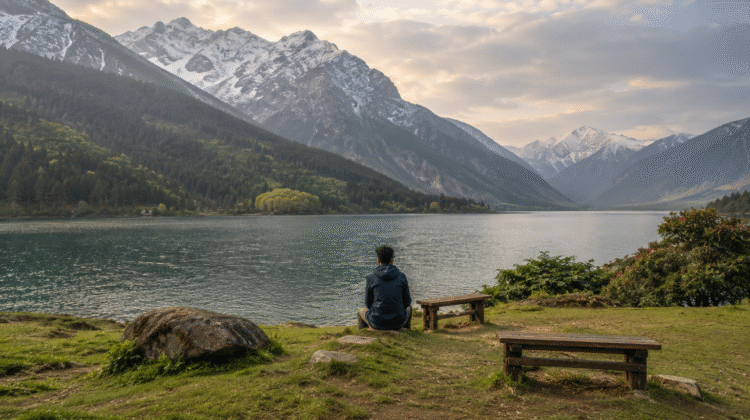
Every memorable destination relies on a delicate balance of climate, water, forests, coastlines, wildlife and local communities. We often admire the final picture the pristine lake, the lush valley, the crystal-clear sea—but rarely think about the fragile systems that allow those places to remain beautiful year after year.
When those systems begin to change, tourism changes with them.
Climate change is often associated with dramatic headlines—floods, wildfires, melting glaciers and record-breaking temperatures. Yet its quieter consequences are equally important. Lakes shrink a little more each summer. Forests become more vulnerable. Beaches slowly erode. Rainfall patterns shift. Communities begin talking less about the seasons and more about managing uncertainty.
Travellers may not immediately notice these changes.
But destinations certainly do.
Water sits at the heart of this conversation.
It determines how hotels operate, how landscapes are maintained, how local communities meet daily needs and whether tourism can continue growing sustainably. A destination struggling with water scarcity isn’t simply facing an environmental challenge. It is facing a tourism challenge, an economic challenge and a community challenge all at once.
Fortunately, many destinations are choosing to respond rather than wait.
Hotels are investing in water-efficient technologies, refill stations and smarter resource management. Tourism boards are encouraging visitors to reduce waste. Protected areas are introducing stricter conservation measures. Boat operators, trekking companies and local guides are becoming educators as much as service providers.
The travel industry is gradually recognising that sustainability is no longer a marketing slogan.
It is becoming essential infrastructure.
As someone who spends a great deal of time travelling and covering the travel industry, I find myself noticing these details more than ever before. Today, I don’t just remember a destination for its scenery. I remember how it treated its environment.
Did the hotel encourage refillable bottles?
Did the destination actively discourage single-use plastics?
Did local businesses explain why conservation mattered?
Did visitors respect those efforts?
Those questions have become just as important as the destination itself.
The encouraging part is that travellers hold more influence than we often realise.
Every booking supports a particular kind of tourism. Every positive review encourages hotels to continue investing in sustainable practices. Every traveller who chooses to carry a reusable bottle, disposes of waste responsibly or respects local environmental guidelines contributes to protecting the places they came to enjoy.
Responsible travel isn’t about giving up comfort.
It’s about understanding that comfort should never come at the expense of the destination.
Increasingly, I believe this is also how luxury should be defined.
Luxury is no longer simply larger rooms, endless buffets or extravagant amenities. The most forward-thinking hotels and destinations are proving that true luxury lies in delivering exceptional experiences while protecting the natural resources that make those experiences possible.
The destinations we admire today deserve to remain just as remarkable for future generations.
When I think back to Sikkim, I don’t just remember its mountains. I remember a destination determined to preserve what makes it unique. When I think of Langkawi, I don’t only remember turquoise waters and island-hopping. I remember a boat captain reminding fifteen travellers that one careless act could cost a marine animal its life.
Those moments changed the way I travel.
They reminded me that every destination tells two stories.
One is the story visitors come to see.
The other is the story of how that destination fights every day to protect itself.
As travellers, we have the privilege of enjoying both.
We also share the responsibility of ensuring that the second story continues for generations to come.
Because if tourism is truly a celebration of place, then conservation is the promise we make to ensure those places remain worth celebrating.
This report is part of TheTravigator’s continuing news coverage of the travel, tourism, aviation, and hospitality sectors. Our editorial team publishes industry news, market insights, partnerships, policy developments, and business updates relevant to the travel trade community. For press releases, partnership opportunities, advertising enquiries, or editorial collaborations, please contact our editorial desk at:
INFO@THETRAVIGATOR.COM