
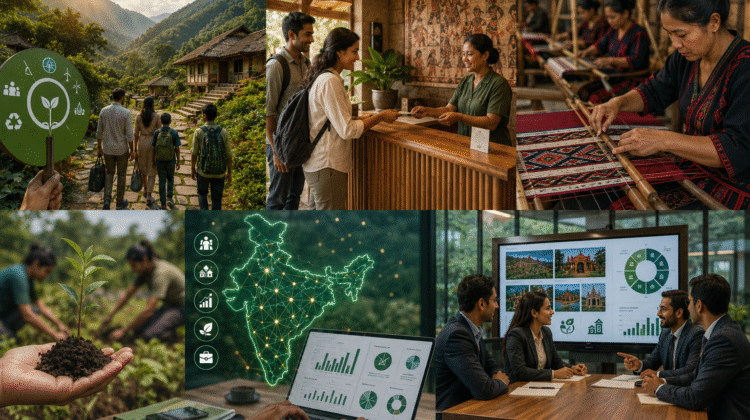
The Death of Greenwashing: The Mandate for ‘Community-Spend’ Tourism
The travel industry’s reliance on superficial eco-labels and “reuse your towel” placards has reached its expiration date. A massive psychological shift has occurred within the Indian demographic. Recent 2026 intelligence confirms that 88% of Indian travellers now actively prioritise sustainable travel, but their definition of the word has radically matured. They are rejecting abstract carbon offset promises.
The unfiltered truth is that 39% of these travellers now explicitly define sustainability as “community-spend.” They are demanding transparent proof that their capital is directly elevating local economies, empowering regional artisans, and funding indigenous heritage rather than being siphoned off by multinational hotel conglomerates. The modern Indian travellers view their holiday budget as a tool for targeted economic impact.
This mirrors the government’s aggressive push with the Swadesh Darshan 2.0 initiative, which pivots away from mere infrastructure building towards holistic, community-led livelihood generation. When a high-net-worth Indian family books a retreat in Dimapur or a corporate team plans a summit in Kochi, they want quantifiable ESG (Environmental, Social, and Governance) metrics. They want to know exactly how many local jobs their itinerary supports. The era of passive sightseeing is dead, the era of audited, economic-impact tourism has taken the throne.
B2B Fraternity Takeaway & Industry Analysis:
Corporate ESG mandates are now dictating travel spend. Stop pitching generic green resorts. You must audit and verify the direct economic impact of your packages on local communities. When selling domestic MICE (Meetings, Incentives, Conferences, and Exhibitions) travel, market the quantifiable regional livelihood generation as the primary corporate value proposition.