Ethical AI Guidelines & Digital Capacity Building in Indian Tourism
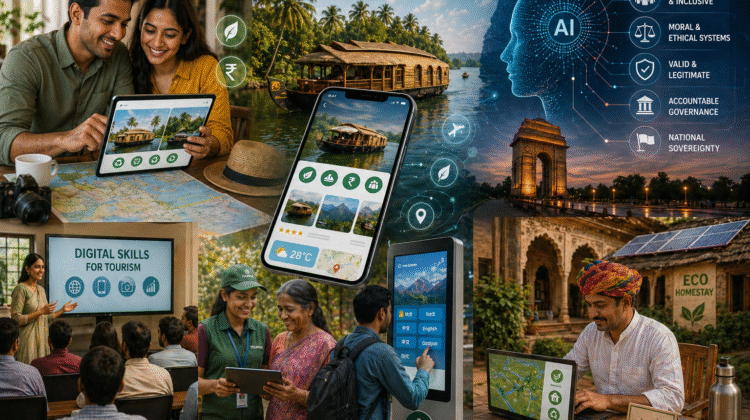
Navigating the AI Frontier with Responsibility Imagine a Delhi couple planning their Kerala getaway. An AI-powered platform suggests eco-friendly houseboats, but what if the algorithm unintentionally excludes budget-friendly options? This is not a distant concern—it is a present reality.
India’s tourism sector is booming. Domestic tourist visits reached 294.76 crore in 2024 , a 17.36% increase over the previous year . The revamped Incredible India Digital Platform (IIDP) now serves approximately 26 lakh users , using AI to personalise travel experiences with real-time weather updates and city exploration features . Yet, with scale comes responsibility.
Recognising this, the government has introduced the MANAV framework —a human-centric AI governance model built on five pillars: Accessible and Inclusive, Moral and Ethical Systems, Valid and Legitimate, Accountable Governance, and National Sovereignty. This framework ensures that AI systems remain fair, transparent, and accountable .
Building Digital Capacity Across the Sector Ethical AI is only half the story. India is also investing heavily in digital skills. The Union Budget 2026-27 prioritises skilling across sectors, with tourism-specific initiatives including the upskilling of 10,000 tourist guides and the establishment of hospitality institutions to bridge academia-industry gaps .
Schemes like Paryatan Mitra and Paryatan Didi empower local communities, particularly women, in tourism-related roles, while the Capacity Building for Service Providers (CBSP) programme enhances employability across the sector .
The Road Ahead For a Rajasthan homestay owner using AI to design low-carbon trails, or a local guide leveraging smart kiosks for multilingual assistance, the message is clear: technology must serve people, not the reverse. With 87% of Indian travellers now prioritising sustainable travel , embedding ethical AI into tourism policy is not just good practice—it is essential for building trust and driving the sector toward its $500 billion potential by 2030 .
This article is part of TheTravigator’s ongoing editorial coverage of trends, developments, and business opportunities within the Indian travel and tourism industry. Our editorial content is intended to inform travel professionals, industry stakeholders, and partners about market movements, policy changes, partnerships, and innovation shaping the sector. For editorial collaborations, advertising opportunities, press releases, or content partnerships, please contact our editorial team at:
INFO@THETRAVIGATOR.COM