


The Shiny Bowl and the Empty Street: Hong Kong’s 2026 Identity Crisis
For decades, Hong Kong was the center of gravity in the Pearl River Delta. You came here to spend money, and the rest of the region was just the factory floor.
In 2026, the gravity has reversed.
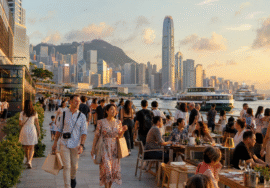
If you walk through Causeway Bay on a Saturday afternoon, it feels… spacious. The crushing crowds are gone. The queue for the luxury watch shop is missing. Why? Because the people of Hong Kong have discovered that the “factory floor” next door now has better food, cheaper massages, and service that doesn’t involve being yelled at.
The New Toy: Kai Tak Sports Park
The government’s answer to this existential crisis is sitting on the old airport runway: Kai Tak Sports Park. After years of delays and a price tag that makes your eyes water ($30 billion HKD), it is finally fully operational as of late 2025/early 2026.
- The Scale: It is a monster. The 50,000-seat main stadium is sleek, pearlescent, and undeniably impressive. It has finally given the city a venue that doesn’t feel like a high school gym (sorry, Hong Kong Stadium).
- The Experience: If you are here for the Rugby Sevens or the Coldplay residency this month, it is world-class. The sound is tight, the retractable roof works, and the views of the Victoria Harbour skyline are absurdly photogenic. It is the “Global City” branding firing on all cylinders.
The Real Movement: The “Northbound” Rush
But step outside the stadium, and the narrative collapses. While the government wants you to look at Kai Tak, the locals are looking at Shenzhen. The defining trend of 2026 is the “Reverse Weekend.” Every Friday night, a million Hong Kongers stream north across the border, leaving the city hollow.
- The Catalyst: The new “Face Easy” e-Channel gates. You don’t even need to show an ID card anymore. You just walk through a scanner, it reads your biometrics, and 20 seconds later you are in Mainland China. It is frictionless, and it is draining the life out of Hong Kong’s retail sector.
- It’s an economic protest. Hong Kong’s service industry became arrogant and expensive. Now, locals are voting with their feet. They are going to Shenzhen’s Sam’s Club and Costco, buying groceries for half the price, and eating at restaurants where the waiters actually smile. The “Pearl of the Orient” is becoming a bedroom community for Shenzhen’s nightlife.
The Quiet City
There is a silver lining to this exodus, though. Hong Kong is breathing again.
- The Hike: Go to the MacLehose Trail on a Sunday. It used to be a conga line of hikers. Now? It’s quiet. You can stand on top of Lion Rock and actually hear the wind.
- The Neighborhoods: Go to Tai Hang or Kennedy Town. The businesses that survived the “retail apocalypse” are the ones that actually care. The mediocrity has been purged. What’s left are the passionate chefs and the dedicated artisans who are fighting to make Hong Kong worth the price tag.
Hong Kong in 2026 is a city of two speeds. There is the Event Speed—the roar of the crowd at Kai Tak, the glitz of the Art Basel crowd, and the sterilized efficiency of the financial district. And then there is the Local Speed—which is currently headed north on the East Rail Line to buy cheaper toilet paper in Futian.